The best sump pumps for iron ochre
Orange slime in the pit is a living thing, and it will find the cheapest moving part in your sump system. Buy for solids handling and a switch it cannot seize.
We earn a commission if you buy through our Amazon links, at no cost to you. We do not bench-test these products and we never take free product — how we pick · affiliate disclosure
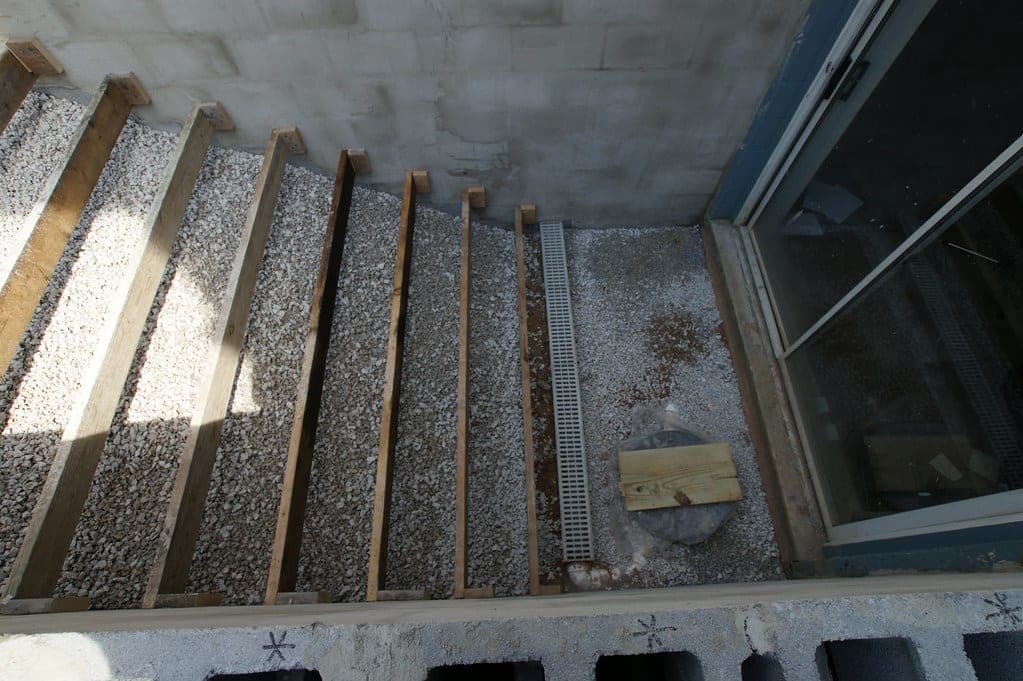
If your sump pit has turned rusty orange and grown a slime, buy for three things: solids handling, a switch that cannot seize, and parts you can replace without pulling the pump. The pump we would fit is the Liberty Pumps 287 — one-piece cast iron, 3/4 inch solids handling and a magnetic float on a quick-disconnect cord. The Zoeller M53 gets you a non-clog vortex impeller for less. And the single most effective upgrade for an ochre pit is not a pump at all: it is replacing the float with a solid-state switch that has no moving part to seize.
Iron ochre is the orange-brown sludge that forms in sump pits, drain tile and footing drains in iron-rich ground. It is produced by iron bacteria, which the Minnesota Department of Health describes as "small living organisms that naturally occur in soil, shallow groundwater, and surface waters" and which combine iron and oxygen to form "rust," bacterial cells and a slimy material that sticks to pipes, pumps and fixtures. That guidance is written about water wells rather than sumps. It is the same organism doing the same thing, stated by a public health agency rather than by somebody selling a remedy, which is why we are using it as the source.
Quick picks
| # | Product | Best for | Score | Price |
|---|---|---|---|---|
| 1 |  Liberty Pumps 287A one-piece cast-iron pump with 3/4" solids handling — the best in our registry — and a magnetic float on a quick-disconnect cord, so the part slime seizes first is the part you can replace. | The pump most likely to survive an ochre pit | 9.0 | Check price on Amazon #ad we earn a commission · Amazon shows the current price |
| 2 |  Zoeller M53 Mighty-MateA cast-iron, oil-filled pump with a non-clog vortex impeller rated to pass 1/2" solids, and the only published flow figure at ten feet in its class. | A vortex impeller at a sensible price | 8.7 | Check price on Amazon #ad we earn a commission · Amazon shows the current price |
| 3 | 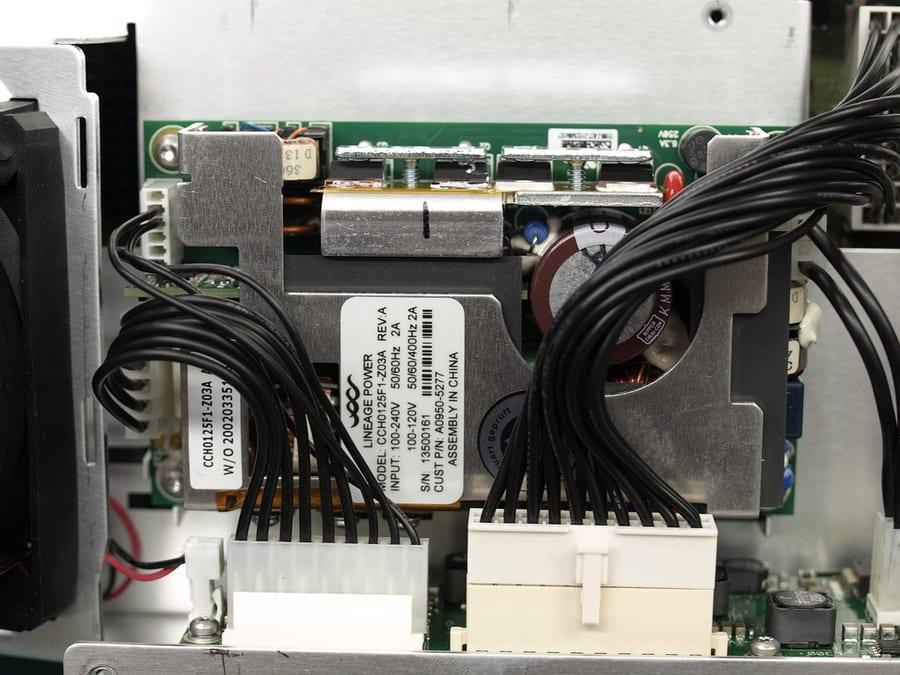 LevelGuard Z24800A1Z solid-state switchA solid-state switch with nothing to pivot, tether or seize — the single most effective upgrade for a pit that grows slime. | The part that actually fails, replaced with one that has no moving parts | 9.0 | Check price on Amazon #ad we earn a commission · Amazon shows the current price |
| 4 | 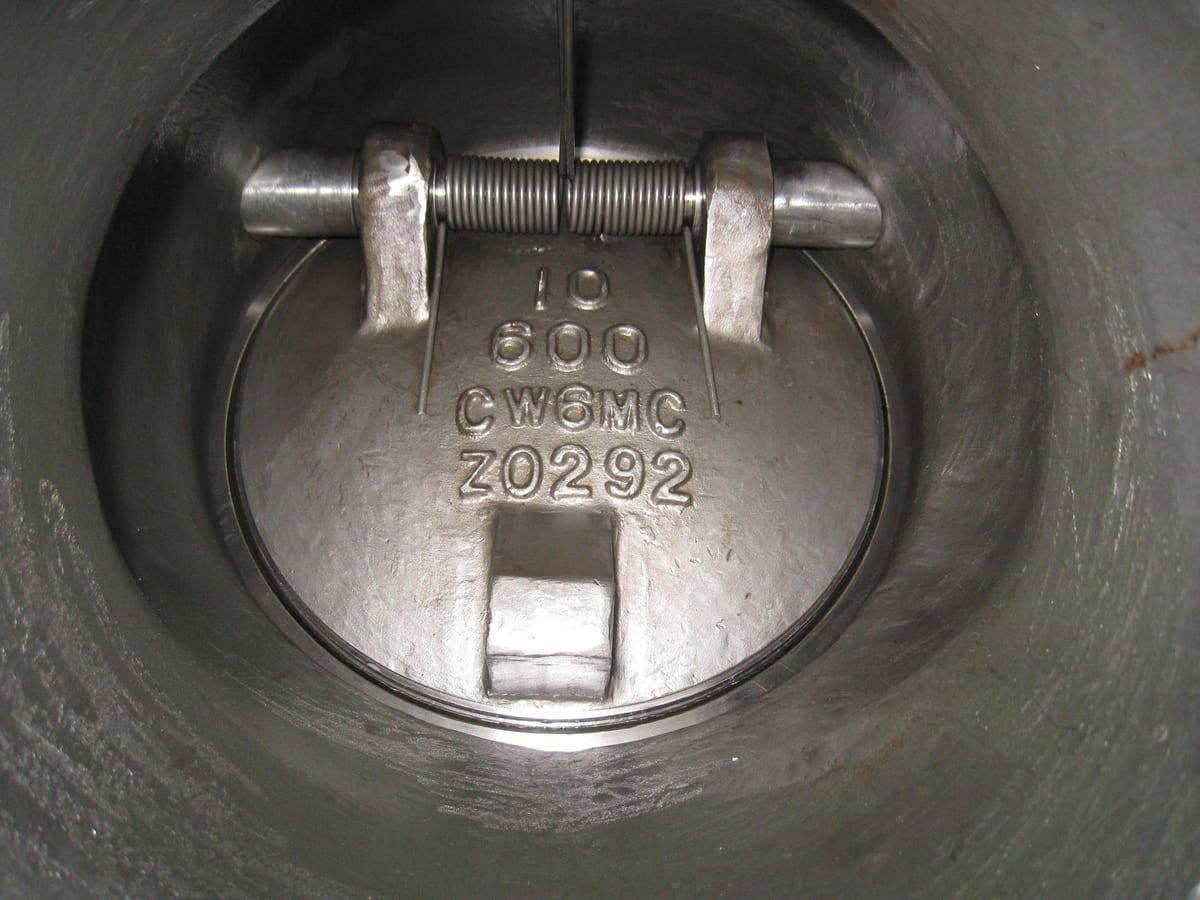 Zoeller 30-0181 check valveA serviceable check valve on the discharge, because an ochre-narrowed valve makes a healthy pump look broken. | The second thing ochre clogs | 8.5 | Check price on Amazon #ad we earn a commission · Amazon shows the current price |
| 5 |  Basement Watchdog Wash-Dog sump system cleaner (WDT20)A tablet sump-system cleaner sold specifically for iron ochre, dropped in the pit and run through on a normal pump cycle. | Periodic treatment of the pit itself | 7.4 | Check price on Amazon #ad we earn a commission · Amazon shows the current price |
| 6 | 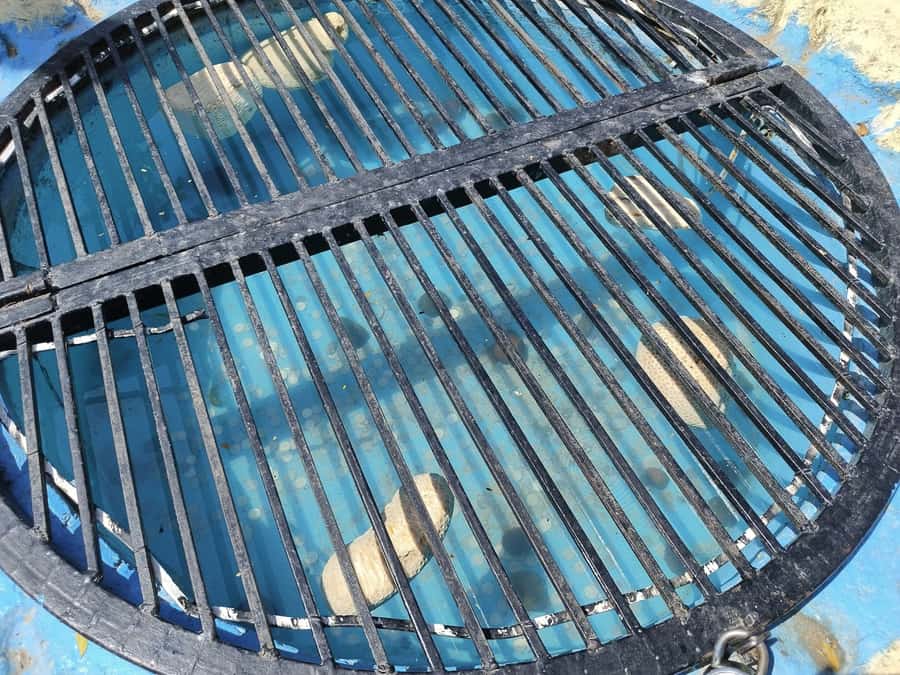 Jackel sealed sump pit coverA sealed pit lid limits the oxygen the bacteria need, keeps the smell in the pit, and still lifts off when you need to scrub. | Slowing the process down rather than cleaning up after it | 8.3 | Check price on Amazon #ad we earn a commission · Amazon shows the current price |
Scores are ours and editorial, not lab measurements — see how we pick. Tap a row for the full write-up.
How to tell it is ochre and not just rust
Rust stains. Ochre is alive, and it behaves differently. The health agency symptom list for iron bacteria maps almost exactly onto what people describe in a sump pit:
- Sticky rusty, yellow, brown or grey slime rather than a dry stain. If you can smear it between two fingers, it is biological.
- Feathery or filamentous growths, especially in standing water — the strands that wave in the pit when the water moves.
- A rainbow, oil-like sheen on the surface. People routinely mistake this for an oil leak from the pump; it is not.
- Swampy, oily, cucumber, sewage or musty smells, often stronger after the water has sat still for a while.
- Reduced flow and clogging as deposits build in the system.
The agency is also clear on the health question: iron bacteria "are not known to cause disease," though they "can create conditions where other disease-causing organisms may grow." So this is a plumbing and maintenance problem rather than a panic. If the smell in your basement is sewage rather than swamp, that is a different diagnosis — see sump pump smells like sewage.
What ochre actually breaks, in order
- The float switch. Slime accumulates on any pivot, tether or cage until the switch stops tracking the water. The motor is fine; the pump just never gets told to run. This is the single most common ochre failure and it is why a magnetic or solid-state switch is worth more here than any horsepower figure.
- The check valve. The narrowest point in the discharge, so the first place a deposit measurably reduces the opening. A valve that stops seating lets the pipe's standing column fall back into the pit, restarting the pump on its own backwash.
- The impeller passage. Semi-open impellers pack with floc. A vortex design throws it through instead, which is why impeller geometry matters more than housing material in this particular fight.
- The discharge line. Deposits narrow the effective diameter over years, so the same pump moves less water at the same lift. If your pump's run time has crept up with no other change, measure the line.
- The drain tile. The expensive one. Ochre bridges the perforations in the pipe around the footing, and once that is blocked, water stops reaching the pit at all — it goes through the slab instead. Nothing you buy in a store fixes that stage.
How we ranked this
Five criteria, applied in this order. Note that the order is different from every other pump page on this site, because in an ochre pit the thing that fails is not the thing that fails elsewhere.
- What is the switch, and can ochre seize it? Solid-state beats magnetic beats vertical mechanical beats tethered. This is the first question, not the fourth.
- How big a solid will it pass? Ochre arrives suspended before it becomes a deposit. Three-quarters of an inch passes what half an inch catches.
- What shape is the impeller? A non-clog vortex design throws floc through the volute. A semi-open impeller slowly packs with it.
- Can you service it without pulling the pump? A quick-disconnect switch cord, unions either side of the check valve, a lid that lifts off. Everything in an ochre system is a consumable; design for replacing it.
- Does it reduce oxygen at the water surface? The deposit needs iron and oxygen. The lid is the only part of that you control.
The published specifications, side by side
| Liberty 287 | Zoeller M53 | Solid-state switch | Check valve | |
|---|---|---|---|---|
| Role | Primary pump | Primary pump | Switch retrofit | Discharge |
| Solids handling | 3/4" | 1/2" | Not applicable | Not applicable |
| Impeller | Thermoplastic vortex | Non-clog vortex | Not applicable | Not applicable |
| Switch type | Vertical magnetic float | Integral vertical mechanical float | Solid state, no moving parts | Not applicable |
| Switch replaceable alone | Yes, quick-disconnect cord | Yes, stocked service part | Is the replacement | Not applicable |
| Housing | One-piece cast iron, no seam | Cast iron, plastic base and impeller | Not applicable | Not applicable |
| Maximum head | 37 ft | 19.25 ft | Not applicable | Not applicable |
| Flow at 10 ft | Not published | 2,040 GPH | Not applicable | Not applicable |
| Warranty | Three years | Three years | Not published | Not published |
Liberty Pumps 287
A one-piece cast-iron pump with 3/4" solids handling — the best in our registry — and a magnetic float on a quick-disconnect cord, so the part slime seizes first is the part you can replace.
#ad we earn a commission · Amazon shows the current price
| Type | Submersible, one-piece "Uni-Body" cast iron |
|---|---|
| Horsepower | 1/2 HP |
| Electrical | 115 V, single phase |
| Discharge | 1-1/2" |
| Solids handling | 3/4" |
| Maximum head | 37 ft |
| Switch | Vertical magnetic float, quick-disconnect 10 ft cord |
| Warranty | Three years |
In an ochre pit the pump rarely dies of the thing people expect. The motor is fine. What fails is the float — slime builds on the pivot, the tether or the cage until the switch stops reporting water — and after that, the impeller passage and the check valve. Choose on those three things and the rest sorts itself out.
The 287 answers all three better than anything else in our registry. Three-quarters of an inch of solids handling means suspended ochre floc goes through the pump rather than accumulating in it. The vertical magnetic float has no pivot to foul and no cage to bridge across. And the quick-disconnect cord means that when the switch does eventually give up — and in a hard ochre pit it will — you are buying a switch, not a pump.
The one-piece casting is a smaller argument but a real one. Liberty pours the motor housing and the volute as a single piece of cast iron, so there is no bolted joint and no gasket line sitting in slime for a decade. Every seam in a sump system is somewhere ochre can get a grip, which is also why the discharge union and the check valve matter more here than in a clean pit.
Be clear about what buying this does not buy you. A pump cannot stop iron bacteria from colonizing a pit, and no manufacturer claims otherwise. What it buys is a longer interval between the day the pit starts turning orange and the day something stops working. The maintenance schedule further down this page does more for you than the pump choice does.
What it gets right
- 3/4" solids handling, the largest figure in our registry and roughly twice what most 1/3 HP pumps manage. Ochre arrives as suspended floc before it becomes a deposit, and that is the figure that decides whether it passes through
- One-piece "Uni-Body" cast-iron housing with no gasketed seam between motor and volute — one fewer crevice for slime to establish in
- Vertical magnetic float with no pivot, no tether and no caged arm. A tethered float in an ochre pit is a float that will eventually stop moving
- The switch sits on a quick-disconnect 10 ft cord, so replacing it is a twenty-minute job rather than a pump replacement
- 37 ft maximum head — useful margin when the discharge line's effective diameter is slowly shrinking
- Three-year warranty, and a parts network that stocks the switch as a service item
Where it falls short
- Liberty publishes no flow figure at ten feet of lift for this model, and two distributor listings disagree on the zero-lift number (63 vs 70 GPM), so you are sizing on endpoints
- Usually the most expensive pump on this page
- Cast iron in an ochre pit will stain and crust on the outside regardless — the material protects the motor, not the finish
- Sold mainly through plumbing distribution rather than consumer retail
- No pump on earth stops ochre forming. This one survives it longer; it does not solve it
Specifications from Liberty 287 distributor listing, Liberty 287 (115 V) product page.
Zoeller M53 Mighty-Mate
A cast-iron, oil-filled pump with a non-clog vortex impeller rated to pass 1/2" solids, and the only published flow figure at ten feet in its class.
#ad we earn a commission · Amazon shows the current price
| Type | Submersible, cast iron |
|---|---|
| Horsepower | 3/10 HP (sold as 1/3 HP) |
| Electrical | 115 V, 9.7 A, 60 Hz |
| Discharge | 1-1/2" NPT vertical female |
| Switch | Integral vertical float, on at 7-1/4", off at 3" |
| Solids handling | 1/2" |
| Shut-off head | 19.25 ft |
| Flow, by lift | 2,580 GPH at 0 ft · 2,040 GPH at 10 ft |
| Warranty | Three years |
The vortex impeller is why this pump belongs on an ochre page. A vortex design spins the water and lets debris pass through the volute without going through the impeller vanes, which is exactly the behavior you want when what is in the water is a soft, stringy floc rather than a stone. Most of the cheap pumps in this class use a semi-open impeller that will slowly pack.
Zoeller is also the manufacturer in this category most willing to publish — 43 GPM maximum, 34 GPM at ten feet of head, trip points at 7-1/4 and 3 inches. In an ochre pit that last pair is more useful than it looks: knowing the pump leaves three inches of water standing tells you how much of the pit is permanently wet, which is where the bacteria live.
The honest reservation is the switch. The M53 uses an integral mechanical float, and mechanical floats are what ochre seizes. If your pit is mildly affected, this is the best value on the page. If it is the sort of pit that grows a skin, pay for the magnetic switch above or fit a solid-state one below. The single-model write-up is in the Zoeller M53 review.
What it gets right
- Non-clog vortex impeller — it throws debris through the pump rather than cutting at it, which is the right geometry for a suspended slime rather than a hard solid
- 1/2" solids handling, better than most pumps in its class
- 2,040 GPH published at ten feet of lift, so you can size against a real number rather than a headline
- Cast-iron housing with a hermetically sealed, oil-filled motor
- Published switch trip points: on at 7-1/4", off at 3", so you know how much water sits in the pit between cycles
- Three years of warranty, and the case-and-switch assembly is a stocked service part rather than a reason to replace the whole pump
Where it falls short
- The integral float is a mechanical switch rather than a magnetic one, and in a heavy ochre pit a mechanical switch is the component most likely to seize
- 9.7 A at 115 V, the highest draw here, and that matters on a shared circuit
- 19.25 ft shut-off head, the lowest on this page — less margin as the discharge line narrows
- The base and impeller are engineered plastic on this model; the all-cast-iron versions are on the M63
- Half an inch of solids handling is good, not best — the Liberty passes 3/4"
Specifications from Zoeller M53 (53-0001) specification sheet.
LevelGuard Z24800A1Z solid-state switch
A solid-state switch with nothing to pivot, tether or seize — the single most effective upgrade for a pit that grows slime.
#ad we earn a commission · Amazon shows the current price
| Type | Solid-state field-effect level sensing, no float and no moving arm |
|---|---|
| Orientation | Vertical, so it needs very little horizontal space in the pit |
Here is the argument for putting a switch in a roundup of pumps. In an iron ochre pit, the sequence of failure is almost always the same: slime accumulates on whatever moves, the float stops reporting the water level accurately, and the pump that is mechanically perfect stops running. Replace the thing that moves with a thing that does not, and you have addressed the actual problem rather than buying around it.
A solid-state switch has no pivot, no hinge, no tether and no cage. It still gets coated — everything in an ochre pit gets coated — but a coating that would jam a mechanical arm does not stop a solid-state sensor working, and wiping the sensor is part of the quarterly clean you should be doing anyway.
The honest reservation is money. This costs a real fraction of a new pump, so it makes sense on a healthy pump in a bad pit and very little sense on a tired pump in any pit. The wider comparison of switch types is in vertical vs tethered float switch and the full class in the best sump pump float switches.
What it gets right
- Solid-state sensing rather than a float, so there is no moving part for ochre to seize — this is the category's answer to the commonest ochre failure
- Retrofits to a pump you already own, which makes it a repair rather than a replacement
- No tether swing to allow for, so it works in a narrow pit where a tethered float cannot
- Removes the most common failure mode in any sump pit, ochre or not
Where it falls short
- Costs a meaningful fraction of a new pump, which is hard to justify on a pit that does not have a switch problem
- Sensing elements still need periodic cleaning — nothing is maintenance-free in an ochre pit, and a coated sensor is still a coated sensor
- Adds a second device and a second set of connections to a system that already has enough of both
- Wiring a replacement switch to an existing pump is a job some people should not do themselves
Specifications from Amazon listing (search).
Zoeller 30-0181 check valve
A serviceable check valve on the discharge, because an ochre-narrowed valve makes a healthy pump look broken.
#ad we earn a commission · Amazon shows the current price
| Type | PVC union check valve with a flexible flapper |
|---|---|
| Size | 1-1/2" slip x slip union, fits 1-1/4" and 1-1/2" pipe |
| Orientation | Vertical or horizontal |
| Noise | Flapper bends over a radius rather than slamming a hard seat |
The check valve is where an ochre problem first shows up as a symptom you notice. The deposit narrows the opening, the pump works harder against it, the cycle lengthens, and eventually the valve stops seating and the water in the discharge pipe falls back into the pit after every cycle. That backwash restarts the pump, which runs the pit through more cycles a day, which deposits more ochre. It is a loop, and it starts at the cheapest part in the system.
Treat the valve as a consumable in an ochre house and plumb it so it can be changed: a union above it and a union below it, so swapping one is fifteen minutes rather than an afternoon with a saw. The mechanics are in how a sump pump check valve works and the class is ranked in the best sump pump check valves.
What it gets right
- A check valve is the narrowest point in a sump discharge and therefore the first place a deposit closes down the effective diameter
- Replacing one is cheap and fast compared with diagnosing a pump that appears to be short-cycling for no reason
- A failing check valve lets the standing column in the discharge pipe fall back into the pit, so the pump restarts on its own backwash — which in an ochre pit doubles the cycling and the deposit rate
- Fits the same 1-1/2 in discharge as every pump on this page
Where it falls short
- It is a consumable in an ochre system, not a permanent fix — plan to replace it rather than clean it indefinitely
- A union above and below the valve is what makes it serviceable, and that is extra plumbing at install time
- No valve design eliminates the restriction; it only makes the restriction replaceable
- A quieter spring-loaded valve has a smaller opening, which in an ochre line is a trade rather than an upgrade
Specifications from Zoeller check valve distributor listing.
Basement Watchdog Wash-Dog sump system cleaner (WDT20)
A tablet sump-system cleaner sold specifically for iron ochre, dropped in the pit and run through on a normal pump cycle.
#ad we earn a commission · Amazon shows the current price
| Type | Tablet sump-system cleaner |
|---|---|
| Treats | Iron ochre and other deposits that clog a sump pit and its discharge line |
| Use | Drop one tablet into the pit and run the pump through a normal cycle |
| Model | WDT20 |
There is a real category of product here and it is worth knowing about, with a clear caveat about evidence. Glentronics sells this as a tablet you drop into the pit and activate by running the pump through a normal cycle, aimed at the iron ochre deposit specifically. The same company sells a contractor version, Clenit, through plumbing distribution.
What is not published anywhere we could reach is what is in it, at what concentration, or any independent test of how well it works. We are not going to tell you it does or does not work; we are telling you the manufacturer's claim and the fact that nobody has published a test. That is a different thing from a recommendation, and on a page about a biological problem it matters.
Two practical cautions. First, anything that goes in the pit goes out the discharge, so read the label before using it where the line empties near a vegetable bed or a stream. Second, this treats the pit and the line. If the ochre has bridged the perforations in your drain tile — which is where the real damage happens — a tablet in the sump is not reaching it, and that is a contractor's jetting job rather than a product purchase.
What it gets right
- Sold explicitly for removing iron ochre and other deposits from a sump system rather than being a general cleaner pressed into service
- Tablet dosing: drop one in the pit and run the pump through a normal cycle, which is about as low-effort as pit maintenance gets
- Made by Glentronics, the manufacturer behind Basement Watchdog, so it is a mainstream product rather than a contractor-only chemical
- Treats the deposit in the discharge line as well as in the pit, which is where a manual scrub cannot reach
- Listed in stock at retail when we checked on 4 November 2026
Where it falls short
- No active ingredients, concentration or independent test data are published on the listings we could reach — you are buying a claim
- A treatment does not stop recolonization: the Minnesota Department of Health notes that eliminating iron bacteria is difficult and often only partly effective, and that is for wells, where you can shock-chlorinate a sealed system
- Dosing and frequency are on the label rather than in the public listing, so you cannot plan the running cost before you buy
- Anything you put in a sump pit leaves through the discharge and onto your ground. Read the label before using it where it drains near a garden or a waterway
- It is a maintenance item, not a repair. If ochre has already blocked the drain tile, nothing poured into the pit is reaching that
Specifications from Wash-Dog WDT20 retail listing: iron ochre and deposit removal, tablet dosing, in stock (checked 2026-11-04), Home Depot listing: Sump System Cleaner for Removing Iron Ochre and Other Deposits (WDT20).
Jackel sealed sump pit cover
A sealed pit lid limits the oxygen the bacteria need, keeps the smell in the pit, and still lifts off when you need to scrub.
#ad we earn a commission · Amazon shows the current price
| Type | Bolt-down sump pit cover with pipe and cord grommets |
|---|---|
| Fits | Basins with pre-drilled rim inserts, 18 in class |
| Why it matters | Keeps debris, pets and children out, and cuts pit humidity and odor |
This is the cheapest thing on the page and it belongs here because of the chemistry. The deposit forms when iron bacteria combine dissolved iron with oxygen; cut the oxygen at the water surface and you slow the reaction at the one point in the system you can actually control. Nobody publishes a number for how much, and we are not going to invent one, but the mechanism is not in dispute.
The secondary benefits are not small either. A sealed lid contains the swampy, oily smell that iron bacteria produce, stops the pit evaporating into the basement, and keeps debris out of the water. The options are in the best sump pump covers, and if the pit doubles as a radon point, radon-sealed covers is the page you want instead.
What it gets right
- Iron bacteria need iron and oxygen to form the rust-and-slime deposit; a sealed lid reduces how much air reaches the standing water
- Contains the smell, which in an ochre pit is the swampy, oily odor the Minnesota Department of Health lists as a symptom
- Keeps the pit from drying into the basement air, and keeps debris and small animals out
- Comes off for the quarterly clean rather than being a permanent seal
- Cheap relative to everything else on this page, and useful in a clean pit too
Where it falls short
- Reducing oxygen slows the deposit, it does not stop it — groundwater arriving in the pit brings its own dissolved oxygen
- A sealed lid makes inspecting the pit a deliberate act rather than a glance, and pits that are not looked at are pits that surprise people
- Every penetration through the lid for the discharge, the cord and the vent is a place the seal fails over time
- No manufacturer publishes a figure for how much a lid actually slows ochre, and neither will we
Specifications from Amazon listing (search).
The maintenance matters more than the pump
This is the uncomfortable part of an affiliate page: the most effective thing on this list is free. A pit that gets cleaned four times a year does not reach the state where the switch seizes. A pit that gets looked at once, when something goes wrong, does.
- Quarterly, not annually. Unplug the pump, lift it out, and scrub the slime off the housing, the intake screen and the float. Bucket out the sludge at the bottom of the pit rather than letting the pump try to pass it.
- Wipe the float or the sensor every time. It is thirty seconds and it is the failure you are preventing.
- Check the check valve twice a year. If the pump short-cycles — runs, stops, and runs again a few seconds later — the valve is letting the column fall back. Replace it.
- Flush the discharge line annually. A garden hose up the outside end, with the pump unplugged, tells you a lot about how much the diameter has changed.
- Keep the lid on. Less oxygen at the surface, less deposit, and far less smell in the basement.
- Watch the run time. A pit whose cycles are getting longer for the same weather is telling you the system is narrowing somewhere. How often should a sump pump run sets the baseline.
About chemical treatment
Chlorination is the standard treatment for iron bacteria in a well, and the temptation is to apply the same thinking to a sump pit. Two things are worth knowing before you do. The Minnesota Department of Health says plainly that eliminating iron bacteria "can be difficult and expensive" and that treatments "may be only partly effective" — and that is in a sealed well casing a contractor can shock-chlorinate to a controlled concentration. A sump pit is open to incoming groundwater that reinoculates it continuously.
The second thing is downstream. The same agency does not usually recommend continuous chlorine injection even in a well, warning that it can mask other bacterial contamination and cause corrosion. In a sump, everything you add leaves through the discharge line and onto your ground, which is a consideration if that line empties near a garden, a well head or a waterway. Use a product sold for the purpose, follow its label, and treat it as periodic maintenance rather than a cure.
When it is past the point of buying a pump
- Water is appearing through the slab rather than in the pit. That usually means the drain tile is blocked, and a new pump in a pit the water is no longer reaching changes nothing.
- The pit fills slowly in heavy rain but the yard is saturated. Same conclusion, from the other direction.
- You have cleaned the pit and the discharge and the run times are still climbing. The restriction is somewhere you cannot reach.
- You are replacing a pump more often than roughly every three years. Something upstream is doing the damage. How long do sump pumps last gives the baseline a healthy pit should hit.
Questions people ask
What is the best sump pump for iron ochre?
The Liberty Pumps 287. It combines the largest solids handling figure in our registry at 3/4 inch, a one-piece cast-iron housing with no gasketed seam, and a vertical magnetic float on a quick-disconnect cord — so the component ochre seizes first is the one you can replace in twenty minutes. The Zoeller M53 is the value pick, with a non-clog vortex impeller and a published flow figure at ten feet of lift.
What is iron ochre in a sump pit?
It is the orange-brown sludge produced by iron bacteria, which the Minnesota Department of Health describes as naturally occurring organisms in soil and shallow groundwater that combine iron and oxygen to form rust, bacterial cells and a slimy material that sticks to pipes and pumps. In a house it coats the pit, the pump, the check valve, the discharge line and eventually the drain tile.
Is iron ochre dangerous?
The Minnesota Department of Health states that iron bacteria are not known to cause disease, but that they can create conditions where other disease-causing organisms may grow. For a sump pit, treat it as a plumbing and maintenance problem rather than a health emergency — though it is worth testing well water for coliform bacteria and nitrate if you are on a private well.
How do I get rid of iron ochre in my sump pump?
You manage it rather than eliminate it. Clean the pit quarterly: unplug and lift the pump, scrub the housing, intake and float, bucket out the sludge, and flush the discharge line annually. Tablet cleaners sold for sump systems treat the pit and the line between cleanings. The health agency's own guidance on iron bacteria is that elimination is difficult and treatment often only partly effective.
Does a sealed sump pit lid help with iron ochre?
It should slow it, because the deposit forms when iron bacteria combine dissolved iron with oxygen, and a lid reduces the air reaching the standing water. It also contains the swampy, oily smell that is one of the agency's listed symptoms. No manufacturer publishes a figure for how much it slows the process, so treat it as a sensible, cheap measure rather than a fix.
Which float switch is best for an iron bacteria pit?
A solid-state switch, because it has no pivot, tether or cage for slime to seize. Second best is a vertical magnetic float like the one on the Liberty 287, which has no mechanical arm. A tethered float is the worst choice here: it needs swing room and it is the design most reliably stopped by a slime build-up.
Why do you not list prices?
Because a price written into an article in November is wrong by December. Every buy button on this site goes to the live listing so you see the current price rather than ours.
Sources
- Minnesota Department of Health, Iron Bacteria in Well Water: what they are, symptoms including slime, sheen and odor, no known disease risk, and the treatment methods including shock chlorination and the warning never to mix acid and chlorine
- Michigan State University Extension bulletin E3453 on iron ochre and drainage clogging
- Liberty 287 distributor listing: one-piece cast iron, 3/4 in solids, 37 ft maximum head, vertical magnetic float on a quick-disconnect cord
- Zoeller M53 (53-0001) specification sheet: vortex impeller, 1/2 in solids, 34 GPM at 10 ft, trip points 7-1/4 in on / 3 in off
- Wash-Dog WDT20 sump system cleaner listing: iron ochre and deposit removal, tablet dosing, in stock (checked 2026-11-04)
- Trade coverage of Glentronics Clenit, the contractor-channel iron-ochre product from the same manufacturer
Read next

How to clean a sump pit
An afternoon, once a year. It is also the only time you will ever get a proper look at the parts that keep your basement dry.
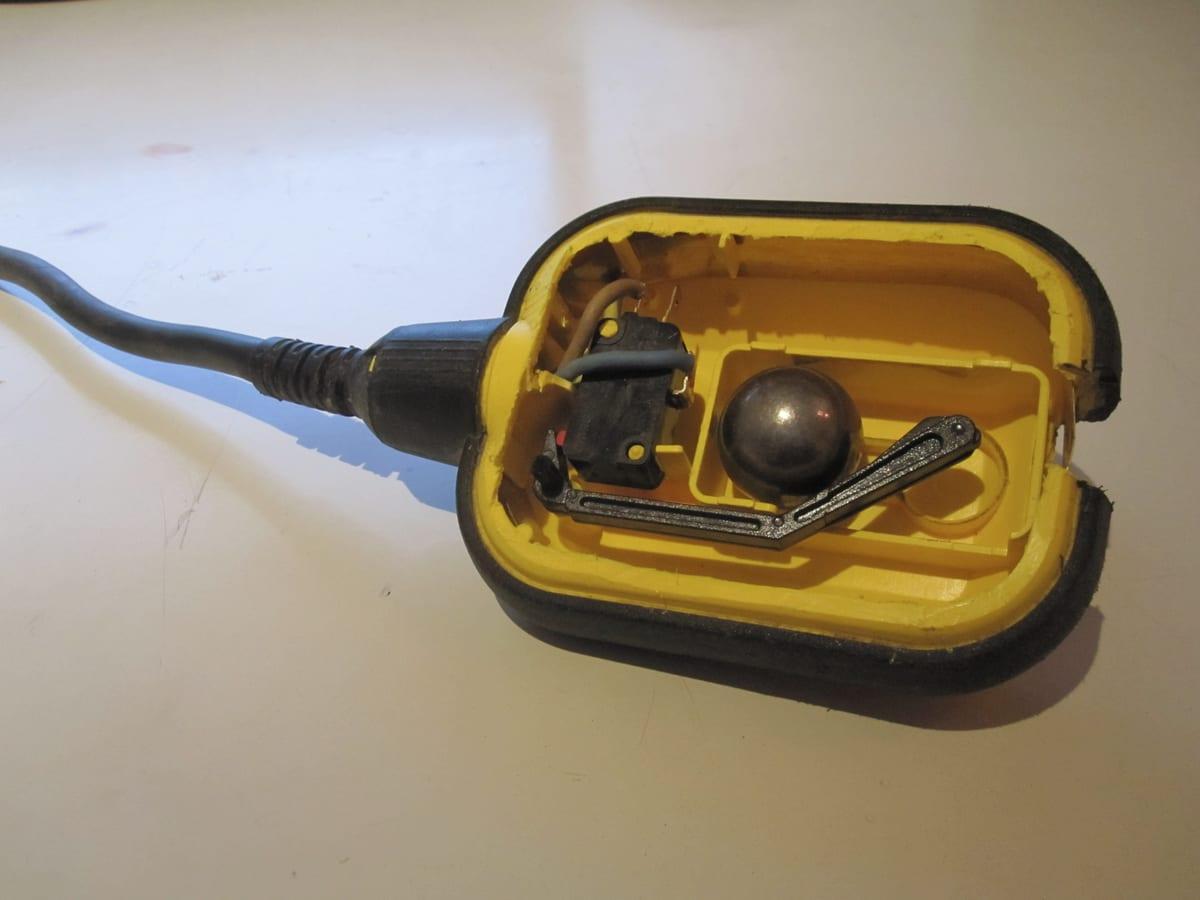
The best sump pump float switches
Motors rarely die first. Switches do — and unlike a motor, a switch is a part you can replace in twenty minutes for the price of a takeout meal.
The best sump pump check valves
A forty-dollar valve is the single most common reason a healthy pump appears to be failing. It is also the easiest thing in the pit to replace.

The best sump pumps for a high water table
When groundwater sits above your slab, the pit is not responding to storms. It is holding back the water table, continuously, forever.
How long do sump pumps last?
Seven to ten years is the honest range. What decides where you land in it is duty cycle, pit size and the switch — not the badge.