The best sump pumps for a basement
What a basement needs that a crawl space or a utility pit does not: margin. Here is what that buys, and what it costs.
We earn a commission if you buy through our Amazon links, at no cost to you. We do not bench-test these products and we never take free product — how we pick · affiliate disclosure
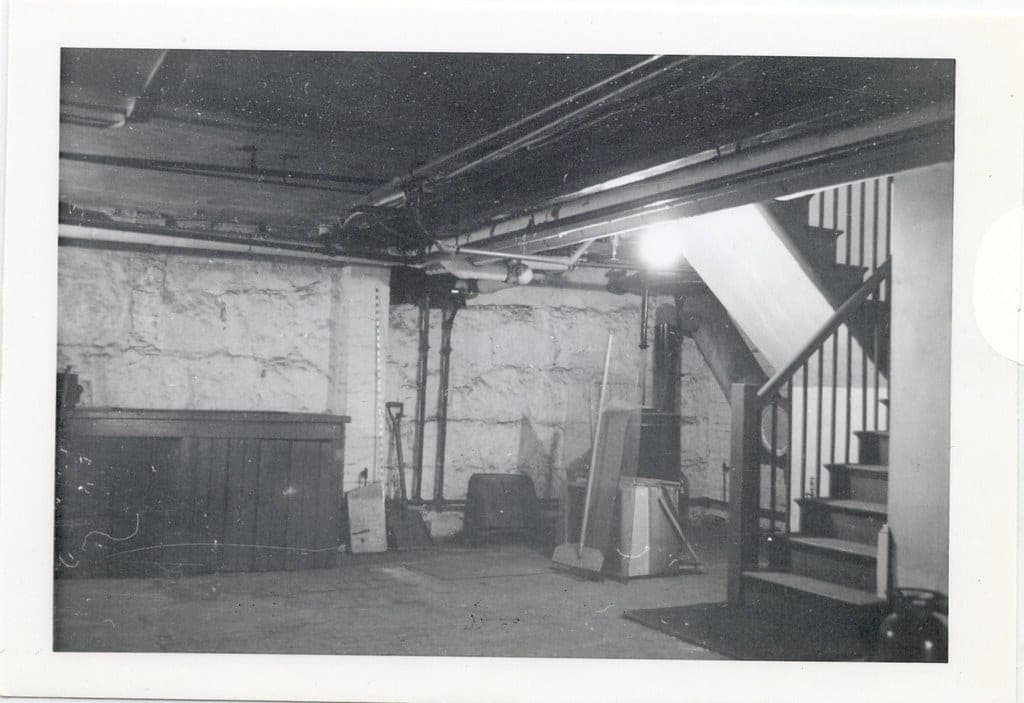
A basement is not a harder pumping problem than a crawl space. It is a more expensive one. The water arrives the same way and the lift is similar, but what is sitting on the floor is worth more and the consequences of a quiet failure are larger. That is the only reason the recommendations differ.
So the question that organizes this page is not horsepower, it is: what happens if this pump fails at 3am while you are away? If the answer is "a wet concrete floor", buy the sensible default. If the answer involves flooring, drywall or anything stored at floor level, buy the margin.
Quick picks
| # | Product | Best for | Score | Price |
|---|---|---|---|---|
| 1 |  Liberty Pumps 257The sealed vertical float and commercial build are exactly the margin a finished floor is worth. Liberty Pumps 257The sealed vertical float and commercial build are exactly the margin a finished floor is worth. | Finished basements | 8.7 | Check price on Amazon #ad we earn a commission · Amazon shows the current price |
| 2 |  Zoeller M53 Mighty-MateThe sensible default: cast iron, a proven switch, and nothing exotic to go wrong. Zoeller M53 Mighty-MateThe sensible default: cast iron, a proven switch, and nothing exotic to go wrong. | Unfinished basements | 8.7 | Check price on Amazon #ad we earn a commission · Amazon shows the current price |
| 3 |  Wayne CDU790A 1/2 HP cast-iron pump that undercuts the premium brands without feeling like a compromise. Wayne CDU790A 1/2 HP cast-iron pump that undercuts the premium brands without feeling like a compromise. | Best flow per dollar | 8.5 | Check price on Amazon #ad we earn a commission · Amazon shows the current price |
| 4 |  Zoeller 1099 (3/4 HP dual-switch submersible)Dual switches and 3/4 HP for the pit where a single switch failure is not survivable. Zoeller 1099 (3/4 HP dual-switch submersible)Dual switches and 3/4 HP for the pit where a single switch failure is not survivable. | A basement that floods badly | 8.7 | Check price on Amazon #ad we earn a commission · Amazon shows the current price |
Scores are ours and editorial, not lab measurements — see how we pick. Tap a row for the full write-up.
Liberty Pumps 257
The sealed vertical float and commercial build are exactly the margin a finished floor is worth.
#ad we earn a commission · Amazon shows the current price
| Type | Submersible, Class 25 cast iron |
|---|---|
| Horsepower | 1/3 HP |
| Electrical | 115 V, 5.2 A |
| Discharge | 1-1/2" NPT vertical female |
| Impeller | Thermoplastic vortex |
| Solids handling | 3/8" |
| Minimum pit | 10 in diameter |
| Maximum head | 23 ft (rated head 5 ft) |
| Flow, by lift | 2,640 GPH at 0 ft |
| Warranty | Three years |
The calculation in a finished basement is not about the pump's price, it is about what is downstream of a failure. Carpet, drywall, a laid floor and anything stored at floor level turn a pump failure from an inconvenience into a four-figure problem, and that changes which pump is rational.
Liberty's answer is to spend the money on the part that fails. The float is sealed, magnetic and vertical, so there is no arm to foul and no pivot to corrode. That is the version of reliability that is actually worth paying for.
What it gets right
- Sealed magnetic float has nothing to catch on a pit wall
- Quick-disconnect cord makes future service a ten-minute job
- Commercial-duty motor with a long warranty
Where it falls short
- Priced above its flow figures
- Heavier than the plastic alternatives
Specifications from Liberty 257 specification listing, Liberty 250-series distributor spec page.
Zoeller M53 Mighty-Mate
The sensible default: cast iron, a proven switch, and nothing exotic to go wrong.
#ad we earn a commission · Amazon shows the current price
| Type | Submersible, cast iron |
|---|---|
| Horsepower | 3/10 HP (sold as 1/3 HP) |
| Electrical | 115 V, 9.7 A, 60 Hz |
| Discharge | 1-1/2" NPT vertical female |
| Switch | Integral vertical float, on at 7-1/4", off at 3" |
| Solids handling | 1/2" |
| Shut-off head | 19.25 ft |
| Flow, by lift | 2,580 GPH at 0 ft · 2,040 GPH at 10 ft |
| Warranty | Three years |
For a basement with a concrete floor, a furnace and some storage on shelves, this is the pump to buy and then forget about. It is the most commonly installed residential sump pump in the country for reasons that hold up to inspection.
If you are replacing a failed pump and you do not want to spend the evening researching, buying this one and a new check valve is a decision you are unlikely to regret.
What it gets right
- Cast iron handles the long run times a storm demands
- Parts and installer familiarity are everywhere
- Published flow at multiple lifts, so you can actually size it
Where it falls short
- Needs float swing room
- Heavy to lift out single-handed
Specifications from Zoeller M53 (53-0001) specification sheet.
Wayne CDU790
A 1/2 HP cast-iron pump that undercuts the premium brands without feeling like a compromise.
#ad we earn a commission · Amazon shows the current price
| Type | Submersible, epoxy-coated cast iron |
|---|---|
| Horsepower | 1/3 HP |
| Electrical | 120 V, 9.5 A, PSC oil-filled motor |
| Discharge | 1-1/2" NPT |
| Cord | 8 ft |
| Switch | Vertical float |
| Flow, by lift | 4,600 GPH at 0 ft · 3,060 GPH at 10 ft |
| Warranty | Three years (the CDU790SS stainless variant is five) |
Wayne occupies a useful middle ground: cast iron and real flow, at a price closer to the budget brands than the premium ones. For a basement that needs more capacity than a 1/3 HP pump offers but does not justify a commercial-grade unit, this is the obvious buy.
The top-suction intake is worth calling out. Drawing water from the top of the pump rather than the bottom keeps the grit that settles in every pit away from the impeller, which is a design decision that pays off in year five, not year one.
What it gets right
- Strong flow at useful lifts for the price
- Cast-iron housing rather than the thermoplastic you often get at this price
- Top suction intake keeps pit debris out of the impeller
Where it falls short
- Switch is good rather than exceptional
- Fewer serviceable parts than the premium brands
Specifications from Wayne CDU790 specification listing, Wayne CDU790 distributor listing.
Zoeller 1099 (3/4 HP dual-switch submersible)
Dual switches and 3/4 HP for the pit where a single switch failure is not survivable.
#ad we earn a commission · Amazon shows the current price
| Type | Submersible, dual switch |
|---|---|
| Horsepower | 3/4 HP |
| Line | Zoeller at Home consumer range |
If the pump is the only thing between you and a basement that has flooded before, redundancy inside one unit is a real answer. The second switch means a stuck float does not take the system offline, which is the single most common way a pump fails without warning.
Be honest about pit size before buying it. Two floats need room to work independently, and in a standard 18-inch crock they will interfere with each other.
What it gets right
- A second switch provides redundancy at the exact point most pumps fail
- Serious flow for a pit with heavy inflow
- Cast-iron construction in Zoeller's long-running platform
Where it falls short
- Expensive
- Needs a large pit, both for the pump and for two floats to work independently
Specifications from Zoeller at Home sump pump range.
Finished basement? Add these three things
- A backup pump. A primary pump with no power is a paperweight, and the storms that fill your pit take the lines down. See battery backups.
- A water alarm on the floor beside the pit. Twelve dollars, and it turns an unnoticed failure into a phone call. See water leak detectors.
- A sealed pit lid. An open pit in a finished basement is a humidity source and a smell. See pit covers.
What does not help
Buying a bigger pump than the pit needs. In a basement with modest inflow, a 3/4 HP pump empties the pit in seconds, switches off, and does the same thing again two minutes later. Short-cycling wears the switch and the motor faster than steady running does, and it buys no additional protection against the storm you are worried about — the limiting factor in a storm is usually the discharge pipe, not the motor.
The real capacity upgrade for a basement that genuinely overwhelms a 1/3 HP pump is a second pit, or a wider discharge line, or finding out why that much water is arriving at the footing in the first place. That last one is usually a gutter.
Questions people ask
What sump pump is best for a finished basement?
One with a sealed, non-tangling float switch and a cast-iron housing, paired with a battery backup and a floor-level water alarm. The pump specification matters less than the fact that a failure is detected and covered.
Should a basement sump pump be on its own circuit?
Yes, ideally a dedicated circuit so that nothing else can trip the breaker that powers it. Local code requirements vary on GFCI protection for sump circuits, so check with a local electrician rather than assuming.
How far should the discharge be from the house?
At least ten feet, discharging onto ground that falls away. A discharge that ends at the foundation recirculates straight back into the drain tile and your pump spends the storm pumping the same water twice.
Do I need two sump pumps in a basement?
Two pumps in one pit, or a primary plus a battery backup, both provide redundancy. A backup is the more common answer because it also covers power loss, which a second mains pump does not.
Sources
Read next
The best sump pumps, ranked by what they move at real lift
Five pumps that cover almost every residential pit, compared on the number that matters: how much water they move at the height your basement actually needs.

The best battery backup sump pumps
The storm that fills your pit is the storm that takes the power out. This is the half of the system that works when the other half cannot.
The best water leak detectors
No detector stops a leak. What it stops is a leak running unnoticed for two days, which is where almost all of the damage comes from.

The best sump pit covers
An open pit is an evaporation surface in the middle of your basement. A lid is the cheapest humidity fix there is.

Your basement flooded. Do these things in this order.
Electricity first, source second, water third, drying fourth. Getting the order wrong is how people get hurt or lose the insurance claim.