The best basement waterproofing sealers
Sealers are judged almost entirely on preparation. The same product is excellent on a clean bare wall and useless on a painted one.
We earn a commission if you buy through our Amazon links, at no cost to you. We do not bench-test these products and we never take free product — how we pick · affiliate disclosure
Sealer is a loose word in this aisle. It covers interior masonry coatings, concrete floor paints, penetrating silicate treatments and exterior membranes, and they are not alternatives to each other — they address different parts of the wall assembly and different water problems.
Three places a sealer can go
| Location | Product | Stops |
|---|---|---|
| Inside face of the wall | Masonry waterproofer | Vapor and light seepage through porous masonry |
| Floor slab | Concrete floor coating | Dust and staining — not moisture from below |
| Outside face of the wall | Dimpled drainage membrane | Water reaching the wall at all |
| Cracks and holes | Hydraulic cement or injection | Discrete leaks — see crack repair |
Quick picks
| # | Product | Best for | Score | Price |
|---|---|---|---|---|
| 1 |  DRYLOK Extreme Masonry WaterprooferThe highest-rated masonry waterproofer in the range, for bare block and poured concrete. DRYLOK Extreme Masonry WaterprooferThe highest-rated masonry waterproofer in the range, for bare block and poured concrete. | Walls | 8.5 | Check price on Amazon #ad we earn a commission · Amazon shows the current price |
| 2 | 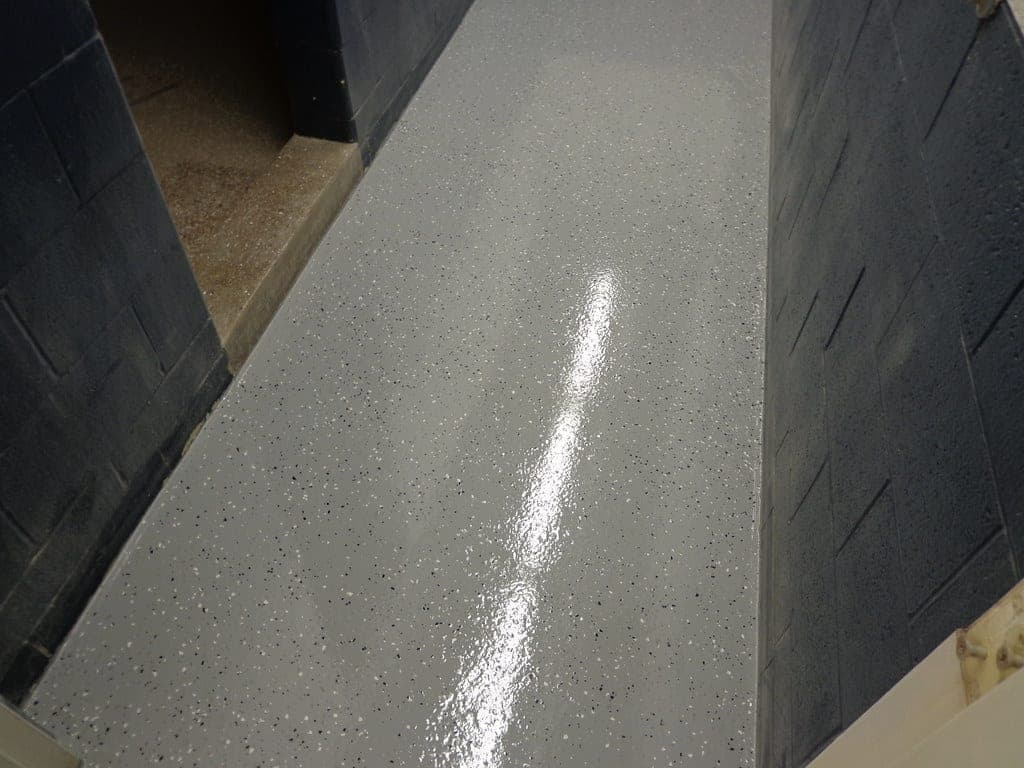 DRYLOK concrete floor paintA concrete floor coating for appearance and dust control, once the moisture question is settled. DRYLOK concrete floor paintA concrete floor coating for appearance and dust control, once the moisture question is settled. | Slabs | 8.0 | Check price on Amazon #ad we earn a commission · Amazon shows the current price |
| 3 |  Dimpled foundation drainage membraneThe only approach on this page that addresses water before it reaches the masonry at all. Dimpled foundation drainage membraneThe only approach on this page that addresses water before it reaches the masonry at all. | The outside of the wall | 8.1 | Check price on Amazon #ad we earn a commission · Amazon shows the current price |
Scores are ours and editorial, not lab measurements — see how we pick. Tap a row for the full write-up.
DRYLOK Extreme Masonry Waterproofer
The highest-rated masonry waterproofer in the range, for bare block and poured concrete.
#ad we earn a commission · Amazon shows the current price
| Type | Latex masonry waterproofer for interior and exterior masonry |
|---|---|
| Hydrostatic resistance | 15 PSI, tested to ASTM D-7088 |
| Coverage | 75 sq ft/gal first coat, 75 to 100 sq ft/gal second coat |
| Film build | 13 to 21 mils wet per coat; 17 mils dry minimum over two coats |
| Mildew | Biocide in the film to resist mildew growth on the dry paint |
| Shelf life | 5 years unopened |
| Warranty | 15 years, fully transferable, per UGL |
Everything about whether this product succeeds happens before the lid comes off. Strip to bare masonry, remove efflorescence, plug active leaks with hydraulic cement, then brush two coats in. Done that way it is genuinely effective on a porous wall.
What it gets right
- Brushed into the masonry rather than rolled over it, which is what seals the pores
- Manufacturer warranty against a stated hydrostatic pressure
- Resists the alkalinity that destroys ordinary paint on masonry
Where it falls short
- Bare, unpainted surfaces only
- Two full coats required
- Not a fix for pressure at the floor joint
Specifications from DRYLOK Extreme product data sheet, DRYLOK Extreme product page.
DRYLOK concrete floor paint
A concrete floor coating for appearance and dust control, once the moisture question is settled.
#ad we earn a commission · Amazon shows the current price
| Type | Latex floor paint for interior and exterior concrete |
|---|---|
| Use | Basement and garage slabs, after the slab is dry and etched |
Tape a two-foot square of plastic tightly to the slab and leave it a day. Dry underneath means you can coat. Damp underneath means the slab is passing moisture and any coating will peel, however good it is.
What it gets right
- Formulated for foot traffic
- Stops concrete dusting
- Makes the space brighter and easier to clean
Where it falls short
- Not a hydrostatic solution
- Lifts if the slab passes moisture from below
Specifications from DRYLOK product range.
Dimpled foundation drainage membrane
The only approach on this page that addresses water before it reaches the masonry at all.
#ad we earn a commission · Amazon shows the current price
| Type | Dimpled HDPE air-gap membrane for exterior foundation walls |
|---|---|
| How it works | Holds an air gap against the wall so water runs down to the footing drain |
| Reality check | Installing it means excavating to the footing, so this is a renovation item, not a weekend fix |
This is the real fix for sustained hydrostatic pressure, and the reason most people do not do it is cost and disruption rather than any doubt about whether it works.
If you are already excavating for another reason — replacing a sewer lateral, underpinning, landscaping to the foundation — the marginal cost of doing it properly while the trench is open is much lower than doing it alone later.
What it gets right
- Keeps water off the wall instead of trying to hold it back from inside
- Dimpled profile creates a drainage plane down to the footing drain
- Decades of service life once buried
Where it falls short
- Requires excavation to the footing
- Expensive compared with everything else here
- Needs a working footing drain to discharge into
Specifications from Amazon listing (search).
The preparation rules nobody enjoys
- Bare masonry or nothing. Every interior waterproofer on the market requires it, and the most common failure is ignoring it.
- Remove efflorescence completely. Those white deposits are salts left by evaporating water. A coating over them has nothing to bond to.
- Plug active leaks first with hydraulic cement, and give it the full cure time.
- Respect temperature and humidity limits. A cold damp basement in February is outside most products' application window, and the result is a coating that never cures properly.
- Two coats. Always. The first penetrates, the second builds the film that seals.
If the surface preparation sounds like more work than the coating, that is the correct impression. Preparation is the job.
Questions people ask
What is the difference between a sealer and waterproofing paint?
In this category they largely overlap: a masonry waterproofer is a thick, filled coating brushed into the surface. Penetrating sealers soak in and densify the concrete instead, which reduces vapor transmission but does not build a film.
Can I seal a basement floor?
You can coat it for appearance and dust control. You cannot seal against moisture rising through the slab — a coating over rising moisture will lift. Test with a taped plastic square first.
Is an exterior membrane worth the cost?
It is the only approach that stops water reaching the wall, so for persistent hydrostatic pressure it is the real answer. The cost is excavation, which is why most people exhaust the cheaper options first.
How long before I can paint over a sealer?
Follow the manufacturer's recoat interval, which is usually measured in hours but can be longer in cold or humid conditions. Rushing it is a reliable way to ruin both coats.
Sources
Read next

The best basement waterproofing paint
These products work on exactly one problem. Used on the right wall they are excellent; used on the wrong one they peel off within a year.
Foundation waterproofing membranes
Every interior product manages water that has already reached the wall. A membrane stops it getting there, which is why it is the only permanent answer to pressure.
How to waterproof a basement
Start outside. A startling share of wet basements are fixed with a ladder and an afternoon, and no product at all.
The best hydraulic cement for a leak you need to stop now
The only product in this aisle you can use while water is actively coming through the wall. Every basement should own a tub.

Interior vs exterior basement waterproofing
One manages water that has reached the wall. The other stops it arriving. They solve different problems and the sales pitch rarely says so.