The best battery backup for an existing sump pump
Your primary pump is fine. You want the outage covered without tearing the pit apart. These are the systems that do that.
We earn a commission if you buy through our Amazon links, at no cost to you. We do not bench-test these products and we never take free product — how we pick · affiliate disclosure

The best battery backup for an existing sump pump is the Zoeller AquaNot 508. It drops into the basin alongside the pump you already have, publishes 1,800 GPH at ten feet of lift, and — the part that matters most in a machine that sits idle for years — tests itself and alerts separately on power loss, high water and a blocked switch. It is the right buy for a homeowner whose primary pump is healthy and who wants the power cut covered this weekend rather than a whole new system.
This page is specifically about adding DC protection to a working pump. If your primary has failed and you are replacing both at once, a combination unit is cheaper and easier — see the best combination sump pumps. If you would rather not own a battery at all, water-powered backups need no electricity, but they need municipal water pressure.
Quick picks
| # | Product | Best for | Score | Price |
|---|---|---|---|---|
| 1 | 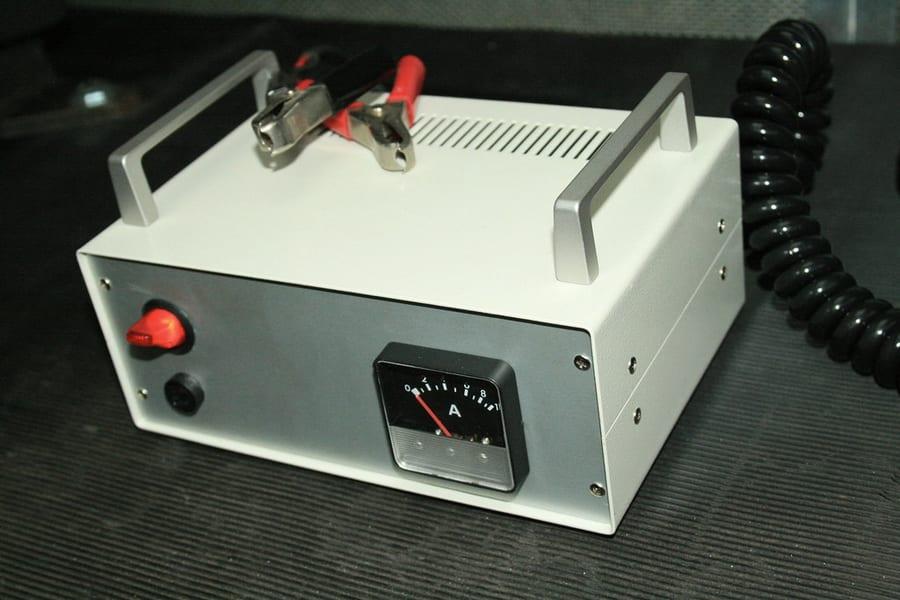 Zoeller AquaNot 508 battery backup systemA self-testing 12 V DC system that alerts on power loss, high water and a blocked switch, with 1,800 GPH published at ten feet. | Adding a backup and then forgetting about it | 9.0 | Check price on Amazon #ad we earn a commission · Amazon shows the current price |
| 2 |  Basement Watchdog Emergency (BWE)A 1/3 HP DC pump with a dual float switch and a battery fluid-level sensor, drawing 6.5 A at 12 V. | Redundancy at the float, where failures actually start | 8.6 | Check price on Amazon #ad we earn a commission · Amazon shows the current price |
| 3 |  Wayne ESP25N battery backup system2,340 GPH at five feet and 1,680 GPH at ten in an epoxy-coated steel body with a cast-iron base, on one Group 27 battery. | The most DC flow at mid lift | 8.5 | Check price on Amazon #ad we earn a commission · Amazon shows the current price |
| 4 | Universal Power Group UB121000 (12 V 100 Ah AGM)A sealed 12 V 100 Ah AGM deep-cycle battery in the Group 27/31 capacity class, with nothing to top up. | The battery the rest of it depends on | 8.8 | Check price on Amazon #ad we earn a commission · Amazon shows the current price |
Scores are ours and editorial, not lab measurements — see how we pick. Tap a row for the full write-up.
Measure three things before you buy anything
- The inside diameter of your basin, at the rim and near the bottom. The Wayne ESP25N states a 14 inch minimum. A second pump, a second float and a second check valve all have to fit beside what is already there.
- Your lift, from the bottom of the basin to the highest point of the discharge pipe. Every flow figure on this page is meaningless without it.
- Where the battery will sit. It needs a dry, level spot off the floor, close enough for the controller's cable and clear of the pit so it is not the thing that gets flooded.
Those three measurements eliminate more options than any specification does. A basin that is genuinely too narrow is the single most common reason an add-on backup install goes wrong, and it is discovered at the worst possible moment: with the primary pump already out of the pit.
The published figures, side by side
| Zoeller AquaNot 508 | Basement Watchdog BWE | Wayne ESP25N | |
|---|---|---|---|
| Flow at 0 ft | Not published | 2,000 GPH | 2,900 GPH |
| Flow at 5 ft | 2,340 GPH | Not published | 2,340 GPH |
| Flow at 10 ft | 1,800 GPH | 1,000 GPH | 1,680 GPH |
| Flow at 15 ft | Not published | Not published | 600 GPH |
| Pump draw | Not published | 6.5 A at 12 V | Not published |
| Switch | Self-testing controller | Dual float plus fluid-level sensor | Float with LED display on the battery case |
| Housing | Not published | Thermoplastic | Epoxy-coated steel, cast-iron base |
| Minimum basin | Not published | Not published | 14 in diameter |
| Battery included? | No, on most SKUs | No | No — one Group 27 |
| Warranty | Three years, limited | Not published | Two years |
Zoeller AquaNot 508 battery backup system
A self-testing 12 V DC system that alerts on power loss, high water and a blocked switch, with 1,800 GPH published at ten feet.
#ad we earn a commission · Amazon shows the current price
| Type | 12 V DC battery backup pump, self-testing |
|---|---|
| Monitoring | Alerts on power outage, high water and switch obstruction |
| Run time | Up to about 6 hours of continuous pumping |
| Battery | 12 V deep-cycle, sold separately on most SKUs |
| Flow, by lift | 2,340 GPH at 5 ft · 1,800 GPH at 10 ft |
| Warranty | Three years, limited |
This is the system we would add to a working primary pump. The specification that earns it the top spot is not the flow — it is the self-test. A backup pump is a machine that does nothing for years and then has to work perfectly for six hours on one particular night, which is exactly the duty cycle under which quiet failure is most likely and least noticed.
Zoeller publishes 2,340 GPH at five feet and 1,800 GPH at ten feet, so you can size it against your own lift rather than against a zero-lift number. Read those figures next to your primary pump's: a DC backup is not supposed to match the primary, it is supposed to stay ahead of the inflow for long enough that the power comes back.
The three separate alerts matter more than they look. Power outage tells you the system is now the only thing working. High water tells you it is losing. Switch obstruction tells you something is fouled before either of the first two happens. Most cheap backups give you one buzzer for all three states.
What it gets right
- 2,340 GPH published at five feet and 1,800 GPH at ten feet — a real curve, not a zero-lift headline
- Self-testing controller, so the system tells you it is still alive instead of waiting for the storm to find out
- Alerts separately on power outage, high water and switch obstruction
- Up to about six hours of continuous pumping on a charged battery, per Zoeller
- Three-year limited warranty
Where it falls short
- Battery sold separately on most SKUs, and it is a real part of the cost
- Needs room in the basin for a second pump and a second float
- The controller wants a dry spot near the pit to live on
Specifications from Zoeller AquaNot 508 battery backup listing, Zoeller 508-0006 AquaNot with M53 primary.
Basement Watchdog Emergency (BWE)
A 1/3 HP DC pump with a dual float switch and a battery fluid-level sensor, drawing 6.5 A at 12 V.
#ad we earn a commission · Amazon shows the current price
| Type | 12 V DC battery backup pump, thermoplastic |
|---|---|
| Horsepower | 1/3 HP |
| Current draw | 6.5 A at 12 V |
| Switch | Dual float switch plus a battery fluid level sensor |
| Charger | 0.4 A |
| Included | Control unit, pump with 1-1/2" PVC adapter, battery box, charger |
| Battery | Not included, sold separately |
| Flow, by lift | 2,000 GPH at 0 ft · 1,000 GPH at 10 ft |
Ask anyone who services backup systems what fails and the answer is the float, not the motor. The BWE's answer to that is two floats and a controller that will run the pump if either one calls. In a system whose whole job is to work unattended after years of inactivity, that is the right place to spend the engineering.
The 6.5 A draw at 12 V is the other quietly useful number. Battery runtime is capacity divided by draw, so a leaner pump buys you hours from the same battery. The trade is on the flow curve: 2,000 GPH at zero lift and 1,000 GPH at ten feet is a steep fall, and ten feet is an ordinary basement lift. Size honestly against your own discharge before choosing it.
What it gets right
- Dual float switch, so one stuck float does not stop the pump — the single most common backup failure
- Battery fluid level sensor on top of the usual charge monitoring
- 6.5 A at 12 V draw, which stretches a given battery further than thirstier DC pumps
- Ships as a complete kit: control unit, pump with a 1-1/2" PVC adapter, battery box and charger
- Low charger draw at 0.4 A
Where it falls short
- 2,000 GPH at zero lift falling to 1,000 GPH at ten feet — the steepest drop-off in this group
- Thermoplastic pump housing
- Battery not included
Specifications from Basement Watchdog BWE specification listing, Basement Watchdog BWE retail listing.
Wayne ESP25N battery backup system
2,340 GPH at five feet and 1,680 GPH at ten in an epoxy-coated steel body with a cast-iron base, on one Group 27 battery.
#ad we earn a commission · Amazon shows the current price
| Type | 12 V DC battery backup pump |
|---|---|
| Housing | Epoxy-coated steel with a cast-iron base |
| Impeller | Corrosion-resistant thermoplastic |
| Discharge | 1-1/2" NPT |
| Battery | One Group 27 deep-cycle battery, sold separately |
| Minimum basin | 14 in diameter |
| Monitoring | LED display and audible alarm on the battery case |
| Flow, by lift | 2,900 GPH at 0 ft · 2,340 GPH at 5 ft · 1,680 GPH at 10 ft · 600 GPH at 15 ft |
| Warranty | Two years |
Wayne publishes more of this pump's curve than anyone else in the group publishes of theirs, and the shape of it is the useful part. Flow is strong to five feet, respectable at ten, and collapses by fifteen. That is characteristic of DC backup pumps generally, and seeing it written down is worth more than a bigger headline figure.
The 14 inch minimum basin is the thing that most often decides this purchase. Measure the inside diameter of your basin at the rim and at the bottom before ordering anything on this page, because the primary pump, its float, the backup pump, its float and two check valves all have to coexist down there.
What it gets right
- Published at four points on the curve: 2,900 GPH at 0 ft, 2,340 at 5 ft, 1,680 at 10 ft, 600 at 15 ft
- Epoxy-coated steel housing on a cast-iron base
- Corrosion-resistant thermoplastic impeller
- LED display and audible alarm live on the battery case where you will see them
- Runs on one Group 27 deep-cycle battery
Where it falls short
- Needs a basin at least 14 inches in diameter — check before you order
- Two-year warranty, the shortest here
- 600 GPH at fifteen feet is a hard ceiling on high-lift installations
Specifications from Wayne ESP25N specification listing, Wayne ESP25 product listing.
Universal Power Group UB121000 (12 V 100 Ah AGM)
A sealed 12 V 100 Ah AGM deep-cycle battery in the Group 27/31 capacity class, with nothing to top up.
#ad we earn a commission · Amazon shows the current price
| Type | Sealed AGM deep-cycle, maintenance free |
|---|---|
| Nominal | 12 V, 100 Ah |
| Use | Group 27/31 class capacity for a 12 V backup pump controller |
Every system above is sold without a battery, and the battery is what decides how long the backup actually runs. Runtime is roughly usable capacity divided by the pump's draw: a 100 Ah battery against the BWE's 6.5 A gives a far longer night than a 40 Ah token battery would, even before you allow for the fact that a standby battery never gives you its full nameplate.
AGM is the sensible default in a basement. There is nothing to top up and nothing to vent, which matters in a finished space. The one thing to check before ordering is that your controller's charger is specified for AGM — a charging profile intended for flooded cells will shorten an AGM battery's life.
What it gets right
- 100 Ah nominal at 12 V, which is real runtime rather than a token reserve
- Sealed AGM, so there is no electrolyte to check and no venting requirement in a finished space
- Group 27/31 class capacity, which suits the controllers above
Where it falls short
- Heavy, and it has to be carried to the pit
- Still a consumable — AGM standby batteries do not last forever
- Check your controller's charging profile supports AGM before buying
Specifications from Amazon listing (search).
How long will it actually run?
Runtime is battery capacity divided by the pump's current draw, derated for the fact that a standby battery never delivers its nameplate and that the pump only runs part of the time. The only pump draw published across our registry is the BWE's 6.5 A at 12 V; against a 100 Ah AGM battery that is a long night of intermittent pumping, and a much shorter one if the pit is running almost continuously.
Zoeller quotes up to about six hours of continuous pumping for the AquaNot 508, and continuous is the key word — few pits run flat out, so a real outage usually stretches much further. The arithmetic, with the variables laid out, is in how long does a sump pump battery last.
Add-on backup, combination unit or water-powered?
| Situation | What to buy |
|---|---|
| Primary pump is healthy, pit has room | An add-on DC backup from this page |
| Primary pump has failed or is near end of life | A combination primary + backup unit |
| Basin is too narrow for a second pump | A ceiling-mounted water-powered backup |
| No municipal water supply (private well) | DC backup — a water-powered unit will not work |
| Outages are long rather than frequent | DC backup plus a generator for the long tail |
That last row is worth pausing on. A battery covers the first several hours well and nothing after that. A generator covers an indefinite outage but only while someone is home to run it. If your area loses power for days rather than hours, read battery backup vs generator before choosing one or the other.
Questions people ask
What is the best battery backup for an existing sump pump?
The Zoeller AquaNot 508. It installs in the basin beside your current pump, publishes 1,800 GPH at ten feet of lift, and uses a self-testing controller that alerts separately on power outage, high water and switch obstruction. The Basement Watchdog BWE is the pick if you want dual-float redundancy; the Wayne ESP25N publishes the most of its flow curve.
Can I add a battery backup to the sump pump I already have?
Yes. An add-on backup is a second, DC-powered pump that sits in the same basin with its own float and its own check valve. The primary pump stays exactly as it is. The constraint is basin width: the Wayne ESP25N, for example, requires a basin at least 14 inches in diameter.
Does a battery backup come with a battery?
Usually not. All three systems here are sold without one on their common SKUs, and the battery is a significant part of the real cost. A sealed AGM deep-cycle battery in the Group 27/31 capacity class is the sensible default for a basement, as long as your controller's charger is specified for AGM.
Do I need a second check valve for the backup pump?
Yes. Two pumps sharing one discharge line without two check valves will push water into each other's outlets rather than up the pipe. It is a small part and the installation does not work properly without it.
How long does a sump pump battery backup run?
Zoeller quotes up to about six hours of continuous pumping for the AquaNot 508. Real outages usually stretch much further than that because a pit rarely runs flat out. Runtime is battery capacity divided by pump draw, derated — the Basement Watchdog BWE's 6.5 A at 12 V against a 100 Ah battery is a long night of intermittent cycling.
Sources
Read next

The best battery backup sump pumps
The storm that fills your pit is the storm that takes the power out. This is the half of the system that works when the other half cannot.
How to install a battery backup sump pump
A weekend job with one awkward decision in the middle: whether the backup gets its own discharge or shares the primary's.
The best batteries for a backup sump pump
Your backup system is only as good as the battery behind it, and the battery is the part everyone forgets until the night it matters.
How long does a sump pump battery last?
Think in cycles pumped, not hours elapsed. And replace the battery on age, because it will test fine right up until it does not.

The best combination sump pump systems
One box, two pumps, floats already set at the right heights. It removes the mistake that disables most home-built backup installations.