Vertical vs tethered float switch
The switch is the part that fails, and the two common types fail differently. Pit width decides most of this argument before anything else does.
We earn a commission if you buy through our Amazon links, at no cost to you. We do not bench-test these products and we never take free product — how we pick · affiliate disclosure

Choose a tethered float if your basin is roughly 18 inches across or wider and holds one pump; choose a vertical or solid-state switch if it is narrower or crowded. That is the decision, and pit geometry settles it before any other consideration does. A tethered float gives you the longest cycles and the longest pump life, but it swings through an arc and needs clear water to swing through. A vertical float moves straight up and down in a few inches of space, and a solid-state sensor does not move at all.
The reason this matters is that the switch, not the motor, is the part of a sump pump that fails. Get the switch type right and you remove the most common cause of a flooded basement; get it wrong and you will be back in the pit within a couple of years.
Quick picks
| # | Product | Best for | Score | Price |
|---|---|---|---|---|
| 1 | 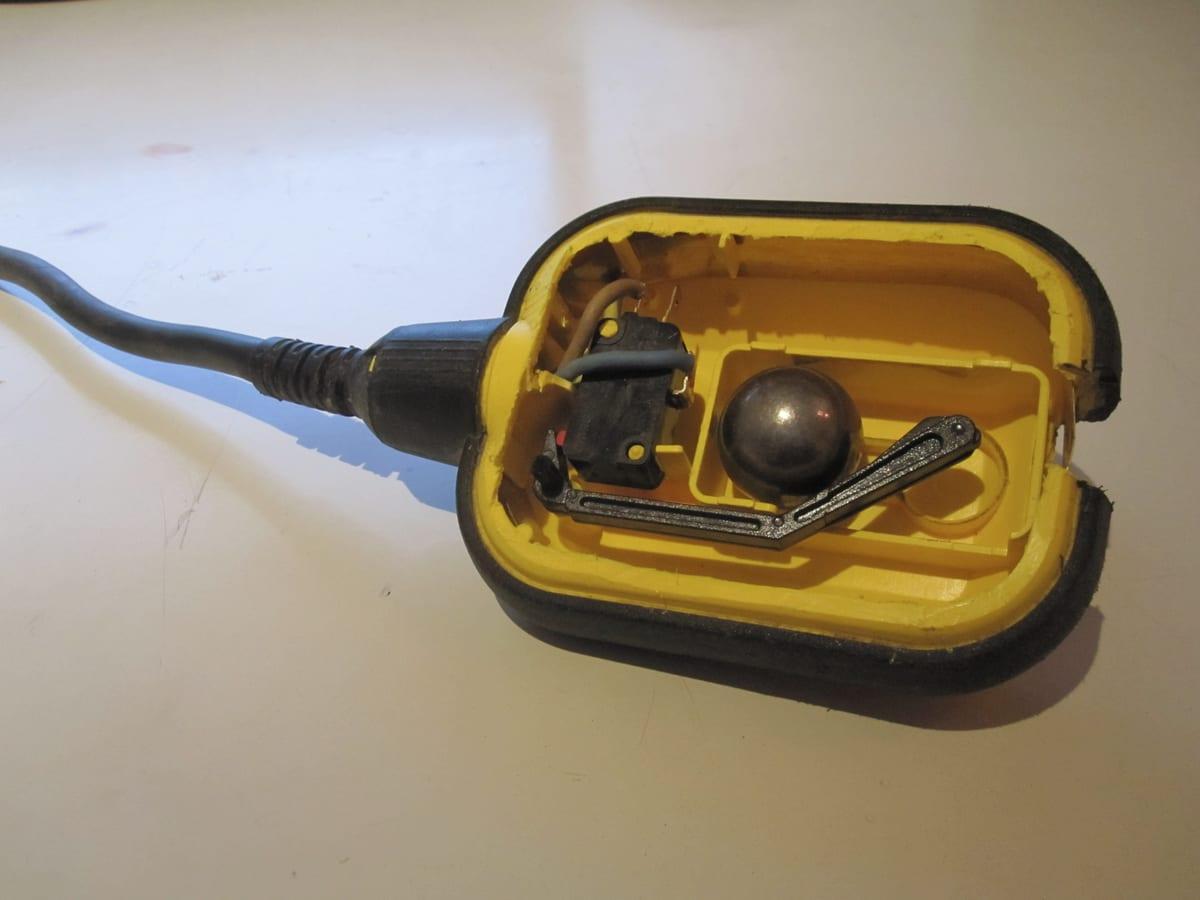 SJE-Rhombus tethered float switchA tethered float on a piggyback plug with a tether adjustable up to 24 inches, which sets the longest on-off spread available. | A wide pit and the longest possible cycles | 8.6 | Check price on Amazon #ad we earn a commission · Amazon shows the current price |
| 2 |  LevelGuard Z24800A1Z solid-state switchSolid-state field-effect level sensing with no float and no moving arm, mounted vertically so it needs almost no horizontal space. | A narrow pit, or a float you are tired of replacing | 8.7 | Check price on Amazon #ad we earn a commission · Amazon shows the current price |
| 3 | Basement Watchdog BWC1 dual float switchA piggyback dual float switch with a controller that triggers on about a third of an inch of rise and runs the pump about ten extra seconds after the float drops. | Redundancy, if you only change one part | 8.5 | Check price on Amazon #ad we earn a commission · Amazon shows the current price |
Scores are ours and editorial, not lab measurements — see how we pick. Tap a row for the full write-up.
How each switch type actually works
| Type | How it senses | Pit space needed | Cycle length | Typical failure |
|---|---|---|---|---|
| Tethered float | A sealed bulb on a cord tips past about 45 degrees as the level changes | Wide — the float swings in an arc | Longest, and adjustable by tether length | Float hangs up on the pump, pipe or basin wall |
| Vertical float | A float rides up and down a fixed rod or stem | Narrow — a few inches of clearance | Short and fixed by the pump's design | Float binds on the rod, or debris jams the travel |
| Diaphragm / pressure | Water pressure at depth flexes a diaphragm | Very little | Short and fixed | Diaphragm fatigues, or the sensing port silts up |
| Solid-state | Field-effect sensing of water at fixed levels, nothing moves | Very little | Set by the sensor's design and position | Electronic rather than mechanical; not inspectable |
Note the trade running down that table. The switches that need the least space give you the shortest, least adjustable cycles, and the switch that gives you the best cycles needs the most room. There is no type that is simply better; there is a type that suits your basin.
Why cycle length is the real stake
Motor starts, not running hours, are what wear a sump pump out. The number of starts over a season is the water arriving divided by the volume the pump removes per cycle — and that volume is set entirely by the distance between the switch's on point and its off point.
Compare two pumps in our registry. The Zoeller M53 uses an integral vertical float that switches on at 7-1/4 inches and off at 3 inches, a spread of about 4-1/4 inches. The Wayne CDU980E switches on at 9 inches and off at 4 inches, a spread of 5 inches. A tethered float with a 24 inch tether can be set to a spread several times either figure. For the same groundwater, that is several times fewer motor starts per season.
- Wider basin plus longer spread equals fewer cycles. The two multiply, which is why basin diameter is a pump-life decision — see what size sump pit.
- Do not set the off point so low that the pump runs dry. A submersible needs water around it for cooling, and the water left in the pit is deliberate — how high should the water be in a sump pit covers the limits.
- A failed check valve destroys any switch setting. Water falling back down the discharge refills the pit and restarts the pump immediately. Check the valve before blaming the switch.
SJE-Rhombus tethered float switch
A tethered float on a piggyback plug with a tether adjustable up to 24 inches, which sets the longest on-off spread available.
#ad we earn a commission · Amazon shows the current price
| Type | Tethered float, piggyback plug |
|---|---|
| Rating | Up to 230 VAC, 13 A maximum |
| Switching points | About 45 degrees above and below horizontal |
| Tether | Up to 24 in, which sets the on/off spread |
| Liquid temperature | Up to 140 F |
A tethered float is a sealed bulb on a cord. As the water rises the bulb floats up, tips past roughly 45 degrees from horizontal and closes the switch; as the level falls it tips back the other way and opens it. The length of cord between the float and its anchor sets how far the water has to rise and fall between those two events.
That adjustability is the whole reason to choose this type. Cycles are what wear sump pumps out, and the number of cycles is the inflow divided by the volume between the on and off points. A long tether in a wide basin gives you the longest, least frequent cycles available — which is the single most effective thing you can do for pump life without changing the pump.
The cost of that is space. The float does not move straight up and down; it swings. In an 18 inch or wider basin with one pump, there is room for the arc. In a narrow pit, or a pit already holding a backup pump and two check valves, the float will eventually catch on something, and a float that cannot fall is a pump that never stops.
What it gets right
- Tether adjustable up to 24 in, so you set the on-off spread rather than accepting the pump's built-in one
- Switching points at roughly 45 degrees above and below horizontal — predictable and documented
- Rated up to 230 VAC and 13 A, which covers any residential sump pump
- Liquid temperature up to 140 F
- Piggyback plug, so fitting it means unplugging the pump and plugging it into the switch
Where it falls short
- Needs horizontal swing room — the float arcs out from the pump and back
- In a narrow or crowded pit it will hang up on the pump body, the discharge pipe or the basin wall
- A longer tether means a deeper draw-down, so the pump runs longer each cycle
Specifications from Amazon listing (search).
LevelGuard Z24800A1Z solid-state switch
Solid-state field-effect level sensing with no float and no moving arm, mounted vertically so it needs almost no horizontal space.
#ad we earn a commission · Amazon shows the current price
| Type | Solid-state field-effect level sensing, no float and no moving arm |
|---|---|
| Orientation | Vertical, so it needs very little horizontal space in the pit |
This is the answer when geometry has already ruled out a tethered float. It senses water level electronically rather than mechanically, so there is nothing to swing, nothing to arc into the discharge pipe, and nothing to hang up on the basin wall. In a 10 or 12 inch basin, or a basin with a primary and a backup pump both in it, that is often the only clean solution.
It is also the right choice if you are on your second or third float in a few years. Repeated float failures in the same pit are almost never bad luck — they are a symptom of a pit that is too tight for the switch in it. Replacing like with like will reproduce the problem.
Be clear-eyed about the trade. You are swapping a mechanical failure mode you understand for an electronic one you cannot inspect, and you lose the free adjustability of a tether. What you gain is a switch that does not care how crowded the pit is.
What it gets right
- No float, no hinge and no moving arm, so the classic mechanical failure modes do not apply
- Vertical body needs very little horizontal space in the pit
- Field-effect sensing is unaffected by the float hanging up on the pump or the pipe
- Works in pits too crowded for any tethered float
Where it falls short
- Costs more than a mechanical switch
- Electronics in a wet pit are a different reliability question, not an absent one
- Switching levels are set by the sensor's design and position rather than freely adjustable like a tether
- No audible click to tell you it operated
Specifications from Amazon listing (search).
Basement Watchdog BWC1 dual float switch
A piggyback dual float switch with a controller that triggers on about a third of an inch of rise and runs the pump about ten extra seconds after the float drops.
#ad we earn a commission · Amazon shows the current price
| Type | Piggyback dual float switch with a controller |
|---|---|
| Redundancy | Two floats, so one stuck float does not stop the pump |
| Trigger | Activates when water raises the float about 1/3" |
| Run-on | Controller runs the pump about 10 extra seconds after the float drops |
If your reason for reading this page is that a stuck float let the basement flood, this is the part to buy. Two independent floats with a controller that acts on either one removes the single failure that causes most sump pump floods — not the motor burning out, but a float wedged against the pipe while the water rises past it.
The run-on timer is a subtler benefit. Because the controller keeps the pump going for about ten seconds after the float drops, the pit is drawn down below the float's own off point, which lengthens the next cycle. That partly offsets the short 1/3 inch trigger travel. Partly — in a small basin this is still a more frequent cycler than a long tether would be.
What it gets right
- Two floats, so a single stuck float does not stop the pump — the dominant failure mode, eliminated
- Triggers on roughly 1/3 in of rise, which is sensitive enough to catch a slow fill
- Controller runs the pump about ten seconds past the float drop, pulling the level down further than the float alone would
- Piggyback plug install, no rewiring
Where it falls short
- The short trigger travel means short cycles unless the run-on is doing the work
- Two floats need more pit room than one, not less
- Another powered controller to find a dry spot for
Specifications from Basement Watchdog BWC1 switch listing.
Can you change a pump's switch?
Usually yes, and more easily than people expect, because of the piggyback plug. A piggyback switch has a plug on one side and a receptacle on the other: the pump plugs into the switch, the switch plugs into the outlet, and the switch gates power to the pump. No rewiring, no tools beyond what it takes to mount the float.
Two conditions. First, the pump has to be a plug-in model rather than one with an integral non-replaceable switch — some pumps, including several in our registry, use a switch cast into the housing. Second, the switch's electrical rating has to cover the pump: the SJE-Rhombus tethered float is rated to 230 VAC and 13 A, which comfortably covers a Zoeller M53 at 9.7 A or a Wayne CDU790 at 9.5 A.
Choosing in four questions
- How wide is the basin, measured inside at the bottom? Under about 14 inches: vertical or solid-state only. 14 to 18: vertical, or a short tether with care. Over 18 with one pump: tethered.
- Is there a second pump in the pit? If yes, treat the basin as narrow regardless of its diameter, and go vertical or solid-state.
- Have you replaced a float before in this pit? If yes, the pit is telling you it is too tight for that switch. Change type, not brand.
- Is the problem actually the switch? Short cycling with a healthy float is usually a failed check valve. Confirm before buying — sump pump float switch not working walks the diagnosis.
Questions people ask
Is a vertical or tethered float switch better for a sump pump?
Neither is better in general — pit width decides. A tethered float gives the longest, most adjustable on-off spread and therefore the fewest motor starts, but it swings in an arc and needs a basin around 18 inches across or wider with only one pump in it. A vertical float works in a few inches of clearance but gives short, fixed cycles.
Why does my float switch keep sticking?
Almost always because the pit is too tight for it. A tethered float that catches on the pump body, the discharge pipe or the basin wall will do it again with a new float of the same type. Change to a vertical float or a solid-state sensor rather than replacing like with like.
Can I replace the switch instead of the pump?
Yes, if the pump is a plug-in model rather than one with a switch cast into the housing. Piggyback switches have a plug on one side and a receptacle on the other, so the pump plugs into the switch and the switch plugs into the outlet. Match the switch's rating to the pump's current draw — a residential sump pump draws roughly 4 to 10 A.
What is a diaphragm switch and should I use one?
A diaphragm switch senses water pressure at depth rather than floating on the surface, so it needs almost no space and has no float to hang up. Its cycle spread is short and fixed, and its failure modes are a fatigued diaphragm or a silted sensing port. It is a reasonable choice in a tight pit; a solid-state sensor is the more capable option at the same footprint.
Does a longer tether make the pump run longer?
Yes, and that is the point. A longer tether raises the on point and lowers the off point, so the pump moves more water per cycle and starts fewer times for the same inflow. Do not take the off point so low that the pump runs dry — a submersible relies on the surrounding water for cooling.
Sources
Read next
The best sump pump float switches
Motors rarely die first. Switches do — and unlike a motor, a switch is a part you can replace in twenty minutes for the price of a takeout meal.
Sump pump float switch not working
If a pump has stopped doing its job, the switch is more likely to blame than the motor — and it is a fraction of the price.
What size should a sump pit be?
The hole constrains everything that goes in it. Pit dimensions rule out more pumps than horsepower ever will.

How high should the water be in a sump pit?
Not empty. A pump that pulls its pit dry is not being thorough, it is running on air and wearing out its seal.
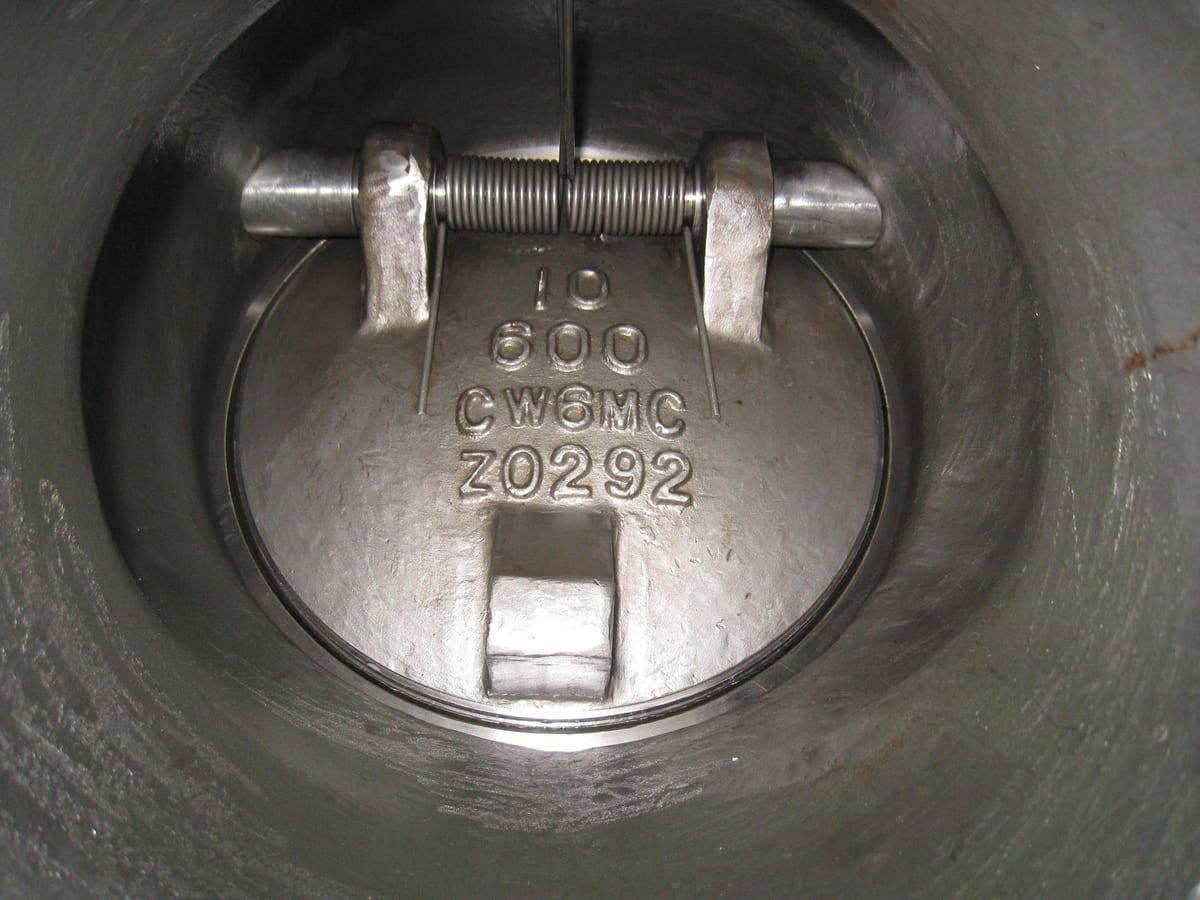
The best sump pump check valves
A forty-dollar valve is the single most common reason a healthy pump appears to be failing. It is also the easiest thing in the pit to replace.