Water-powered vs battery backup sump pump
One has no runtime limit and four conditions attached. The other works anywhere and runs out. That is the whole decision.
We earn a commission if you buy through our Amazon links, at no cost to you. We do not bench-test these products and we never take free product — how we pick · affiliate disclosure

These two technologies solve the same problem in opposite ways, and the choice is unusually clear-cut because it is decided by conditions rather than preferences. Work through the conditions first; if you fail any of them, the decision is already made.
Side by side
| Water-powered | Battery | |
|---|---|---|
| Runtime | Unlimited while supply pressure holds | Finite — hours to a day, depending on inflow |
| Works on a well | No | Yes |
| Ongoing cost | Metered water every minute it runs | A battery every 3–5 years |
| Maintenance | Essentially none | Battery checks, terminal cleaning, replacement |
| Flow at 15 ft | Holds up well | Falls off sharply |
| Code | Backflow preventer usually required; sometimes prohibited | No plumbing code involvement |
| Installation | A plumbing job | A pump swap plus a battery |
Quick picks
| # | Product | Best for | Score | Price |
|---|---|---|---|---|
| 1 | 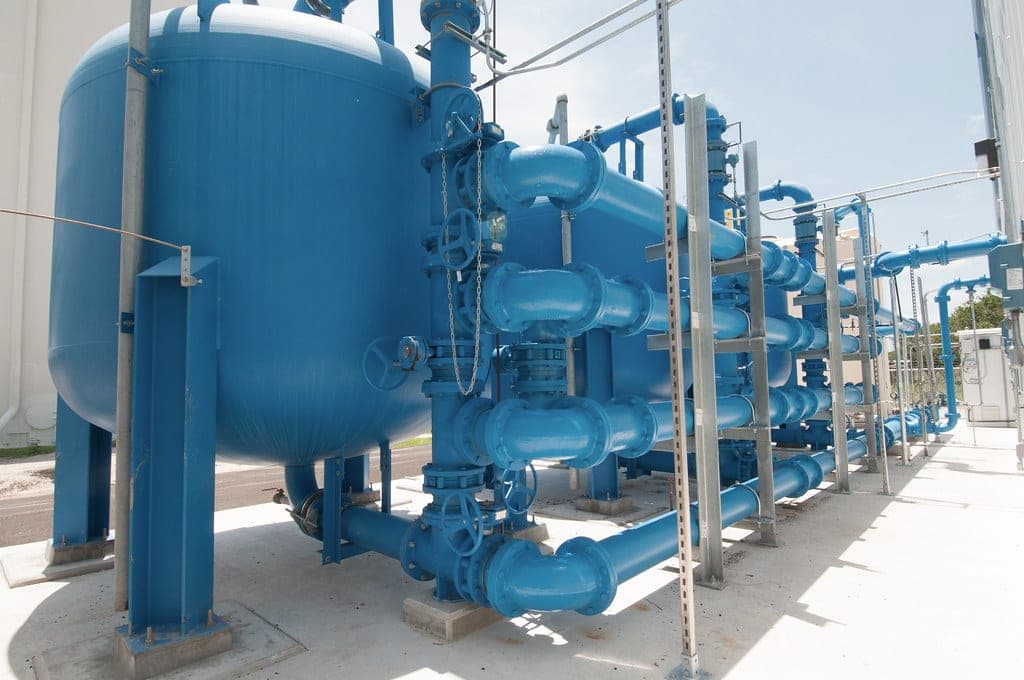 Liberty Pumps SumpJet SJ10ARuns for as long as the outage lasts, and holds flow at heights where batteries have given up. Liberty Pumps SumpJet SJ10ARuns for as long as the outage lasts, and holds flow at heights where batteries have given up. | The water-powered case | 8.3 | Check price on Amazon #ad we earn a commission · Amazon shows the current price |
| 2 | Wayne ESP25N battery backup systemWorks in every house, installs in an afternoon, and runs until the battery is flat. | The battery case | 8.5 | Check price on Amazon #ad we earn a commission · Amazon shows the current price |
Scores are ours and editorial, not lab measurements — see how we pick. Tap a row for the full write-up.
Liberty Pumps SumpJet SJ10A
Runs for as long as the outage lasts, and holds flow at heights where batteries have given up.
#ad we earn a commission · Amazon shows the current price
| Type | Water-powered backup, no electricity and no battery |
|---|---|
| Supply pressure | 20 to 100 PSI inlet |
| Connections | 3/4" inlet, 1-1/2" discharge |
| Water used | Removes about 2 gallons of sump water per gallon of supply water |
| Alarm | Indoor 115 V alarm with 9 V battery backup, included |
| Flow, by lift | 1,188 GPH at 4 ft · 1,020 GPH at 8 ft · 912 GPH at 12 ft · 810 GPH at 15 ft |
The decisive advantage is that time stops being a variable. A battery system's protection is a countdown; a water-powered system's protection is a condition that is either met or not met, and if it is met it stays met.
What it gets right
- No battery to age or replace
- Still moving water at 15 ft of lift
- Nothing to recharge after a storm
Where it falls short
- Municipal supply only
- Uses metered water
- Backflow preventer required in most jurisdictions
Specifications from Liberty SumpJet SJ10A specification listing.
Wayne ESP25N battery backup system
Works in every house, installs in an afternoon, and runs until the battery is flat.
#ad we earn a commission · Amazon shows the current price
| Type | 12 V DC battery backup pump |
|---|---|
| Housing | Epoxy-coated steel with a cast-iron base |
| Impeller | Corrosion-resistant thermoplastic |
| Discharge | 1-1/2" NPT |
| Battery | One Group 27 deep-cycle battery, sold separately |
| Minimum basin | 14 in diameter |
| Monitoring | LED display and audible alarm on the battery case |
| Flow, by lift | 2,900 GPH at 0 ft · 2,340 GPH at 5 ft · 1,680 GPH at 10 ft · 600 GPH at 15 ft |
| Warranty | Two years |
The battery's advantage is universality. There is no house where it cannot be installed, no plumbing inspector involved, and no ongoing water cost. For most people that is enough to settle it.
What it gets right
- No plumbing, no code question, no municipal supply needed
- Strong flow at 10 ft
- Uses no water
Where it falls short
- Finite runtime
- Battery needs replacing every few years
- Capacity fades with battery age
Specifications from Wayne ESP25N specification listing, Wayne ESP25 product listing.
The four questions that decide it
- Are you on municipal water? No means battery. This is absolute — your well pump is out in the same outage.
- Does local code allow it? Some jurisdictions prohibit water-powered backups outright. Call before you shop.
- How long are your outages? Routinely over a day points hard toward water-powered. A few hours and a battery is plenty.
- What is your lift? Above about 12 feet, water-powered units hold their flow noticeably better.
If the answers point to a battery, the battery backup roundup is the shortlist. If they point to water-powered, that roundup covers what to check before ordering.
Questions people ask
Which backup sump pump is more reliable?
Water-powered, in the houses that can take one, because there is no battery to degrade silently. Its reliability is conditional on municipal pressure; a battery's is conditional on battery health.
How much water does a water-powered backup use?
Around one gallon of supply water per two gallons of sump water removed on an efficient unit. During a long storm this is a meaningful amount of metered water.
Do water-powered backups work during a water main break?
No. They depend on supply pressure, so a loss of municipal pressure disables them just as a flat battery disables a battery system.
Can I add a water-powered backup to an existing pit?
Usually yes, though it is a plumbing job rather than a pump swap: a supply tee, a backflow preventer, the ejector and a discharge connection.
Sources
Read next
The best water-powered backup sump pumps
No battery, no charger, no runtime limit. In the houses where it fits, this is the most reliable backup you can install.

The best battery backup sump pumps
The storm that fills your pit is the storm that takes the power out. This is the half of the system that works when the other half cannot.
Battery backup vs generator for a sump pump
One works while you sleep at reduced flow. The other gives full flow but needs you awake and outside. They are not really competing.

Sump pump backflow preventers
A check valve stops water falling back into the pit. A backflow preventer stops water arriving from somewhere else entirely.
Do I need a battery backup sump pump?
The storms that fill your pit are the storms that take the power down. The question is what a few hours of no pumping would actually cost you.