Sump pump clogged: finding the blockage
Three places block, and they need three different responses. Working out which one costs nothing but a few minutes.

If the pump is running and the water level is not falling, something between the pit and the outside is blocked. There are three candidates, and a short sequence of checks identifies which.
Check one: the intake screen
Unplug the pump, lift it out, and look at the intake. Silt, gravel, mortar crumbs and the gritty sludge that accumulates in every pit all collect here. Rinse it clear with a hose outside, not in the pit, where you would simply return the debris.
While the pump is out, scoop the sludge out of the bottom of the basin. If the pump has been sitting in several inches of grit, it has been drawing it through the impeller for months.
Check two: the impeller
With the pump unplugged and out of the pit, look into the discharge and the intake for anything wrapped around or wedged in the impeller. A small stone is the classic. A pump that hums without moving water, with a clear intake, is almost always this.
Check three: the discharge line
- At the outlet outside — leaves, mulch, a collapsed grate, a snow bank, or a mouse nest in a line that sat unused all summer.
- At the check valve — a failed flapper can hang in the closed position and block flow entirely.
- Ice, in any part of the run that is exposed or shallow. See sump pump freezing in winter.
- A crushed or kinked flexible hose where something heavy has been set down on it.
A quick test: disconnect the discharge just above the check valve, put a bucket under it, and run the pump briefly. Strong flow means the pump is fine and the blockage is downstream.
Jackel sealed sump pit cover
Most pit debris falls in from above. A sealed lid removes the supply.
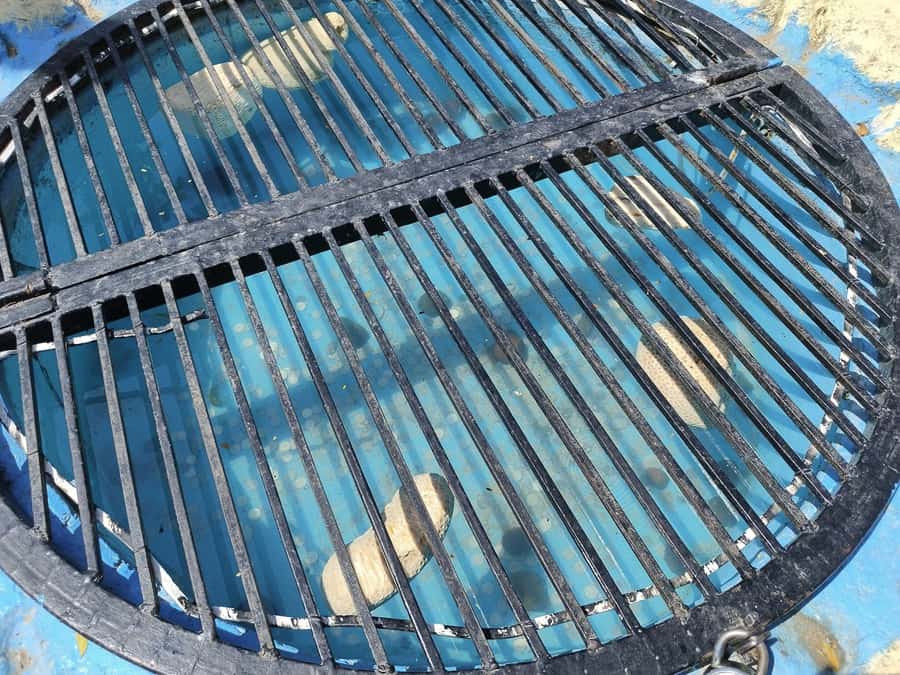
#ad we earn a commission · Amazon shows the current price
| Type | Bolt-down sump pit cover with pipe and cord grommets |
|---|---|
| Fits | Basins with pre-drilled rim inserts, 18 in class |
| Why it matters | Keeps debris, pets and children out, and cuts pit humidity and odor |
An open pit in a working basement collects sawdust, insulation fibers, pet hair, small toys and whatever gets knocked off a shelf. A lid is the cheapest preventative maintenance available.
What it gets right
- Keeps debris, dust and objects out of the pit
- Cuts humidity and noise too
- Easy to fit
Where it falls short
- Must match the basin diameter
- Has to be removable for testing
Specifications from Amazon listing (search).
ELK Freeze Relief discharge fitting
If the blockage is seasonal and outside, a relief fitting gives the water somewhere to go.

#ad we earn a commission · Amazon shows the current price
| Type | Polypropylene pipe transition with relief slots |
|---|---|
| Sizes | 1.5" line into a 3" or 4" discharge |
| What it does | Gives water an escape route when the buried line is frozen or blocked |
An iced discharge line is a blockage the pump cannot clear and cannot survive for long. A relief fitting is the standard answer where part of the run is buried.
What it gets right
- Passive, nothing to fail
- Protects the pump as well as the basement
- Cheap
Where it falls short
- Releases water near the house when it operates
- Needs fitting at the right point
Specifications from Freeze relief fitting product listing.
Preventing the next one
- Fit a lid. Most pit debris falls in from the room.
- Clean the pit annually. Scoop the sludge, rinse the intake, check the screen.
- Walk the discharge outlet each season, especially after leaf fall and before winter.
- Fit freeze protection if any part of the line is buried or exposed to hard frost.
- Never let construction debris near an open pit. Drywall dust and mortar set hard in the bottom of a basin.
Questions people ask
How do I know if my sump pump is clogged?
It runs but the water level does not fall. If the intake and impeller are clear, the blockage is in the discharge — test by disconnecting above the check valve and running the pump into a bucket.
Can I clean a sump pump myself?
Yes. Unplug it, lift it out, rinse the intake and impeller outside, and scoop the sludge from the bottom of the basin. It is an hour once a year and it extends the pump's life.
What causes a sump pit to fill with sediment?
Groundwater carries fine silt through the drain tile, and open pits collect dust and debris from the room. A lid handles the second; annual cleaning handles the first.
Will a clogged discharge damage the pump?
Yes, if it runs against the blockage for long. The motor loses the flow that carries its heat away and the thermal cutout eventually trips — or the motor fails.
Sources
Read next
Sump pump not working: find out why before you replace it
Most dead pumps are not dead. They are unplugged, switched off by a stuck float, or sitting behind a tripped GFCI.

Sump pump maintenance checklist
Twenty minutes a year, split into four short visits, is the difference between a pump that reaches ten years and one that fails at six.

The best sump pit covers
An open pit is an evaporation surface in the middle of your basement. A lid is the cheapest humidity fix there is.
Sump pump freezing in winter
The pump is fine. The pipe is full of ice, and the pump is now running against a closed valve it cannot open.
The best sump pump discharge kits
The pump is only half the system. Where the water goes, and how easily it gets there, decides what the pump can actually deliver.