Basement Watchdog vs Zoeller
One of these tells you when it is unwell. The other is cheaper and expects you to check. That is most of the comparison.
We earn a commission if you buy through our Amazon links, at no cost to you. We do not bench-test these products and we never take free product — how we pick · affiliate disclosure
Buy the Zoeller AquaNot 508 if you want a backup that tells you it is still healthy; buy the Basement Watchdog BWE if the price difference decides it. Zoeller self-tests and reports power loss, high water and switch obstruction separately, and publishes 1,800 GPH at ten feet of lift. The BWE costs less, has a genuinely useful dual float switch, and publishes 1,000 GPH at ten feet — roughly half the output at the lift most basements actually need.
Both brands sit in the same part of the market and get compared constantly, usually on price. The comparison that matters is what happens in the eight months between storms, because that is when a backup system silently stops being a backup.
The numbers, side by side
| Zoeller AquaNot 508 | Basement Watchdog BWE | Basement Watchdog Big Combo | |
|---|---|---|---|
| Type | 12 V DC backup, self-testing | 12 V DC backup | Primary + 12 V backup combination |
| Flow at 0 ft | Not published | 2,000 GPH | 4,400 GPH (primary) |
| Flow at 5 ft | 2,340 GPH | Not published | Not published |
| Flow at 10 ft | 1,800 GPH | 1,000 GPH | Not published |
| Switch | Self-testing controller | Dual float plus battery fluid sensor | Dual float on both pumps |
| Alerts | Outage, high water, switch obstruction | Audible alarm and indicators | Wi-Fi capable controller |
| Charger | Not published | 0.4 A | 1.6 A |
| Run time | About 6 hours continuous | Not published | Not published |
| Battery | Sold separately on most SKUs | Sold separately | Sold separately |
| Warranty | Three years, limited | Not published | Not published |
Two things stand out. The first is the gap at ten feet: 1,800 against 1,000 gallons an hour is not a rounding difference, it is the difference between holding a busy pit and losing ground in it. The second is how much neither brand publishes — run time, charger rating and warranty are all partially blank, and we have left them blank rather than filling them in.
Quick picks
| # | Product | Best for | Score | Price |
|---|---|---|---|---|
| 1 | 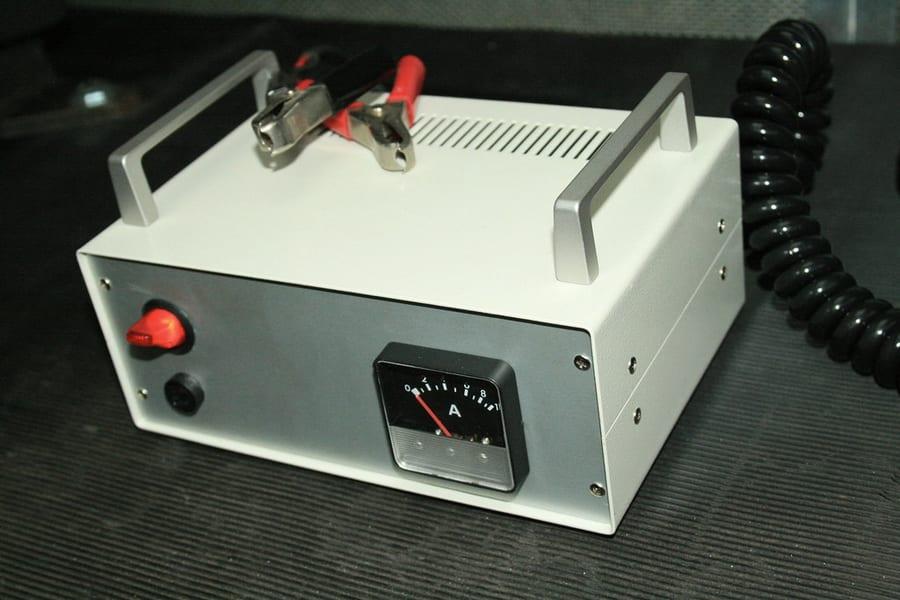 Zoeller AquaNot 508 battery backup systemA self-testing backup that reports power loss, high water and an obstructed switch — the system that does not quietly die in the corner. | Knowing it still works | 8.7 | Check price on Amazon #ad we earn a commission · Amazon shows the current price |
| 2 |  Basement Watchdog Emergency (BWE)A dual float switch and a battery fluid sensor at a lower price, in a thermoplastic pump that moves 1,000 GPH at ten feet. | The cheaper way to be covered | 7.9 | Check price on Amazon #ad we earn a commission · Amazon shows the current price |
| 3 |  Basement Watchdog Big ComboA pre-plumbed primary and backup with dual float switches on both, for a pit being rebuilt rather than patched. | Replacing the whole pit at once | 8.1 | Check price on Amazon #ad we earn a commission · Amazon shows the current price |
Scores are ours and editorial, not lab measurements — see how we pick. Tap a row for the full write-up.
Self-testing is the real dividing line
A battery backup spends almost all of its life doing nothing, which is a terrible way to maintain confidence in a machine. Three things go wrong quietly: the battery loses capacity, the charger fails, and the float gets fouled. None of them announces itself, and all three are only discovered during the outage, which is the worst possible moment.
- Zoeller's answer is automation. The controller exercises the pump and the battery periodically and raises a distinct fault for each problem it finds.
- Basement Watchdog's answer is instrumentation. A battery fluid level sensor and indicator lights tell you a lot, provided you look at them, and the dual float removes the most common mechanical failure.
- Either way, test it twice a year yourself. Pull the plug on the primary, pour water in, and watch the backup take over. Five minutes, two Saturdays a year — see how to test a sump pump.
Zoeller AquaNot 508 battery backup system
A self-testing backup that reports power loss, high water and an obstructed switch — the system that does not quietly die in the corner.
#ad we earn a commission · Amazon shows the current price
| Type | 12 V DC battery backup pump, self-testing |
|---|---|
| Monitoring | Alerts on power outage, high water and switch obstruction |
| Run time | Up to about 6 hours of continuous pumping |
| Battery | 12 V deep-cycle, sold separately on most SKUs |
| Flow, by lift | 2,340 GPH at 5 ft · 1,800 GPH at 10 ft |
| Warranty | Three years, limited |
The failure mode that defeats most backup systems is not a flat battery during the storm. It is a backup that stopped working in July and was not discovered until March. A self-testing controller attacks exactly that: the system exercises itself on a schedule and complains while you are still in a position to do something.
Zoeller also distinguishes between three faults rather than sounding one generic alarm. Power loss, high water and an obstructed switch need different responses, and a beep that could mean any of them wastes the warning.
Flow is published at five and ten feet, which lets you check it against your inflow rather than guess. At ten feet it moves 1,800 GPH — not primary-pump output, and enough to hold a pit whose inflow is below that figure.
What it gets right
- Self-testing: it exercises itself rather than waiting for the storm to find the fault
- Alerts on power outage, high water and switch obstruction, which are three different failures
- 1,800 GPH at 10 ft and 2,340 GPH at 5 ft, published
- Around six hours of continuous pumping, per Zoeller
- Three-year limited warranty
Where it falls short
- Costs more than the Basement Watchdog equivalent
- Battery sold separately on most SKUs
Specifications from Zoeller AquaNot 508 battery backup listing, Zoeller 508-0006 AquaNot with M53 primary.
Basement Watchdog Emergency (BWE)
A dual float switch and a battery fluid sensor at a lower price, in a thermoplastic pump that moves 1,000 GPH at ten feet.
#ad we earn a commission · Amazon shows the current price
| Type | 12 V DC battery backup pump, thermoplastic |
|---|---|
| Horsepower | 1/3 HP |
| Current draw | 6.5 A at 12 V |
| Switch | Dual float switch plus a battery fluid level sensor |
| Charger | 0.4 A |
| Included | Control unit, pump with 1-1/2" PVC adapter, battery box, charger |
| Battery | Not included, sold separately |
| Flow, by lift | 2,000 GPH at 0 ft · 1,000 GPH at 10 ft |
The BWE is the volume seller in this category and it earns that honestly: a dual float switch is a real redundancy feature, the battery fluid sensor catches a neglected wet cell, and the kit arrives with everything except the battery.
Where it gives ground is output at lift. One thousand gallons an hour at ten feet is enough for a modest pit and not enough for a high water table, so the specification has to be checked against your own inflow rather than assumed.
The 0.4 A charger is the detail worth knowing. After a long outage it takes a long time to put a deep-cycle battery back, which matters when a second storm follows the first within a day.
What it gets right
- Dual float switch, so one stuck float does not stop the backup
- Battery fluid level sensor, which matters if you run a wet-cell battery
- Published 2,000 GPH at 0 ft and 1,000 GPH at 10 ft
- Comes with the control unit, battery box and charger
Where it falls short
- Thermoplastic pump body rather than metal
- 1,000 GPH at 10 ft is roughly half the Zoeller
- 0.4 A charger means a slow recovery after a long outage
Specifications from Basement Watchdog BWE specification listing, Basement Watchdog BWE retail listing.
Basement Watchdog Big Combo
A pre-plumbed primary and backup with dual float switches on both, for a pit being rebuilt rather than patched.
#ad we earn a commission · Amazon shows the current price
| Type | Pre-assembled primary + 12 V DC backup combination |
|---|---|
| Primary pump | 1/2 HP cast iron |
| Switch | Dual float switches on both the primary and the backup |
| Included | Primary pump, 12 V backup pump, primary controller, Wi-Fi capable backup controller, two dual float switches, 1.6 A charger, two check valves, 1-1/2 in rubber union, battery box |
| Battery | Not included, sold separately (wet cell or maintenance-free AGM) |
| Minimum pit | 12 in diameter |
| Backup flow | 2,600 GPH at 0 ft and 1,850 GPH at 10 ft (True Value); 2,500 and 1,730 GPH on the Home Depot listing for the BW4000 variant |
| Flow, by lift | 4,400 GPH at 0 ft · 3,200 GPH at 10 ft |
If the primary is old and the backup does not exist, a combination system is usually cheaper and tidier than assembling the same thing from parts, and the two pumps are matched to sit in one basin without fighting each other for space.
Treat it as a pit rebuild rather than an upgrade. The 1.6 A charger is four times the BWE's, which is the detail that matters most after a long outage.
What it gets right
- 1/2 HP cast-iron primary plus a 12 V backup, assembled and matched
- Dual float switches on both pumps
- Wi-Fi capable backup controller
- Includes two check valves, the union, the charger and the battery box
Where it falls short
- Published flow figures for the kit are thinner than for the individual pumps
- Buying a system means replacing a working primary you may not need to replace
Specifications from Basement Watchdog Big Combo specification listing, Big Combo Connect (CITS-50) listing: 4,400 / 3,540 GPH primary, 2,600 / 1,850 GPH backup, Big Combination (BW4000) listing: 4,400 / 3,200 GPH primary, 2,500 / 1,730 GPH backup, 12 in minimum pit.
What neither brand includes
Both systems are sold without the battery on most SKUs, and the battery is the component that decides how long the backup actually lasts. A 100 Ah deep-cycle AGM battery will run a 12 V backup pump far longer than a small standby cell, and the maintenance-free AGM chemistry suits an unattended basement far better than a wet cell that needs topping up. We work through capacity against run time in how long does a sump pump battery last and the options in the best sump pump batteries.
Choosing between them
- Measure the basin. Under about 14 inches across and this comparison is moot.
- Measure the lift, then compare it against the published flow figures above rather than the headline capacity.
- Estimate your inflow during the worst hour you have seen. If it is above roughly 1,000 GPH, the Zoeller is the only one of the two with margin at ten feet.
- Decide how often you will actually check it. If the honest answer is never, buy the self-testing system — it is cheaper than a flooded basement.
- Budget for the battery separately. It is not an accessory, it is half the system.
Questions people ask
Is Basement Watchdog or Zoeller better?
Zoeller's AquaNot 508 is the better system: it self-tests, it reports power loss, high water and switch obstruction separately, and it publishes 1,800 GPH at ten feet against the Basement Watchdog BWE's 1,000. The BWE is the better buy only if the price difference is what decides it.
How long will either backup run in an outage?
Zoeller publishes up to about six hours of continuous pumping for the AquaNot 508. Real run time depends on the battery capacity and how hard the pit is working, and continuous pumping is the worst case — most pits cycle rather than run flat out.
Does a battery backup come with a battery?
Usually not. Both brands sell most SKUs without one, and the battery you choose decides the run time. A deep-cycle AGM battery is the right type for an unattended basement.
Can I fit a Zoeller backup alongside a Basement Watchdog primary, or the other way round?
Yes. Backup pumps are plumbed into the discharge with their own check valve and work independently of the primary's brand. The usual constraint is physical space in the basin, not compatibility.
Which one is quieter?
Backup pumps only run during an outage, so day-to-day noise is not really a difference between them. Most of the noise people blame on a pump is the check valve slamming, which is a cheap fix on either system.
Sources
Read next

The best battery backup sump pumps
The storm that fills your pit is the storm that takes the power out. This is the half of the system that works when the other half cannot.
Basement Watchdog alternatives
Basement Watchdog built this category around the second pump and the dual float switch. If you want something else, there are four genuinely different answers and one that removes the battery entirely.
The best combination sump pump systems
One box, two pumps, floats already set at the right heights. It removes the mistake that disables most home-built backup installations.
Basement Watchdog
A brand built around the second pump rather than the first, and around the idea that one float switch is one too few.
The best batteries for a backup sump pump
Your backup system is only as good as the battery behind it, and the battery is the part everyone forgets until the night it matters.
How to install a battery backup sump pump
A weekend job with one awkward decision in the middle: whether the backup gets its own discharge or shares the primary's.