Basement Watchdog alternatives
Basement Watchdog built this category around the second pump and the dual float switch. If you want something else, there are four genuinely different answers and one that removes the battery entirely.
We earn a commission if you buy through our Amazon links, at no cost to you. We do not bench-test these products and we never take free product — how we pick · affiliate disclosure

The closest alternative to a Basement Watchdog backup is the Zoeller AquaNot 508 — the same shape of system, self-testing, with alerts for outage, high water and a blocked switch, from the brand with the deepest parts network in the category. If you want to stop depending on a battery at all, the Basepump RB750-EZ uses municipal water pressure instead, with no charger, no battery and a five-year warranty. The Wayne ESP25N publishes the most honest flow curve in the class, the Liberty SumpJet SJ10A works on a wider supply-pressure range than any other water-powered unit here, and the PumpSpy monitor gets you the phone notifications without replacing a pump that works.
First, what Basement Watchdog is actually known for, because it is worth being clear before replacing it. Glentronics built the brand around the second pump rather than the first: battery backup systems, pre-plumbed primary-plus-backup combination units, controllers with battery fluid-level sensing, and dual float switches on the principle that one switch is one too few. It is the most widely stocked backup brand in US retail, its controllers are the most talked-about part of its systems, and the combination units are genuinely convenient — one box, pre-plumbed, both pumps matched. Our own coverage is at the Basement Watchdog brand page and the Big Combo review.
People look for alternatives for ordinary reasons: a preference for a pump-manufacturer brand with a wider service network, a dislike of proprietary batteries and consumables, a pit too small for a second pump, a desire for a system with no battery to maintain, or simply wanting Wi-Fi alerts on the pump they already own. All five of those have a good answer, and they are not all the same answer.
Quick picks
| # | Product | Best for | Score | Price |
|---|---|---|---|---|
| 1 | 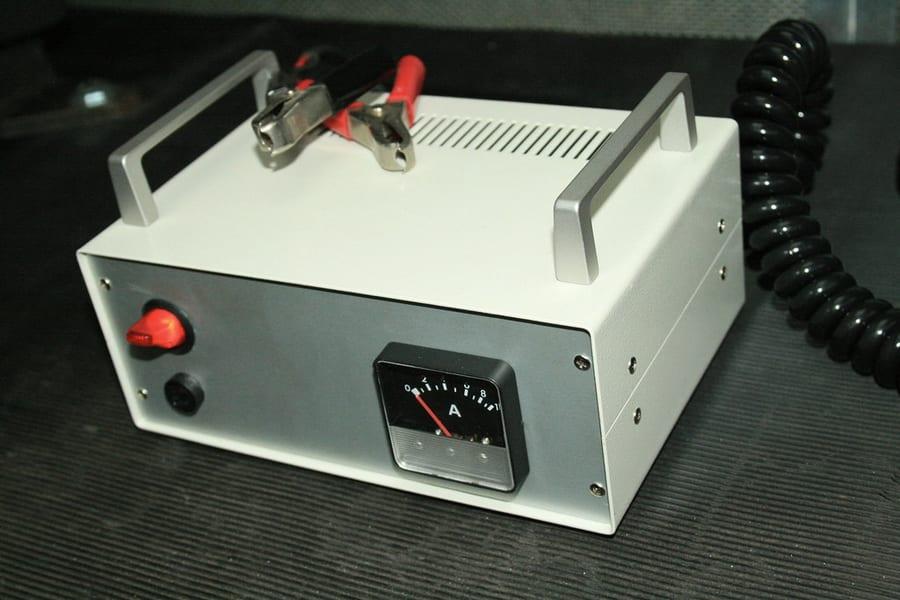 Zoeller AquaNot 508 battery backup systemA self-testing 12 V battery backup from the brand with the deepest parts network in the category, with alerts for outage, high water and a blocked switch. | The closest like-for-like battery backup | 9.0 | Check price on Amazon #ad we earn a commission · Amazon shows the current price |
| 2 | 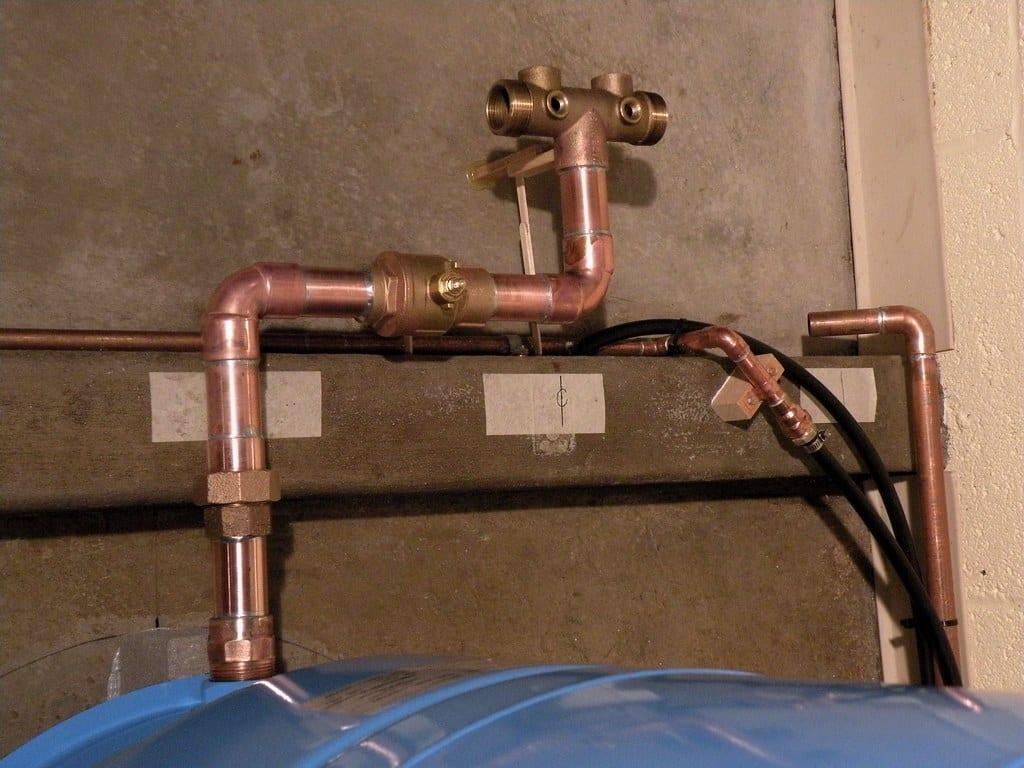 Basepump RB750-EZA water-powered backup with no battery, no charger and no electrical parts, published at 725 GPH at ten feet of lift and carrying a five-year warranty. | Removing the battery from the equation | 8.7 | Check price on Amazon #ad we earn a commission · Amazon shows the current price |
| 3 | 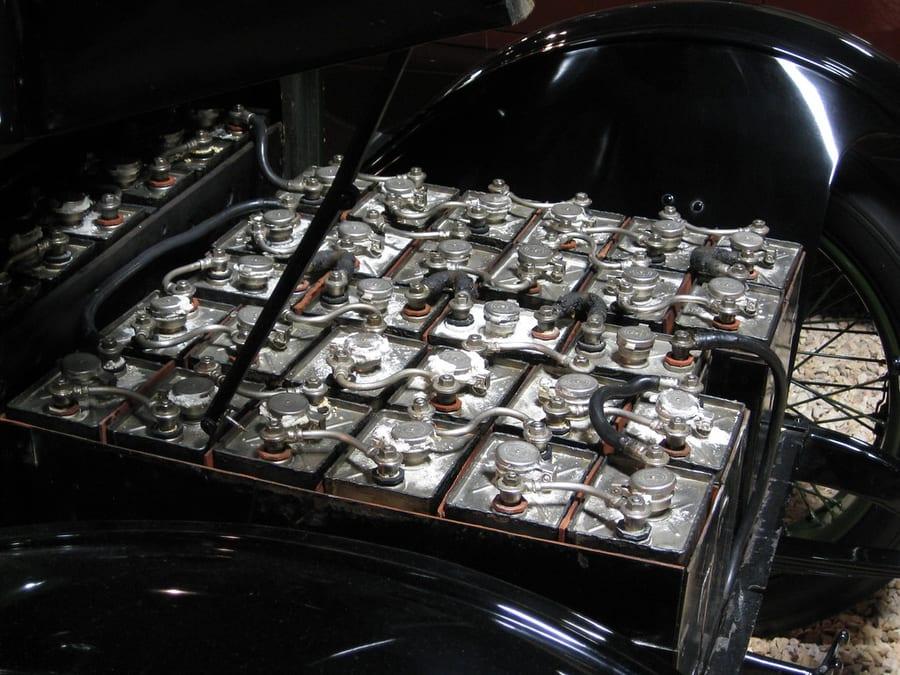 Wayne ESP25N battery backup systemA 12 V battery backup that publishes flow at four separate lifts, in an epoxy-coated steel housing with a cast-iron base. | The best-documented flow curve in the class | 8.4 | Check price on Amazon #ad we earn a commission · Amazon shows the current price |
| 4 | 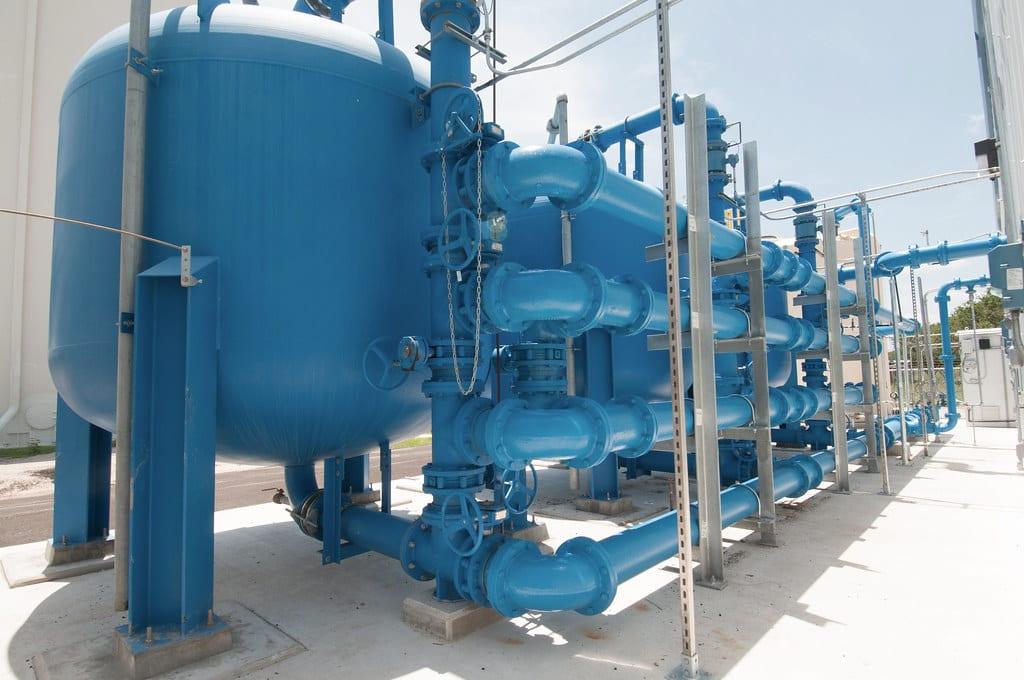 Liberty Pumps SumpJet SJ10ALiberty's SumpJet works on a wider supply-pressure range than most water-powered units and ships with an indoor alarm, from a manufacturer plumbers already stock. | A water-powered backup from a mainstream pump brand | 8.5 | Check price on Amazon #ad we earn a commission · Amazon shows the current price |
| 5 |  PumpSpy sump pump monitorA Wi-Fi monitor with its own high-water float that watches pump power, cycles and pit level, and pushes an alert to your phone instead of to an empty basement. | Keeping the pump you have and replacing only the monitoring | 8.2 | Check price on Amazon #ad we earn a commission · Amazon shows the current price |
Scores are ours and editorial, not lab measurements — see how we pick. Tap a row for the full write-up.
The three kinds of alternative
Before comparing models, decide which of these three you are shopping for. They are not interchangeable:
- Another battery backup. A second DC pump in the pit with a charger and a deep-cycle battery. Same architecture, different manufacturer. Capacity is decent at low lift and falls away sharply as the discharge rises, and run time is finite — hours, not days.
- A water-powered backup. No battery and no electricity: municipal water pressure drives an ejector that lifts sump water out. Lower peak capacity, but it holds up better at height and runs for as long as the outage lasts. Needs city water and backflow protection.
- Monitoring only. Keep the pump and the pit as they are and add a device that tells you when something is wrong. The cheapest of the three and the only one that pumps nothing.
The decision usually comes down to one question: are you on municipal water or a well? On a well, every water-powered option on this page is out, because the pump that supplies your water is electric too. On city water, the water-powered route removes the single most failure-prone component in a backup system.
How we ranked these
Five criteria, applied in this order:
- What happens when the power stays off for two days? A battery system has a run time; a water-powered system does not. This is the question the whole category exists to answer.
- Is capacity published at a stated lift? A zero-lift figure is marketing. Two systems here publish four-point curves, and those curves show that DC pumps lose far more to lift than water-powered ones do.
- How does it tell you something is wrong? Self-test, specific alert conditions, remote notification. A silent failure in a device that sits idle for years is the normal failure.
- What does it need from the pit and the house? Minimum basin diameter, a dedicated supply line, backflow protection, a battery that is not in the box.
- What does it cost to keep? Batteries are consumables on a three-to-five-year cycle; water is metered; a monitor needs a subscription-free path to your phone.
The published specifications, side by side
| Zoeller 508 | Basepump RB750 | Wayne ESP25N | Liberty SJ10A | PumpSpy | |
|---|---|---|---|---|---|
| Type | 12 V battery backup | Water-powered | 12 V battery backup | Water-powered | Monitor only |
| GPH at 5 ft | 2,340 | Not published | 2,340 | 1,188 at 4 ft | Not applicable |
| GPH at 10 ft | 1,800 | 725 (at 50 PSI) | 1,680 | 1,020 at 8 ft | Not applicable |
| GPH at 15 ft | Not published | Not published | 600 | 810 | Not applicable |
| Run time | About 6 hours continuous | Unlimited while water flows | Battery dependent | Unlimited while water flows | Not applicable |
| Needs a battery | Yes, sold separately | No | Yes, Group 27, separate | No | No |
| Needs city water | No | Yes | No | Yes, 20-100 PSI | No |
| Minimum basin | Not published | Small float area | 14 in | Not published | Not applicable |
| Alerting | Self-test, outage, high water, switch | Alarm included | LED and buzzer | Indoor alarm with 9 V backup | Push and email |
| Warranty | Three years, limited | Five years | Two years | Not published | Not published |
Read the fifteen-foot row carefully, because it is the one that overturns the usual assumption. The Wayne DC pump manages 600 GPH there; the Liberty water-powered unit manages 810. Battery backups look stronger on paper at low lift and weaker than people expect once the discharge rises — which is the same lift problem that sends people shopping for a 1 HP primary pump in the first place.
Zoeller AquaNot 508 battery backup system
A self-testing 12 V battery backup from the brand with the deepest parts network in the category, with alerts for outage, high water and a blocked switch.
#ad we earn a commission · Amazon shows the current price
| Type | 12 V DC battery backup pump, self-testing |
|---|---|
| Monitoring | Alerts on power outage, high water and switch obstruction |
| Run time | Up to about 6 hours of continuous pumping |
| Battery | 12 V deep-cycle, sold separately on most SKUs |
| Flow, by lift | 2,340 GPH at 5 ft · 1,800 GPH at 10 ft |
| Warranty | Three years, limited |
If you want the same shape of product as a Basement Watchdog — a DC pump in the pit, a controller on the wall, a battery in a box — from a different manufacturer, this is the one we would fit. Zoeller's argument is not features; it is that the company has been making sump pumps for a very long time and that a plumber in any US city can get parts for one.
The self-test is the feature that matters. A backup system's failure mode is silent: the battery sulfates, or the charger quits, or the float gets stuck, and nobody finds out until the night it is needed. A controller that exercises itself and shouts when something is wrong converts a hidden failure into a visible one. Zoeller's alert set is specific — outage, high water, obstructed switch — rather than one buzzer for everything.
The honest reservation is the battery, and it applies to every battery system on this page. Six hours of continuous pumping is the published figure; what you actually get is a function of battery amp-hours, how often the pump cycles and how old the battery is. Budget for a decent deep-cycle unit and replace it on a schedule rather than on failure — how long does a sump pump battery last covers the intervals, and the head-to-head against the Watchdog systems is in Basement Watchdog vs Zoeller.
What it gets right
- Self-testing: the controller exercises itself rather than waiting for the storm to find out whether it works, which is the single most useful feature in a device that sits idle for years
- Alerts on power failure, high water and switch obstruction — three distinct conditions rather than one generic alarm
- 1,800 GPH published at ten feet of lift and 2,340 at five feet, so the capacity is quotable at a stated lift rather than only at zero
- Up to about six hours of continuous pumping on a charged deep-cycle battery
- Three-year limited warranty, and Zoeller service parts are stocked by plumbing distribution nationwide
- Sold both as a standalone backup and as a kit with an M53 primary, so it suits a new install or a retrofit
Where it falls short
- The battery is sold separately on most SKUs, so the shelf price is not the system price — budget for a Group 27 or larger deep-cycle battery on top
- Six hours of continuous pumping is a figure for continuous running; a multi-day outage with intermittent pumping is a different calculation and depends entirely on the battery
- Zoeller publishes less detail about the controller's logic than Basement Watchdog does about its own
- A second pump in the pit needs pit room, and in a 14 inch basin two pumps and two floats is a crowded space
- No Wi-Fi in the base system, so remote notification means adding a monitor
Specifications from Zoeller AquaNot 508 battery backup listing, Zoeller 508-0006 AquaNot with M53 primary.
Basepump RB750-EZ
A water-powered backup with no battery, no charger and no electrical parts, published at 725 GPH at ten feet of lift and carrying a five-year warranty.
#ad we earn a commission · Amazon shows the current price
| Type | Water-powered backup, ejector mounted on the ceiling joist above the pit |
|---|---|
| Rated capacity | 725 GPH, measured at 10 ft of lift on 50 PSI average supply pressure |
| Water used | Basepump states 1 gallon of city water removes 2 gallons of sump water in its bullets, and 1.5 to 2 gallons in its table |
| Moving parts | Hydraulic float; no electrical parts at all |
| Run-on | A timer keeps the ejector running about 30 to 45 seconds after the float drops |
| Alarm | A high-water alarm is included with every pump |
| Radon | Compatible with a sealed radon pit cover |
| Warranty | Five years |
This is the most genuinely different answer on the page. Every battery backup, from any brand, shares one weakness: it depends on a battery, and a battery is a consumable that degrades invisibly. A water-powered backup removes that entire category of failure. There is no charger to quit, no electrolyte to check, no capacity to lose over four years, and no run-time limit — it pumps for as long as the mains water is flowing.
The numbers are modest and should be read honestly. Basepump publishes 725 GPH for this model at ten feet of lift on 50 PSI average supply pressure. That is a fraction of what a primary pump moves, so this is a system for holding the pit at a safe level through an outage, not for matching your primary's capacity. For most houses that is exactly the right job, because the worst-case inflow in a storm is usually well under 725 GPH.
Two things to settle before you buy. First, the water: you are using treated municipal water to move groundwater, at a ratio the manufacturer states as either one-to-two or one-to-one-and-a-half in two different places on the same page. Over a long outage that shows up on a bill. Second, the install — a ceiling-mounted ejector, a dedicated supply tee and a backflow preventer, which in many jurisdictions has specific requirements. City water sump pump backup covers the plumbing, and water-powered vs battery is the direct comparison.
What it gets right
- No battery at all, which eliminates the maintenance item that causes most backup-system failures — nothing to charge, test, water or replace every few years
- Hydraulic float with no electrical parts, so there is nothing in the pit that an outage, a surge or a damp controller can take out
- Runs for as long as the outage lasts. A battery system is a stopwatch; this is not
- 725 GPH published at ten feet of lift on 50 PSI average supply pressure — a figure at a stated lift and a stated pressure, which is better disclosure than most of this category
- Five-year warranty, the longest here, and a high-water alarm is included with every pump
- Compatible with a sealed radon pit cover, which matters if your pit is also a radon mitigation point
- A timer keeps the ejector running 30 to 45 seconds after the float drops, so it clears the pit properly rather than cycling at the trip point
Where it falls short
- It needs municipal water. On a well, the pump that supplies it is electric, so in an outage you have nothing — this is not an option for well-water houses
- It uses potable water to move groundwater. Basepump's bullets say one gallon of city water removes two gallons of sump water; its own comparison table says one and a half to two. Either way you are metered for it
- Installation is the real cost: the ejector mounts on a ceiling joist above the pit and needs a dedicated supply tee, a backflow preventer and a separate discharge. This is a plumber's half-day, not a plug-in
- 725 GPH is well below what a battery backup pump or any primary pump moves. It is a system to keep the pit under control, not to match the primary
- Some jurisdictions restrict or require specific backflow protection for water-powered pumps. Check locally before buying
- Performance depends on your supply pressure, so a house at the low end of the range gets less than the headline figure
Wayne ESP25N battery backup system
A 12 V battery backup that publishes flow at four separate lifts, in an epoxy-coated steel housing with a cast-iron base.
#ad we earn a commission · Amazon shows the current price
| Type | 12 V DC battery backup pump |
|---|---|
| Housing | Epoxy-coated steel with a cast-iron base |
| Impeller | Corrosion-resistant thermoplastic |
| Discharge | 1-1/2" NPT |
| Battery | One Group 27 deep-cycle battery, sold separately |
| Minimum basin | 14 in diameter |
| Monitoring | LED display and audible alarm on the battery case |
| Flow, by lift | 2,900 GPH at 0 ft · 2,340 GPH at 5 ft · 1,680 GPH at 10 ft · 600 GPH at 15 ft |
| Warranty | Two years |
We rank this third for one reason and keep it on the page for another. The reason it is not higher is the 14 inch minimum basin and the two-year warranty. The reason it stays is disclosure: Wayne publishes flow at zero, five, ten and fifteen feet, and nobody else in this class does. That curve is the most useful single piece of data about battery backups anywhere in our registry.
Look at what it tells you. 2,900 GPH at zero lift collapses to 600 GPH at fifteen feet. A DC pump running off a 12 V battery is working with a fraction of the power a mains pump has, and lift punishes it hard. That is not a Wayne weakness — it is physics that applies to every battery backup — but Wayne is the only manufacturer here willing to print it. If your discharge rises high, read that number and plan accordingly, whichever brand you end up buying.
The monitoring is basic: an LED display and a buzzer on the battery case. That is adequate when somebody is home and worthless when the house is empty. If this is the pump you want, pair it with a separate monitor — the options are in the best sump pump alarms and monitors.
What it gets right
- The only backup pump in our registry with a published curve at four lifts: 2,900 GPH at zero, 2,340 at five feet, 1,680 at ten and 600 at fifteen. If you need to size rather than hope, buy from a curve
- That fifteen-foot figure is the useful one — it tells you plainly that a tall discharge costs you most of the capacity, which other manufacturers simply do not disclose
- Epoxy-coated steel housing with a cast-iron base and a corrosion-resistant thermoplastic impeller
- 1-1/2 in NPT discharge, so it ties into standard sump plumbing
- LED display and audible alarm on the battery case, so the system's state is visible at a glance
- Takes a single standard Group 27 deep-cycle battery rather than a proprietary pack
Where it falls short
- 600 GPH at fifteen feet is a steep drop-off. In a house with a high discharge this system is doing much less than its headline figure suggests — which is true of its rivals too, but they do not publish it
- 14 in minimum basin, the largest requirement on this page: in a 12 or 14 inch pit alongside a primary pump, this does not fit
- Two-year warranty, the shortest here
- Battery sold separately
- Local alarm only, with no self-test and no remote notification
Specifications from Wayne ESP25N specification listing, Wayne ESP25 product listing.
Liberty Pumps SumpJet SJ10A
Liberty's SumpJet works on a wider supply-pressure range than most water-powered units and ships with an indoor alarm, from a manufacturer plumbers already stock.
#ad we earn a commission · Amazon shows the current price
| Type | Water-powered backup, no electricity and no battery |
|---|---|
| Supply pressure | 20 to 100 PSI inlet |
| Connections | 3/4" inlet, 1-1/2" discharge |
| Water used | Removes about 2 gallons of sump water per gallon of supply water |
| Alarm | Indoor 115 V alarm with 9 V battery backup, included |
| Flow, by lift | 1,188 GPH at 4 ft · 1,020 GPH at 8 ft · 912 GPH at 12 ft · 810 GPH at 15 ft |
Two water-powered picks on one page needs justifying. They differ in two ways that matter. The Basepump is a specialist's product with the longer warranty and the higher-capacity sibling available; the Liberty SumpJet comes from a mainstream pump manufacturer and tolerates a far wider supply-pressure range — 20 to 100 PSI against the 40 to 90 PSI Basepump specifies. If your house sits at the low end of the pressure range, that difference decides it.
The curve is the argument for considering a water-powered system at all. 810 GPH at fifteen feet of lift, against 600 GPH for the Wayne DC pump at the same height. People assume a water-powered backup is the weak option; at the lifts real basements present, it frequently is not, and it does not care how long the outage lasts.
The limits are the same as any mains-water system: a well supply makes it pointless, backflow protection is mandatory and sometimes regulated, and you are metered for the water it uses. The full class ranking is in the best water-powered backup pumps.
What it gets right
- Works from 20 to 100 PSI inlet pressure, a much wider window than the 40 to 90 PSI most water-powered systems specify — that makes it viable in houses with lower supply pressure
- Publishes a four-point curve: 1,188 GPH at four feet of lift, 1,020 at eight, 912 at twelve and 810 at fifteen. The capacity holds up with height far better than any battery pump here
- 810 GPH at fifteen feet versus 600 GPH for the battery system above — at real basement lifts, a water-powered pump can out-pump a DC one
- Removes about two gallons of sump water per gallon of supply water, stated by the manufacturer
- Includes an indoor 115 V alarm with a 9 V battery backup, and uses a 3/4" inlet with a 1-1/2" discharge
- Liberty Pumps is a mainstream plumbing brand, so parts and advice are easy to come by
Where it falls short
- Same fundamental limitation as any water-powered system: no municipal water, no backup. Well-water houses are out
- Needs a dedicated supply connection and backflow protection, which is plumbing work and may be regulated locally
- Uses treated water to move groundwater, and you pay for it by the gallon
- No remote notification — the alarm is a local sounder
- Capacity still sits below a mains primary pump, so it is a holding system rather than a replacement
Specifications from Liberty SumpJet SJ10A specification listing.
PumpSpy sump pump monitor
A Wi-Fi monitor with its own high-water float that watches pump power, cycles and pit level, and pushes an alert to your phone instead of to an empty basement.
#ad we earn a commission · Amazon shows the current price
| Type | Wi-Fi sump pump monitor with its own high-water float |
|---|---|
| What it watches | Pump power, pump cycles and pit water level |
| Alerts | Push and email when the pump stops cycling or the level climbs |
This pick is here because of why people shop this brand in the first place. Basement Watchdog's reputation rests on its controllers and its dual-float switching — the monitoring, not the castings. If monitoring is what you want and your primary pump is fine, you do not need to replace the pump to get it.
A monitor with its own float is independent of the pump's own switch, which is the component most likely to fail. It watches whether the pump has power, whether it is cycling, and how high the water is, and it pushes an alert to a phone. That is a materially different thing from a buzzer in an empty house.
Two honest caveats. It pumps nothing — if you have no backup, a notification is just an earlier warning of the same flood. And it needs working Wi-Fi and a powered router, which during a power cut means a UPS on the router. The wider class, including the units that do not depend on the cloud, is in the best sump pump alarms and monitors.
What it gets right
- Addresses the real reason people buy a branded controller: being told that something is wrong. A push notification reaches you at work; a buzzer in the basement does not
- Watches three things — pump power, pump cycling and pit water level — so it can tell the difference between a pump that has lost power and a pump that is running and not keeping up
- Has its own high-water float, so it is not dependent on the pump's switch to notice a problem
- Retrofits to any existing pump, so it costs a fraction of replacing a working system to get its monitoring
- Also useful alongside any of the backup systems above, several of which alarm only locally
Where it falls short
- It is a monitor, not a pump. It will tell you the basement is flooding; it will not pump the water out
- Needs Wi-Fi in the basement, which is exactly where Wi-Fi tends to be worst, and a router that is on mains power during the outage you are monitoring for
- Cloud-dependent notifications mean the service has to keep working for the device to keep being useful
- We could not reach a manufacturer specification sheet with detailed figures, so our data here is thinner than on the pumps
- Another plug and another device in a space that is already short of outlets
Specifications from Amazon listing (search).
Where Basement Watchdog is still the right answer
Three situations where we would not switch, and it is only fair to name them:
- You need one pre-plumbed box. The combination systems ship a matched primary and backup with both float switches, the controller, check valves and a union in a single carton. Assembling an equivalent from separate parts costs more time than most people want to spend. The specifics are in the Big Combo review.
- You want battery fluid-level sensing. The controllers monitor the battery itself, not just the charge, which is a genuinely useful feature if you use a wet-cell battery.
- You want it today. It is the most widely stocked backup brand in US retail. On a Saturday with rain forecast, availability beats specification.
And one place where switching changes nothing: a battery backup from any brand is only as good as its battery. If the last system disappointed you because the battery was flat when it mattered, the fix is a maintenance schedule rather than a different badge — see the best sump pump batteries.

What to check before you buy any of these
- Measure the basin. Diameter and depth. A second pump plus two floats needs room, and the Wayne wants 14 inches minimum. This rules options in and out faster than any specification.
- Measure the lift. From the pit to the highest point of the discharge. Then read the capacity at that height rather than at zero, which is where most of this category's disappointment comes from.
- Establish your water source. City water makes two of these five possible; a well rules them out.
- Decide who gets told. If the house is often empty, a local buzzer is not a notification. Either buy a system with remote alerting or add a monitor.
- Plan the discharge. Two pumps sharing one line raise the effective head on both, and each needs its own check valve. Two sump pumps in one pit covers the plumbing.
Questions people ask
What is the best alternative to Basement Watchdog?
The Zoeller AquaNot 508 if you want the same kind of system from a different maker: it is self-testing, alerts separately on power failure, high water and a blocked switch, and publishes 1,800 GPH at ten feet of lift with a three-year warranty. If you would rather not depend on a battery at all, the Basepump RB750-EZ is water-powered, has no electrical parts and carries a five-year warranty.
Is there a backup sump pump that does not need a battery?
Yes — water-powered backups use municipal water pressure to drive an ejector that lifts water out of the pit, with no battery, charger or electrical parts. The Basepump RB750-EZ publishes 725 GPH at ten feet of lift and the Liberty SumpJet SJ10A publishes 810 GPH at fifteen feet. Both need city water and backflow protection, so neither works on a well.
Is Zoeller better than Basement Watchdog?
They are built around different strengths. Basement Watchdog specializes in backup systems and controllers, with dual float switches and battery fluid-level sensing, and it is the most widely stocked brand in US retail. Zoeller is a pump manufacturer with a very deep service-parts network and a self-testing backup controller. If you want a pre-plumbed combination box, the Watchdog systems are more convenient; if you want parts availability from any plumbing supplier, Zoeller wins.
Can I replace just the Basement Watchdog controller?
The controllers are designed around their own pumps and batteries, so the practical options are to replace the whole backup system or to add an independent monitor alongside it. A Wi-Fi monitor with its own high-water float watches pump power, cycling and water level regardless of which brand of pump is in the pit, and costs far less than a new system.
How much water does a backup sump pump need to move?
Less than your primary, but at the lift your discharge actually presents. Measure from the pit to the highest point in the line, then read the capacity at that height: the systems here range from 600 GPH to 1,800 GPH at real basement lifts, and a zero-lift figure will overstate all of them. If your storm inflow is under about 700 GPH, even the smallest water-powered unit holds the pit.
Do water-powered backup pumps use a lot of water?
Basepump states that one gallon of city water removes two gallons of sump water in its bullet points, and one and a half to two gallons in its comparison table; Liberty quotes about two gallons removed per gallon used. Over a short outage that is trivial. Over a multi-day outage with heavy inflow it is a metered cost worth being aware of, and it is the trade for never having a flat battery.
Why do you not list prices?
Because a price written into an article in November is wrong by December. Every buy button on this site goes to the live listing so you see the current price rather than ours.
Sources
- Basepump product comparison table: RB750 725 GPH, HB1000 950 GPH and CB1500 1,450 GPH, all measured at 10 ft of lift on 50 PSI average supply pressure; ceiling-joist mounted ejector; hydraulic float with no electrical parts; 30-45 second run-on timer; alarm included with every pump; five-year warranty; one gallon of city water removes two gallons of sump water in the bullets and 1.5-2 gallons in the table
- Zoeller AquaNot 508 battery backup listing: self-testing, alerts on power outage, high water and switch obstruction, about six hours of continuous pumping
- Zoeller 508-0006 AquaNot system supplied with an M53 primary pump
- Wayne ESP25N specification listing: 2,900 GPH at 0 ft, 2,340 at 5 ft, 1,680 at 10 ft and 600 at 15 ft, 1-1/2 in outlet, Group 27 battery, 14 in minimum basin
- Liberty Pumps SumpJet SJ10A specification listing: 20-100 PSI inlet, 3/4 in inlet and 1-1/2 in discharge, 1,188 GPH at 4 ft falling to 810 GPH at 15 ft, about two gallons removed per gallon used, indoor alarm with 9 V backup included
- Water Damage Defense retail listing for the Basepump HB1000-PRO, the higher-capacity model in the same line (checked 2026-11-12)
Read next
Basement Watchdog vs Zoeller
One of these tells you when it is unwell. The other is cheaper and expects you to check. That is most of the comparison.
Water-powered vs battery backup sump pump
One has no runtime limit and four conditions attached. The other works anywhere and runs out. That is the whole decision.
The best battery backup sump pumps
The storm that fills your pit is the storm that takes the power out. This is the half of the system that works when the other half cannot.
The best water-powered backup sump pumps
No battery, no charger, no runtime limit. In the houses where it fits, this is the most reliable backup you can install.
Basement Watchdog
A brand built around the second pump rather than the first, and around the idea that one float switch is one too few.