Two sump pumps in one pit
It is the cheapest real redundancy you can buy. It is also easy to plumb in a way that makes both pumps worse than one.
Yes, you can run two sump pumps in one pit, and it is the cheapest genuine redundancy available — but only if each pump gets its own check valve, the two switches are staggered so one pump leads and the other backs it up, and the basin is wide enough for both. Get any of those three wrong and the two pumps actively work against each other. Eighteen inches of basin diameter is a realistic minimum.
The usual reason to do this is that a single pump is a single point of failure in a house where a flood is expensive. The usual alternative is a DC battery backup, which covers a different failure — a power cut rather than a dead pump. They are not the same insurance, and plenty of basements want both.
What two AC pumps protect you from, and what they do not
| Failure | Two AC pumps | DC battery backup | Water-powered backup |
|---|---|---|---|
| Pump motor dies | Covered | Covered | Covered |
| Float switch sticks | Covered, if the switches are independent | Covered | Covered |
| Power cut | Not covered | Covered for hours | Covered indefinitely |
| Inflow exceeds one pump's capacity | Covered — both run together | Partly | Partly |
| Breaker trips on that circuit | Covered only if on separate circuits | Covered | Covered |
| Discharge line frozen or blocked | Not covered | Not covered | Not covered |
Read the third row carefully. Two AC pumps give you nothing at all in a power cut, which is when a very large share of basements flood. If outages are your risk, the money belongs in a battery backup for your existing pump, not in a second AC pump.
The five rules
- A check valve on each pump. Non-negotiable. Without it the running pump discharges back down the idle pump's outlet into the basin, and neither pump ever wins.
- Stagger the switch heights. The lead pump switches on at the normal level; the second pump's switch sits two to four inches higher, so it only joins in when the lead pump is losing or has failed. Two switches at the same height means both pumps short cycling together on every ordinary fill.
- Separate circuits if you possibly can. Two pumps on one breaker means one tripped breaker takes out both — which converts your redundancy into a slightly more expensive single pump.
- Size the shared discharge for both running at once. If the two pumps tie into one line, that line has to carry their combined flow when both are running, or the second pump adds nothing. Sizing rules are in sump pump discharge pipe size.
- Choose switches that do not foul. Two tethered floats in one basin will eventually catch on each other or on the pipework. Vertical or solid-state switches are the right answer in a crowded pit.
Jackel SF20 sump basin (18 x 22 in)
18 by 22 inches and 20 gallons, which is the realistic minimum for two pumps, two floats and two check valves.
#ad we earn a commission · Amazon shows the current price
| Size | 18 in diameter x 22 in deep |
|---|---|
| Capacity | 20 gallons |
| Material | Injection-molded structural foam polyethylene, one piece |
| Rim | Pre-drilled holes with metal inserts to accept a cover |
| Sealing | Gas and radon tight when fitted with a sealed cover |
| Weight | 11 lb |
Two pumps in a 12 inch basin is not redundancy, it is two pumps that interfere with each other. If you are serious about a dual-pump pit and your basin is narrow, the basin is the first purchase, not the second pump.
Twenty gallons also does something specific for a dual setup: it gives the lead pump room to run a long cycle, which is what you want, while leaving the second pump genuinely idle rather than nibbling at the same few inches of water.
What it gets right
- 20 gallons, which gives the lead pump a long cycle even with the second pump taking up room
- 18 in diameter is enough for two pumps if the floats are chosen carefully
- One-piece structural foam, no seam to fail
- Pre-drilled rim for a bolted cover, which you will want over a crowded pit
Where it falls short
- Fitting it to an existing basement means breaking out and re-pouring concrete
- Even 18 inches is tight for two tethered floats
- 22 in depth is a real excavation
Specifications from 18 x 22 in radon sump basin distributor listing.
Zoeller 30-0181 check valve
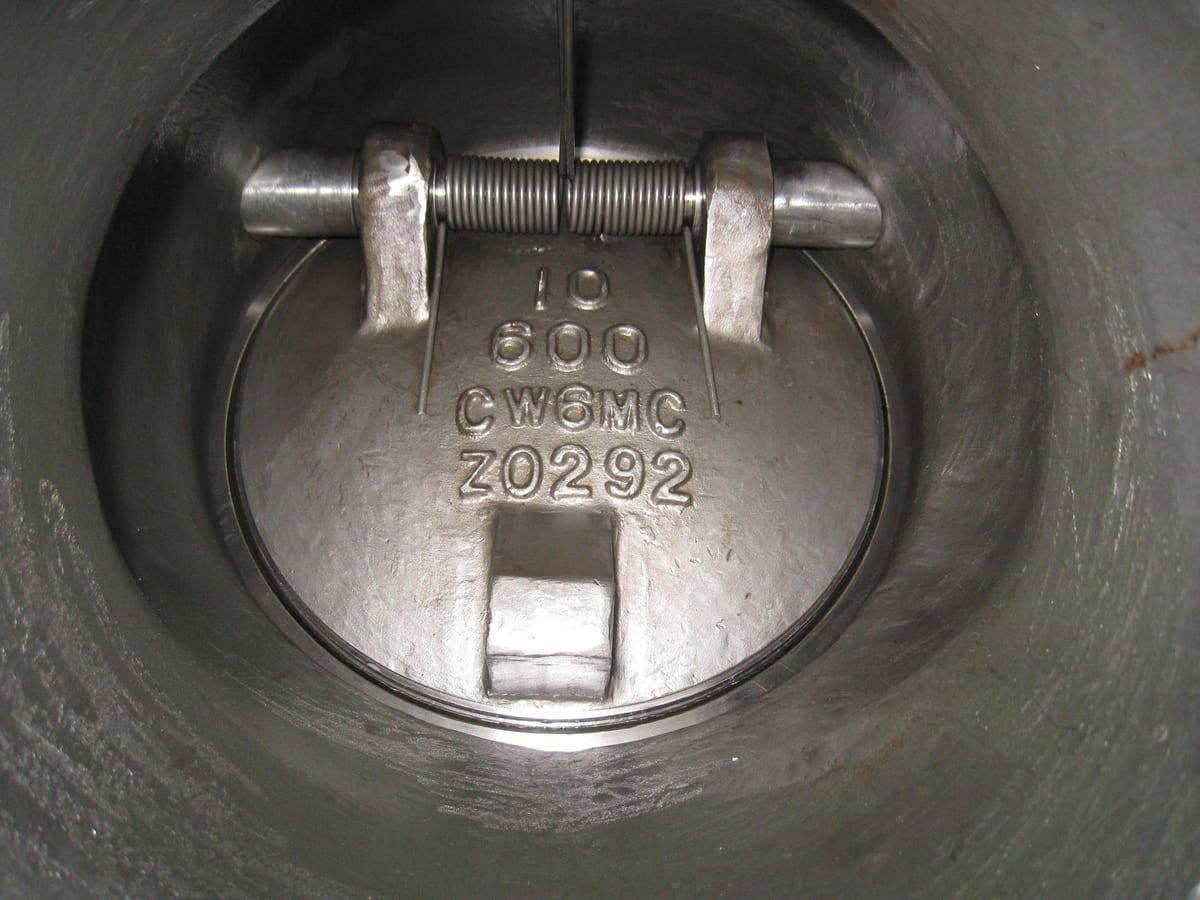
A 1-1/2 inch PVC union check valve with a flexible flapper that bends over a radius rather than slamming a hard seat.
#ad we earn a commission · Amazon shows the current price
| Type | PVC union check valve with a flexible flapper |
|---|---|
| Size | 1-1/2" slip x slip union, fits 1-1/4" and 1-1/2" pipe |
| Orientation | Vertical or horizontal |
| Noise | Flapper bends over a radius rather than slamming a hard seat |
This is the part that makes a two-pump pit work at all. Without a check valve on each pump's discharge, the running pump pushes water straight down the idle pump's outlet and back into the basin, and neither pump ever clears the pit. It is the single most common way a dual installation is plumbed wrong.
The union body earns its place in this application specifically. In a pit with two pumps and two valves, being able to unscrew a valve for service rather than cutting pipe is the difference between a tidy job and a mess.
What it gets right
- Union body, so it comes apart for service without cutting pipe — valuable on a crowded pit
- Fits 1-1/4" and 1-1/2" pipe, which covers both pumps in most installations
- Flexible flapper bends over a radius instead of slamming, so two valves do not mean twice the noise
- Mounts vertically or horizontally
Where it falls short
- Two valves means two more joints to get right in a confined space
- A flapper valve has a small permanent head loss
Specifications from Zoeller check valve distributor listing.
LevelGuard Z24800A1Z solid-state switch
Solid-state level sensing with no float and no moving arm, mounted vertically so it takes almost no horizontal space.
#ad we earn a commission · Amazon shows the current price
| Type | Solid-state field-effect level sensing, no float and no moving arm |
|---|---|
| Orientation | Vertical, so it needs very little horizontal space in the pit |
Two tethered floats in one basin is the classic dual-pump mistake: each float swings through an arc, and sooner or later one catches on the other pump or its pipework. A solid-state sensor has no arc, which is why it is the sensible switch choice as soon as a pit holds two pumps.
The trade-off between switch types, including how much pump life a long tether buys you, is set out in vertical vs tethered float switch.
What it gets right
- No swinging float, so nothing to foul on the second pump, the second valve or the basin wall
- Vertical body needs very little horizontal clearance
- In a two-pump pit, the crowding problem is exactly what this solves
Where it falls short
- Costs more than a mechanical float
- Switching levels are less freely adjustable than a tether's
- Electronics in a wet pit are a different reliability question, not an absent one
Specifications from Amazon listing (search).
One discharge line or two?
Two separate lines out of the house is the better engineering answer and often the impractical one, because it means a second penetration through the foundation and a second run to the discharge point. What it buys you is complete independence: a blocked or frozen line takes out one pump, not both.
One shared line is what most installations use. It works, with two conditions: each pump keeps its own check valve on its own vertical riser before the tee, and the shared section is sized for both pumps running simultaneously. If you merge two pumps into a pipe sized for one, the second pump will be throttled by the first exactly when you need it most.
Two identical pumps, or one big and one small?
Two identical pumps is the simpler and usually better choice. Spares and switches interchange, both have the same curve so the shared discharge sizing is predictable, and you can rotate which one leads if you want to even out the wear.
The case for mismatched pumps is a lead pump sized to the ordinary inflow plus a larger second pump held back for storm conditions. It works, but you now have two sets of spares, and the shared discharge must be sized for the larger pump plus the smaller one running together. Unless you have a clear reason, match them.
Questions people ask
Can you put two sump pumps in one pit?
Yes, and it is the cheapest real redundancy against a pump failing. Three conditions: each pump needs its own check valve on its own riser, the switch heights must be staggered so one pump leads and the other only joins in when needed, and the basin needs enough width — about 18 inches is a realistic minimum.
Do two sump pumps need two check valves?
Yes, one per pump, each on its own vertical riser before the two lines meet. A single shared valve downstream of the tee does not help, because the running pump can still push water backwards into the idle pump's outlet upstream of it.
How high should the second pump's switch be set?
Two to four inches above the lead pump's on point. That way the lead pump handles ordinary inflow alone and the second pump only starts when the level keeps rising — either because the lead pump has failed or because inflow has exceeded its capacity. Setting both at the same height makes both pumps short cycle on every fill.
Can two sump pumps share one discharge pipe?
Yes, provided each pump has its own check valve before the tee and the shared section is sized to carry both pumps running at once. Merging two pumps into a pipe sized for one means the second pump is throttled by the first exactly when you need it.
Is a second AC pump better than a battery backup?
They cover different failures. A second AC pump covers a dead pump, a stuck float and inflow beyond one pump's capacity. It does nothing in a power cut, which is when a large share of basements flood. If outages are your main risk, buy the battery backup first.
Sources
Read next
The best sump pump check valves
A forty-dollar valve is the single most common reason a healthy pump appears to be failing. It is also the easiest thing in the pit to replace.

Sump pump discharge pipe size
The pump is rated against a certain resistance. Every reduction, elbow and yard of corrugated hose adds to it — and the pipe is often the real bottleneck.
Vertical vs tethered float switch
The switch is the part that fails, and the two common types fail differently. Pit width decides most of this argument before anything else does.

The best combination sump pump systems
One box, two pumps, floats already set at the right heights. It removes the mistake that disables most home-built backup installations.
What size should a sump pit be?
The hole constrains everything that goes in it. Pit dimensions rule out more pumps than horsepower ever will.