The best hydraulic cement for a leak you need to stop now
The only product in this aisle you can use while water is actively coming through the wall. Every basement should own a tub.
We earn a commission if you buy through our Amazon links, at no cost to you. We do not bench-test these products and we never take free product — how we pick · affiliate disclosure
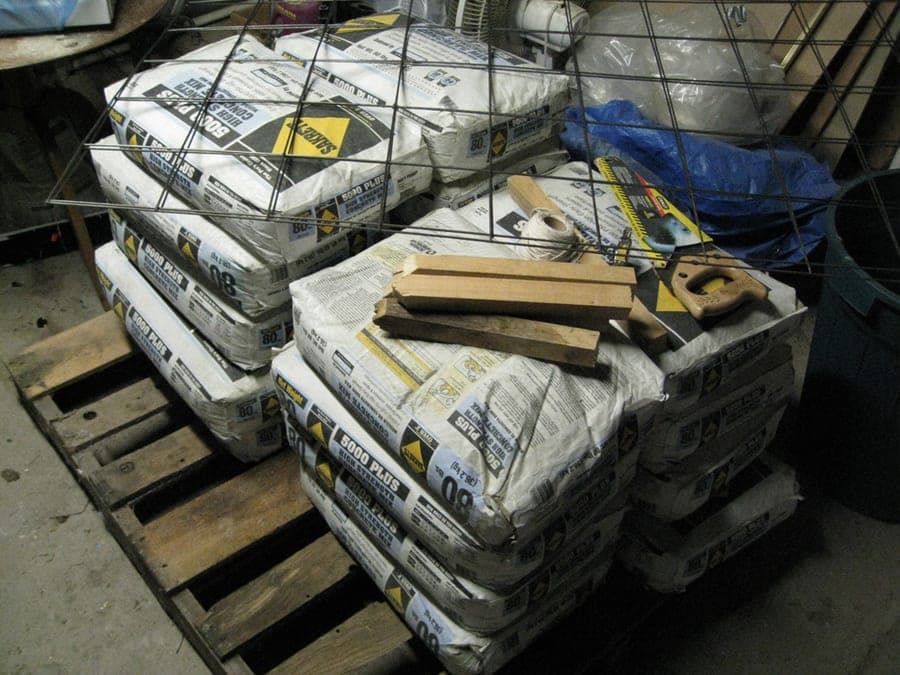
Hydraulic cement is a rapid-setting cement that expands slightly as it cures. Both properties exist for one purpose: to let you plug a hole that has water coming out of it. Ordinary mortar washes out before it sets and shrinks as it cures, which is why it fails at this job.
What it is for
- Form tie-rod holes in poured walls — round holes, often weeping, the classic use.
- Pipe and conduit penetrations through the foundation.
- The wall-floor cold joint, where the slab meets the wall — though if water is coming in all along it, the underlying problem is pressure.
- Holes and voids left by removed fixings or broken-out concrete.
What it is not for
- Moving cracks. It is rigid, and it will crack again alongside the repair.
- Structural repair. It plugs; it does not restore the wall's strength.
- Large areas. It is a plug material, not a coating.
- Hydrostatic pressure across a whole wall. No cement applied inside fixes a water table outside.
Quick picks
| # | Product | Best for | Score | Price |
|---|---|---|---|---|
| 1 | DRYLOK Fast Plug hydraulic cementSets in minutes while wet, expands as it cures, and locks itself into the hole. | Fast setting on an active leak | 9.0 | Check price on Amazon #ad we earn a commission · Amazon shows the current price |
| 2 |  Quikrete Hydraulic Water-Stop CementThe same job from the biggest name in bagged cement, usually the easiest to find locally. Quikrete Hydraulic Water-Stop CementThe same job from the biggest name in bagged cement, usually the easiest to find locally. | Larger repairs and wider availability | 8.8 | Check price on Amazon #ad we earn a commission · Amazon shows the current price |
Scores are ours and editorial, not lab measurements — see how we pick. Tap a row for the full write-up.
DRYLOK Fast Plug hydraulic cement
Sets in minutes while wet, expands as it cures, and locks itself into the hole.
#ad we earn a commission · Amazon shows the current price
| Type | Quick-setting hydraulic cement |
|---|---|
| Set time | 3 to 5 minutes |
| Works under water | Patches holes where water is actively flowing through them |
| Composition | Sand and cement, 100% solids |
| Coverage | 16 cu in per lb |
The chemistry here is genuinely different from ordinary patching compound: it sets fast enough to resist being washed out, and it expands into the void rather than shrinking away from it. That combination is what lets you push it into a hole with water coming through.
Mix no more than a handful at a time. The first time most people use it they mix a bucket and watch two-thirds of it go off before they can place it.
What it gets right
- Designed specifically for stopping running water, not merely tolerating damp
- Expands slightly as it sets, which is what makes the plug hold
- Long shelf life, so a tub bought today is useful in three years
Where it falls short
- Working time measured in minutes — mix tiny batches or waste it
- Rigid: not a fix for a crack that is still moving
- Will not bond to a dusty or unsound surface
Specifications from DRYLOK Fast Plug product data.
Quikrete Hydraulic Water-Stop Cement
The same job from the biggest name in bagged cement, usually the easiest to find locally.
#ad we earn a commission · Amazon shows the current price
| Type | Fast-setting hydraulic cement for active leaks |
|---|---|
| Set time | Very fast; mix only what you can place immediately |
There is very little to choose between the two on performance. Availability decides it: whichever is on the shelf when you need it is the right one, and this is usually on the shelf.
What it gets right
- Stocked almost everywhere, including at 8pm on a Sunday
- Published technical data to work from
- Economical for larger jobs such as a run of wall-floor joint
Where it falls short
- Same short working time
- Same rigidity limitation
- Larger pack sizes can be wasteful for one hole
Specifications from Amazon listing (search).
Technique: the part that decides whether it holds
- Undercut the holeChisel the opening so it is wider inside than at the surface — a dovetail profile. This is the single biggest factor in whether the plug stays put, because it mechanically locks the cement in place.
- Clean out dust and loose materialThe cement needs sound concrete to grip. Brush and flush the hole out before mixing anything.
- Mix a small batch, stiffEnough for this one hole, mixed to a putty consistency. Too wet and it will not hold its shape against running water.
- Press and holdForce it into the hole with a gloved thumb and hold firm pressure for the stated set time, usually a few minutes. Holding is the step people skip.
- Let it cure before coatingGive it the full cure time before applying any waterproofing coating over it, or the coating fails along the patch.
Questions people ask
How fast does hydraulic cement set?
Typically three to five minutes from mixing, depending on product and temperature. Mix very small batches — a handful at a time is the right scale.
Can I use hydraulic cement on a crack?
On a stable, non-structural crack it works as a plug. On a crack that still moves seasonally it will fail, and injection is the right repair.
Will it hold against water pressure?
At a discrete hole, yes, remarkably well, especially with the hole undercut. Across a whole wall under hydrostatic pressure, no.
Can I paint over it?
Yes, once fully cured. Follow the cure time before applying a masonry waterproofer, or the coating will lift along the patch.
Sources
Read next

The best basement crack repair kits
A single wet line down a wall is a crack, and a crack has three different fixes depending on whether it is wet, moving, or holding the house up.
How to seal basement wall cracks
Surface patching a crack is a decorative exercise. Water pressure gets behind it within a season. Injection is the repair.

The best basement waterproofing paint
These products work on exactly one problem. Used on the right wall they are excellent; used on the wrong one they peel off within a year.

Interior vs exterior basement waterproofing
One manages water that has reached the wall. The other stops it arriving. They solve different problems and the sales pitch rarely says so.

Basement waterproofing cost
The range runs from two downspout extensions to a full excavation. Understanding which end you are at is worth more than any national average.