Best sump pumps and Consumer Reports: what it actually tests
Everyone searches for a Consumer Reports sump pump rating. It does not exist in the form people expect, and what does exist is more useful than they realize.
We earn a commission if you buy through our Amazon links, at no cost to you. We do not bench-test these products and we never take free product — how we pick · affiliate disclosure

"Best sump pumps consumer reports" is one of the most-typed phrases in this category, and it rests on an assumption that turns out to be wrong. People expect a Consumer Reports ratings table for primary sump pumps, the way there is one for dishwashers or tires. There is not one.
What Consumer Reports does rate, and rates in a lab with a published method, is sump pump BACKUP systems. Its buying guide is explicit about it: the tests that determine its ratings "use rising water levels to recreate the scenario of a main system failure." That is a backup test. The primary pump in that scenario is assumed to have already died.
Once you know that, the search becomes answerable. This page sets out exactly what the CR method measures, why the absence of a primary-pump rating is not an oversight, how to use the backup ratings whether or not you have a membership, and which backup systems hold up against the criteria that method implies.
What Consumer Reports actually measures
The method is published on the CR buying guide for the category, and it is specific enough to be useful even without reading a single rating. Four things stand out.
- Flow is measured at 10 feet of vertical lift, with each pump connected to a 10-foot vertical discharge pipe — not at the zero-lift figure manufacturers print on the box.
- Battery-powered units are tested on a 12-volt deep-cycle AGM battery with 75 amp-hour capacity, so every battery model is compared on the same power source.
- Amperage draw during operation is recorded, which is what lets a run time be calculated rather than claimed.
- Water-powered systems are measured by weight, by weighing a collection barrel before and after pumping out, because you cannot read their output off an electrical spec.
CR also says it factors in installation difficulty, giving better marks to models that do not require much fiddling with existing plumbing. Across the category it covers all three backup architectures: battery-powered, water-powered and combination units.
Why there is no Consumer Reports primary pump rating
It is reasonable to wonder whether this is a gap CR simply has not got around to. We cannot speak for their editorial decisions, but the shape of the category explains a lot. Primary sump pumps are commodity electromechanical devices whose published flow curves are comparatively honest and easy to verify, and whose failures are overwhelmingly about the float switch and the installation rather than the pump. A lab bench ranking of primary pumps would mostly reproduce the manufacturers' own curves.
Backups are the opposite. Their marketing is full of "up to X hours" claims that depend entirely on an unstated battery, their flow figures are usually quoted at zero lift, and the architectures are not directly comparable to each other. That is a category that genuinely needs an independent lab, and that is where CR has pointed its equipment.
The practical consequence: if you want third-party measurement, you can have it for your backup and not for your primary. For the primary, size it yourself. What size sump pump do I need is the sizing method, and how to choose a sump pump is the shortlist process.
The criteria we judge backups on, and why
We do not run a lab. We are not going to pretend otherwise, and nothing on this site is bench-tested. What we can do is take the criteria an independent lab method implies and apply them consistently to published manufacturer specifications, which is exactly what the picks below are built on.
- Does it publish flow at a stated lift? A backup quoting only a zero-lift GPH number has told you nothing you can use. This is a pass/fail criterion, not a scoring one.
- Does it publish current draw? Without amps at 12 volts you cannot calculate run time from a battery's amp-hour rating, and the manufacturer's hour claim is unfalsifiable.
- Does it watch itself? Backups fail silently. Self-testing, a high-water alarm and a switch-obstruction alert all address the real failure mode, which is discovering the problem during the flood.
- How hard is the install? CR weights this and so do we. A system that needs the discharge re-plumbed is a system more people will install badly.
- What does endurance depend on? A battery system is limited by amp-hours; a water-powered system is limited by municipal pressure. Neither limit is a flaw, but you need to know which one you are buying.
Quick picks
| # | Product | Best for | Score | Price |
|---|---|---|---|---|
| 1 |  Basement Watchdog Emergency (BWE)A plain DC backup pump with an honest published flow curve, and one of the models in CR's test group. | The backup Consumer Reports has a test page for | 8.0 | Check price on Amazon #ad we earn a commission · Amazon shows the current price |
| 2 | 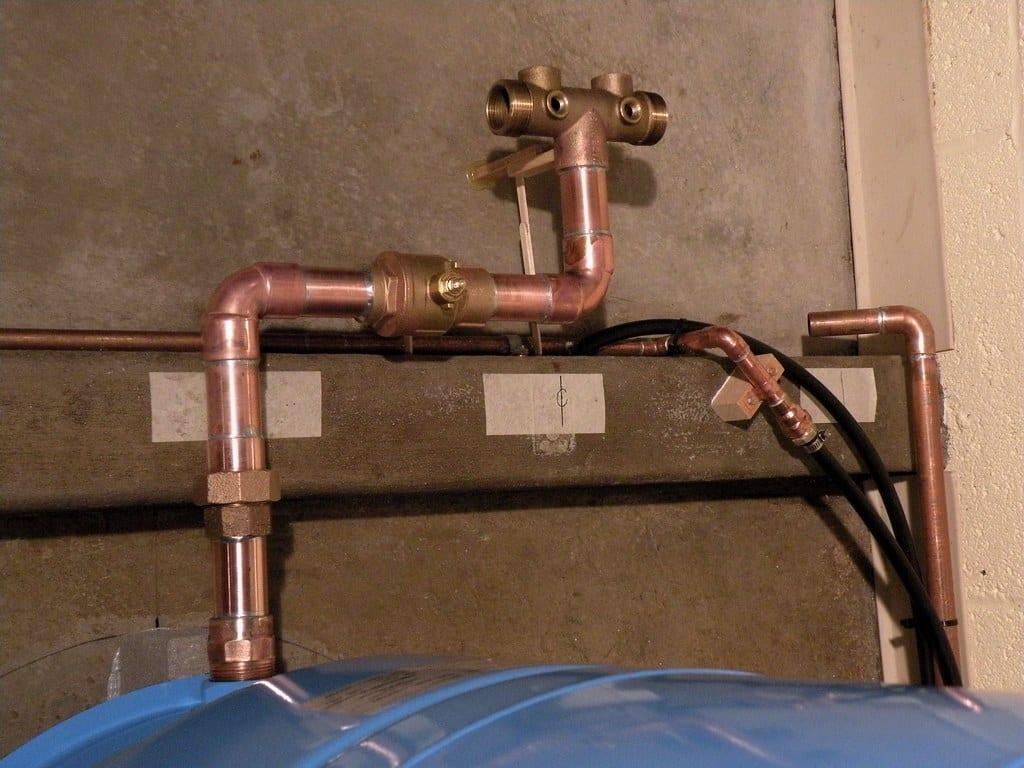 Basepump RB750-EZNo battery, no charger, no maintenance schedule — it runs on house water pressure for as long as the outage lasts. | Outages longer than any battery | 8.0 | Check price on Amazon #ad we earn a commission · Amazon shows the current price |
| 3 | 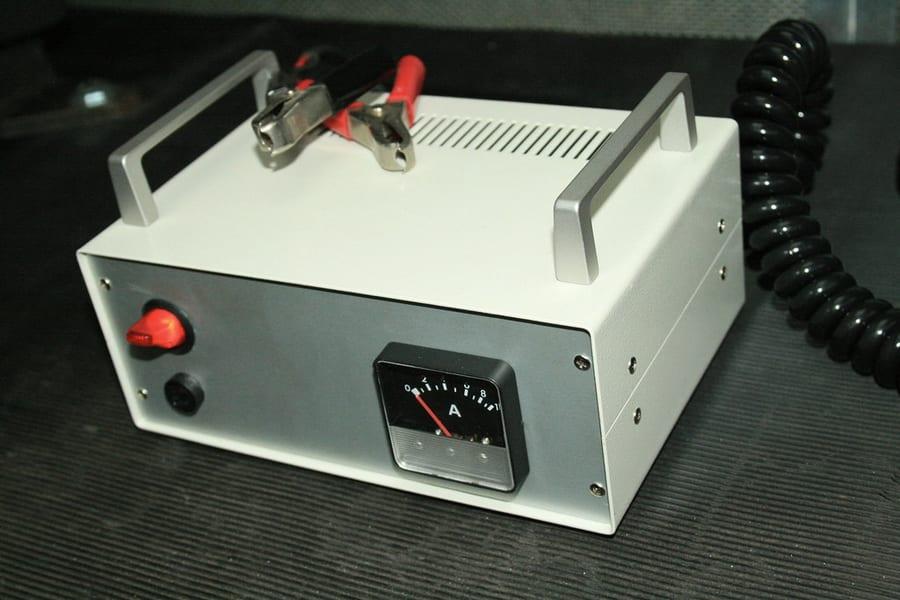 Zoeller AquaNot 508 battery backup systemSelf-testing monitoring and a published flow curve, though CR has no public model page for it. | A backup that tests itself | 8.3 | Check price on Amazon #ad we earn a commission · Amazon shows the current price |
| 4 | 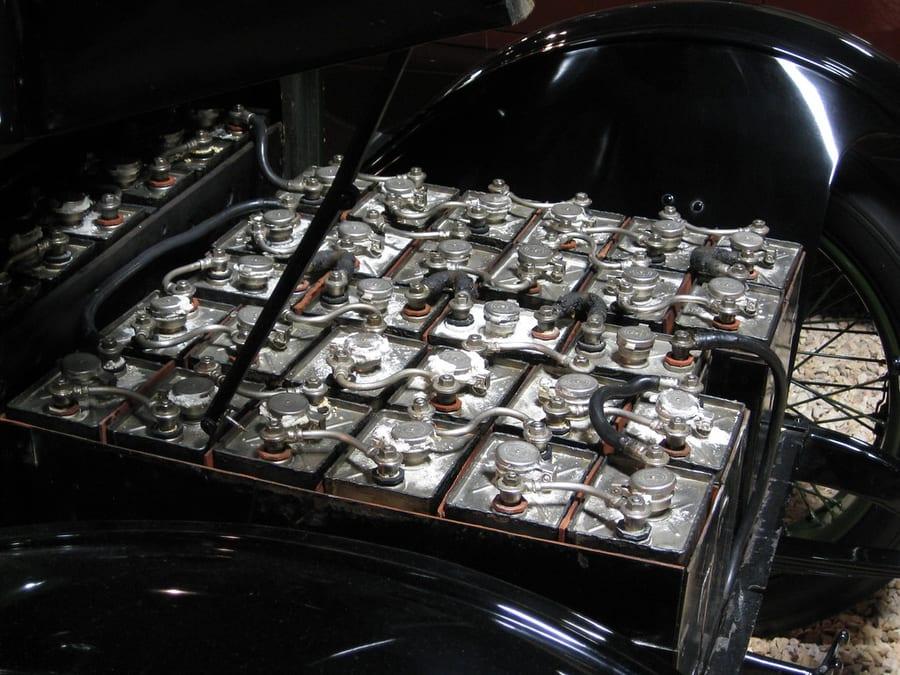 Basement Watchdog AGM standby batteryA maintenance-free AGM standby battery, which is the chemistry the independent test method assumes. | Matching the battery CR tests with | 8.4 | Check price on Amazon #ad we earn a commission · Amazon shows the current price |
Scores are ours and editorial, not lab measurements — see how we pick. Tap a row for the full write-up.
Basement Watchdog Emergency (BWE)
A plain DC backup pump with an honest published flow curve, and one of the models in CR's test group.
#ad we earn a commission · Amazon shows the current price
| Type | 12 V DC battery backup pump, thermoplastic |
|---|---|
| Horsepower | 1/3 HP |
| Current draw | 6.5 A at 12 V |
| Switch | Dual float switch plus a battery fluid level sensor |
| Charger | 0.4 A |
| Included | Control unit, pump with 1-1/2" PVC adapter, battery box, charger |
| Battery | Not included, sold separately |
| Flow, by lift | 2,000 GPH at 0 ft · 1,000 GPH at 10 ft |
The reason to start here is not that it is the most powerful backup available. It is that its published numbers line up with how an independent lab measures the category: flow quoted at a stated lift, and current draw quoted so run time can be calculated rather than guessed.
That matters more than it sounds. Most backup pumps are sold on a zero-lift GPH figure and a vague "up to X hours" claim. A pump that tells you 1,000 GPH at 10 feet and 6.5 A at 12 V is a pump you can actually plan around.
What it gets right
- Publishes flow at 10 feet (1,000 GPH) as well as at zero lift, which is the figure CR's method uses
- 6.5 A draw at 12 V, so a decent deep-cycle battery gives real run time
- Dual float switch plus a battery fluid level sensor, so the system watches itself
- Consumer Reports maintains a model page for it, so a membership gets you an independent read
Where it falls short
- Battery is not included and is a significant extra cost
- Flow halves between zero lift and 10 feet, which is a lot of loss
- Thermoplastic pump body — fine for intermittent backup duty, not for primary duty
Specifications from Basement Watchdog BWE specification listing, Basement Watchdog BWE retail listing.
Basepump RB750-EZ
No battery, no charger, no maintenance schedule — it runs on house water pressure for as long as the outage lasts.
#ad we earn a commission · Amazon shows the current price
| Type | Water-powered backup, ejector mounted on the ceiling joist above the pit |
|---|---|
| Rated capacity | 725 GPH, measured at 10 ft of lift on 50 PSI average supply pressure |
| Water used | Basepump states 1 gallon of city water removes 2 gallons of sump water in its bullets, and 1.5 to 2 gallons in its table |
| Moving parts | Hydraulic float; no electrical parts at all |
| Run-on | A timer keeps the ejector running about 30 to 45 seconds after the float drops |
| Alarm | A high-water alarm is included with every pump |
| Radon | Compatible with a sealed radon pit cover |
| Warranty | Five years |
Consumer Reports tests water-powered backups differently — weighing a collection barrel before and after pumping — precisely because they are a different animal. The relevant comparison is not peak flow, it is what happens in hour nine of an outage, and that is where every battery system loses to this one.
The honest cost is water. You are spending municipal supply to move groundwater, at a ratio that is never flattering. For a storm that knocks power out for a day, that is a cheap insurance premium. For a pit that cycles constantly, it is the wrong tool.
What it gets right
- Unlimited run time while the mains water supply holds
- Nothing to charge, test or replace every few years
- Consumer Reports maintains a model page for it, including its water-powered test method
- Rated around 15 GPM at 15 feet of lift, which is real capacity rather than a trickle
Where it falls short
- Uses potable water to pump water, and your water meter will notice
- Ceiling-mounted installation above the pit is a real plumbing job, not a plug-in
- Useless on a private well, because a well pump needs the power that just went out
- Some jurisdictions restrict or require backflow protection on this kind of connection
Zoeller AquaNot 508 battery backup system
Self-testing monitoring and a published flow curve, though CR has no public model page for it.
#ad we earn a commission · Amazon shows the current price
| Type | 12 V DC battery backup pump, self-testing |
|---|---|
| Monitoring | Alerts on power outage, high water and switch obstruction |
| Run time | Up to about 6 hours of continuous pumping |
| Battery | 12 V deep-cycle, sold separately on most SKUs |
| Flow, by lift | 2,340 GPH at 5 ft · 1,800 GPH at 10 ft |
| Warranty | Three years, limited |
We include this deliberately, labeled honestly: it is a strong backup system that Consumer Reports has no public page for. A page about CR ratings that only recommended CR-rated models would be pretending the ratings are the whole market, and they are not.
What earns it a place is the self-testing. The most common way a backup system fails is quietly, months before you need it. A controller that checks itself and complains out loud addresses the actual failure mode.
What it gets right
- 1,800 GPH at 10 feet of lift, better than most DC backups at that height
- Alerts on power loss, high water and an obstructed switch, so silent failure is less likely
- Three-year limited warranty
Where it falls short
- Consumer Reports does not publish a model page for it, so there is no independent lab read
- Battery sold separately on most SKUs
- About six hours of continuous pumping is the ceiling, which a long outage will exceed
Specifications from Zoeller AquaNot 508 battery backup listing, Zoeller 508-0006 AquaNot with M53 primary.
Basement Watchdog AGM standby battery
A maintenance-free AGM standby battery, which is the chemistry the independent test method assumes.
#ad we earn a commission · Amazon shows the current price
| Type | Maintenance-free AGM standby battery |
|---|---|
| Designed for | Basement Watchdog backup controllers |
This is here because of a detail in the test method rather than for its own sake. Consumer Reports states that it tests battery-powered units with a 12-volt deep-cycle AGM battery of 75 amp-hour capacity. If your system runs a different chemistry or a much smaller battery, the run times in any published rating will not describe your basement.
Matching the chemistry is the cheap way to make an independent figure mean something at your pit. Matching the capacity is the other half, and it is worth checking the amp-hour rating of whatever you buy rather than assuming.
What it gets right
- AGM construction needs no fluid top-ups, unlike a flooded standby battery
- Designed for Basement Watchdog controllers, so charger behavior matches
- Using AGM makes published lab run-time figures a fair comparison for your system
Where it falls short
- Costs more than a flooded deep-cycle battery of similar capacity
- Still a consumable — plan on replacement every few years
- Capacity is what sets run time, so a small AGM is not automatically better than a large flooded battery
Specifications from Basement Watchdog battery range (retail listing).
Models Consumer Reports lists that we do not cover
For transparency: CR maintains model pages in this category for several backup systems this site does not currently cover, including the Star Basement Sentry STBB100, the Zoeller STBC101 thermoplastic battery-powered unit, the Wayne WSS30VN combination system and the K2 Pumps ASP00001K water-powered backup. Their presence on CR is a reason to look them up, not a reason for us to write about products we have not researched properly.
We have deliberately not quoted any CR score, rank or verdict anywhere on this page. Those sit behind a membership, they are CR's work rather than ours, and paraphrasing a paywalled rating from a search snippet is how misinformation gets made. If you want the scores, the membership is the way to get them.
How to get the same answer without a membership
The genuinely transferable part of the CR approach is not the ratings — it is the method. You can apply it yourself in an afternoon, and it will tell you more about your own basement than any national ranking can.
- Measure your real liftTape-measure from the pump's discharge outlet to the highest point the water has to climb before it starts running downhill. That number, not zero, is the lift you compare pumps at.
- Measure your inflowDuring steady rain, let the pit fill to the switch-on point, unplug the pump and time how long the water takes to rise one inch. Multiply by the pit's area for a rough gallons-per-minute figure.
- Reject any pump that will not state flow at your liftIf the only published figure is zero-lift GPH, you cannot size against it. That alone eliminates a surprising share of the market.
- Calculate run time yourselfDivide your battery's amp-hour rating by the pump's current draw at 12 V for a crude ceiling, then halve it, because a backup cycles rather than running flat out and no battery delivers its rated capacity in a cold basement.
- Test the whole system twice a yearPour water in until the float lifts, with the primary pump unplugged, and watch the backup take over. A system nobody has ever triggered is a system nobody has verified.
Steps four and five are where most backup systems are actually won or lost. There is a longer version of the run-time math in how long does a sump pump battery last, and the full test routine is in how to test a sump pump.
Battery, water-powered or combination?
| Architecture | What limits it | Best when |
|---|---|---|
| Battery backup | Amp-hours, and battery age | You have an existing primary pump and outages are short |
| Water-powered | Municipal water pressure | Outages are long and you are on city water, not a well |
| Combination unit | Amp-hours, same as battery | You are replacing the primary anyway and want one pre-plumbed assembly |
If you have not decided which architecture you want, water-powered vs battery works through the trade in detail, and do I need a battery backup is the step before that.
Questions people ask
Does Consumer Reports rate sump pumps?
It rates sump pump backup systems — battery-powered, water-powered and combination units — using a lab method built around a simulated primary-pump failure. It does not publish a ratings table for primary sump pumps.
What is the Consumer Reports best sump pump?
There is no such pick for a primary pump, because the category is not rated. There are CR model pages and ratings for backup systems, which require a membership to read in full.
How does Consumer Reports test sump pump backups?
By raising water levels to simulate a main pump failure, measuring flow through a 10-foot vertical discharge pipe, running battery models on a 12-volt deep-cycle AGM battery with 75 amp-hour capacity, recording amperage draw, and weighing a collection barrel to measure water-powered output. Installation difficulty is also factored in.
Do I need a Consumer Reports membership to use any of this?
Not for the method. The buying guide and the test description are public; the scores and rankings are not. The method is the transferable part, and you can apply its 10-foot-lift standard to any pump listing yourself.
Why do other sites publish Consumer Reports sump pump top 10 lists?
Because the query gets traffic. If a list ranks primary pumps and credits CR, treat it as unverified — CR does not rate primary pumps. Some such lists are quietly reporting backup systems instead, which is a different product entirely.
Is a backup system worth it if my primary pump is new?
The question is not the pump's age, it is what happens when the power goes out. Storms take out power and raise the water table at the same time, so a new primary pump on a dead circuit is just a heavy object in a hole. If a flood would reach anything you cannot replace, yes.
Does the AGM battery choice really change the result?
It changes the run time, which is usually the number people care about. Chemistry affects how much of the rated capacity you actually get and how the charger behaves; capacity in amp-hours sets the ceiling. Matching both to what a test assumed is the only way its run-time figure describes your basement.
Sources
Read next

The best battery backup sump pumps
The storm that fills your pit is the storm that takes the power out. This is the half of the system that works when the other half cannot.
Water-powered vs battery backup sump pump
One has no runtime limit and four conditions attached. The other works anywhere and runs out. That is the whole decision.

Do I need a battery backup sump pump?
The storms that fill your pit are the storms that take the power down. The question is what a few hours of no pumping would actually cost you.
How long does a sump pump battery last?
Think in cycles pumped, not hours elapsed. And replace the battery on age, because it will test fine right up until it does not.
The best batteries for a backup sump pump
Your backup system is only as good as the battery behind it, and the battery is the part everyone forgets until the night it matters.

Sump Pumps Direct is now Ferguson Home
The specialist sump pump retailer people still search for by name has been folded into Ferguson. Here is what that changes for you.