How high should the water be in a sump pit?
Not empty. A pump that pulls its pit dry is not being thorough, it is running on air and wearing out its seal.

The water in a sump pit should normally sit between about 2 and 8 inches deep, and it should never be pumped completely dry. The exact figures are set by the pump's switch: a Zoeller M53, for example, specifies its float turning the pump on at 7-1/4 inches and off at 3 inches. Between cycles the water resting a few inches up the basin is correct and healthy, because a submersible pump needs water around it to cool the motor and to keep the seal wet.
That is the short answer. The useful part is what a level outside that range tells you.
Why a dry pit is the wrong goal
A submersible pump uses the water in the pit as a heat sink, and the shaft seal relies on being wet. Run the level below the intake and three things happen: the motor loses its cooling, the pump cavitates and draws air instead of water, and the seal starts to dry out. All three shorten the pump's life, and none of them is visible from the top of the stairs. A pump whose switch is set to keep going until the basin is empty is not more thorough — it is being damaged every cycle.
A small permanent pool also keeps the pit from drying out and cracking around the inlet, and it stops the sewer-gas-like smell you get from a bone-dry basin with a dried trap nearby.
Reading your own level
| What you see | What it means | What to do |
|---|---|---|
| 2-8 in of water between cycles | Normal operation | Nothing |
| Bone dry, always | Either a very low water table or the switch is set far too low | Check the intake stays submerged; confirm the pump still primes |
| Within a few inches of the top | The pump is not keeping up or is not running | Treat as urgent — check power and float |
| Level never changes, pump never runs | Float stuck, no power, or the pit is fed by nothing | Pour water in and watch; see the testing guide |
| Drops, then immediately rises again | Discharge water is draining back | Fit or replace the check valve |
| Higher than it used to be, same weather | Pump losing capacity, or a restricted discharge | Check for a clog before replacing the pump |
Setting the on and off points
On most pumps the switch arrangement decides both levels, and the amount you can adjust depends on the switch type.
- Integral vertical float: fixed on and off points, published in the specification. Nothing to set, nothing to get wrong.
- Tethered float: the tether length sets the spread. Longer tether means a deeper draw-down, fewer starts, longer cycles. Keep the off point above the pump's intake.
- Piggyback switch with a controller: some add a run-on timer that keeps the pump going a few seconds after the float drops, which lowers the finished level without moving the switch.
- Solid-state sensing: fixed sensing points, no moving parts, no adjustment — and nothing to drift.
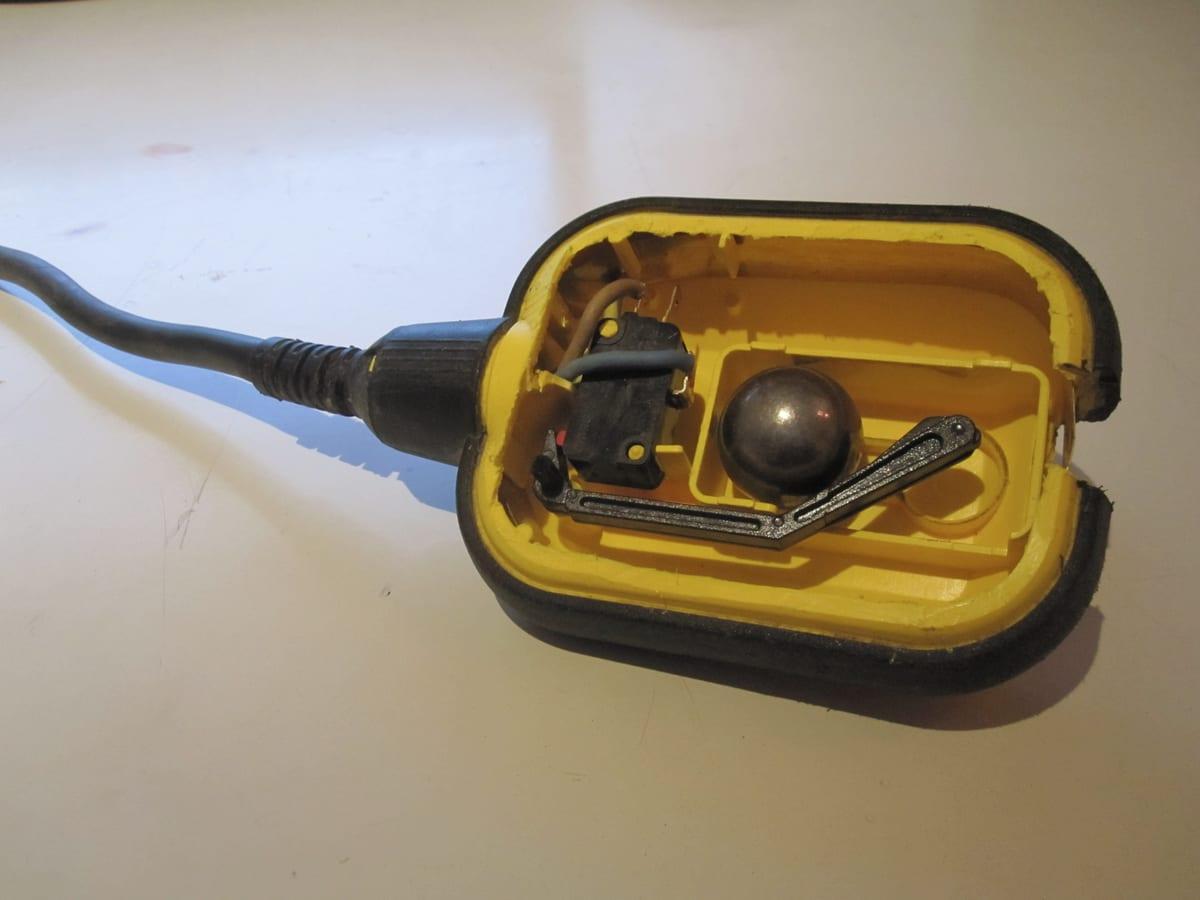
SJE-Rhombus tethered float switch
A tethered piggyback float with up to 24 inches of adjustable tether, which is what actually sets the on and off points.
#ad we earn a commission · Amazon shows the current price
| Type | Tethered float, piggyback plug |
|---|---|
| Rating | Up to 230 VAC, 13 A maximum |
| Switching points | About 45 degrees above and below horizontal |
| Tether | Up to 24 in, which sets the on/off spread |
| Liquid temperature | Up to 140 F |
If the question is where the water should sit, the answer is set by the switch, and a tethered float is the one type where you control it directly. A longer tether means a deeper draw-down, fewer starts and longer cycles; a shorter tether means the opposite.
The practical limit is the basin. Give the float a clear arc away from the pipe, and never set it so long that the off point uncovers the pump's intake.
What it gets right
- Tether length up to 24 in sets the draw-down directly
- Rated to 230 VAC and 13 A, so it suits any residential pump
- Switches about 45 degrees above and below horizontal, which is predictable
- Works with pumps up to 140 F liquid temperature
Where it falls short
- Needs horizontal swing room, so it is wrong for a narrow pit
- Can foul on the discharge pipe if the tether is set long
Specifications from Amazon listing (search).
Basement Watchdog BWC1 dual float switch
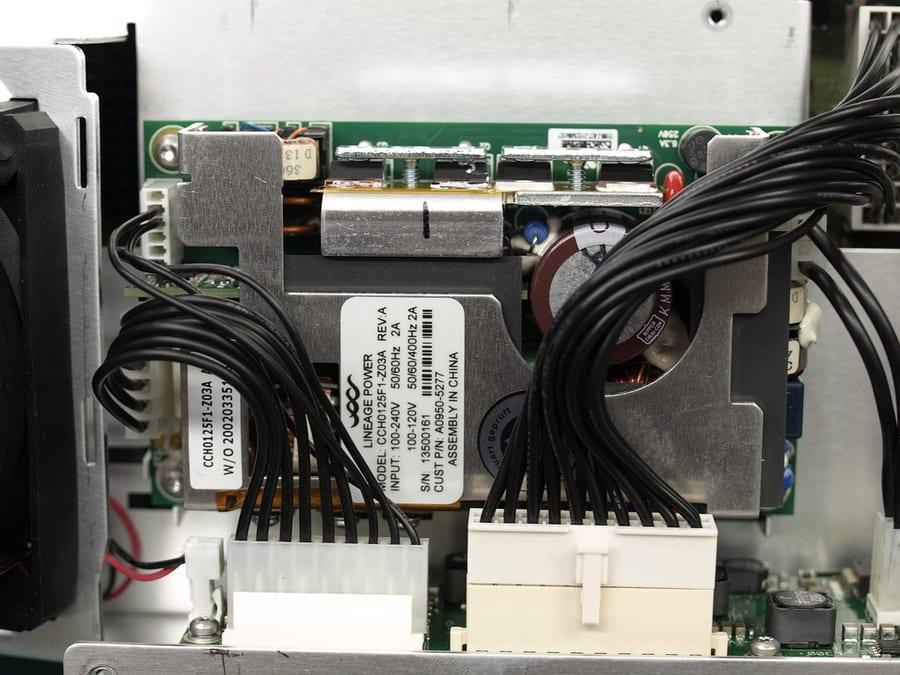
Two floats and a controller that runs the pump about ten extra seconds, so the pit finishes lower than one switch alone.
#ad we earn a commission · Amazon shows the current price
| Type | Piggyback dual float switch with a controller |
|---|---|
| Redundancy | Two floats, so one stuck float does not stop the pump |
| Trigger | Activates when water raises the float about 1/3" |
| Run-on | Controller runs the pump about 10 extra seconds after the float drops |
The run-on timer is the interesting feature for level control: the pump keeps going briefly after the float drops, which lowers the finished level and cuts the number of cycles without changing the switch height.
What it gets right
- Two floats, so one stuck float does not stop the pump
- Triggers on about a third of an inch of float rise, which is sensitive
- The ten-second run-on empties more of the pit per cycle
Where it falls short
- A controller is one more thing in the circuit
- Run-on needs the intake to stay submerged — check the level
Specifications from Basement Watchdog BWC1 switch listing.
LevelGuard Z24800A1Z solid-state switch
Solid-state field-effect level sensing with no float and no moving arm, in a vertical package.
#ad we earn a commission · Amazon shows the current price
| Type | Solid-state field-effect level sensing, no float and no moving arm |
|---|---|
| Orientation | Vertical, so it needs very little horizontal space in the pit |
In a pit where every float setting fouls something, removing the float is the fix. Field-effect sensing has nothing to swing, which also removes the most common reason a pit level drifts out of range over time.
What it gets right
- No moving parts to jam or foul
- Vertical, so it needs almost no horizontal space
- Nothing to catch on the discharge pipe
Where it falls short
- Costs considerably more than a mechanical float
- Fixed sensing arrangement rather than a tether you can tune
Specifications from Amazon listing (search).
How the level relates to cycling
The volume between the on and off points is the working volume, and the number of times the pump runs is inflow divided by that volume. Widen the gap and you get fewer, longer cycles. Narrow it and you get many short ones, which is harder on the motor because starts cause most of the wear. This is the same arithmetic as the basin size question in what size sump pit, and the same reason a wider pit extends pump life without removing any water.
If your level and your cycling both look wrong, deal with the level first. A badly set float can produce exactly the symptoms of an undersized pump, and the fix is free.
Questions people ask
How much water should be in a sump pit?
Usually two to eight inches between cycles, set by the pump's switch. Some standing water is correct: a submersible pump uses it to cool the motor and keep the shaft seal wet.
Should a sump pit be dry?
No. A permanently dry pit means either a very low water table or a switch set so low that the pump runs on air at the end of each cycle, which damages the seal and bearings.
Is it bad if the water in my sump pit is high?
Water close to the top means the pump is not keeping pace or is not running at all. Check that it has power and that the float moves freely, then look for a clog or a frozen discharge.
How do I lower the water level in my sump pit?
On a tethered float, shorten the tether so the pump switches off later; on a controller with a run-on timer, let the timer do it. Never set the off point below the pump's intake.
Why does my sump pit refill right after the pump stops?
Almost always a missing or failed check valve: the water standing in the vertical discharge pipe falls straight back into the basin when the pump stops. A check valve on the standpipe fixes it.
Sources
Read next

How often should a sump pump run?
There is no single correct number. There is a correct pattern, and a pump that breaks the pattern is telling you something specific.
The best sump pump float switches
Motors rarely die first. Switches do — and unlike a motor, a switch is a part you can replace in twenty minutes for the price of a takeout meal.
Sump pump float switch not working
If a pump has stopped doing its job, the switch is more likely to blame than the motor — and it is a fraction of the price.
What size should a sump pit be?
The hole constrains everything that goes in it. Pit dimensions rule out more pumps than horsepower ever will.
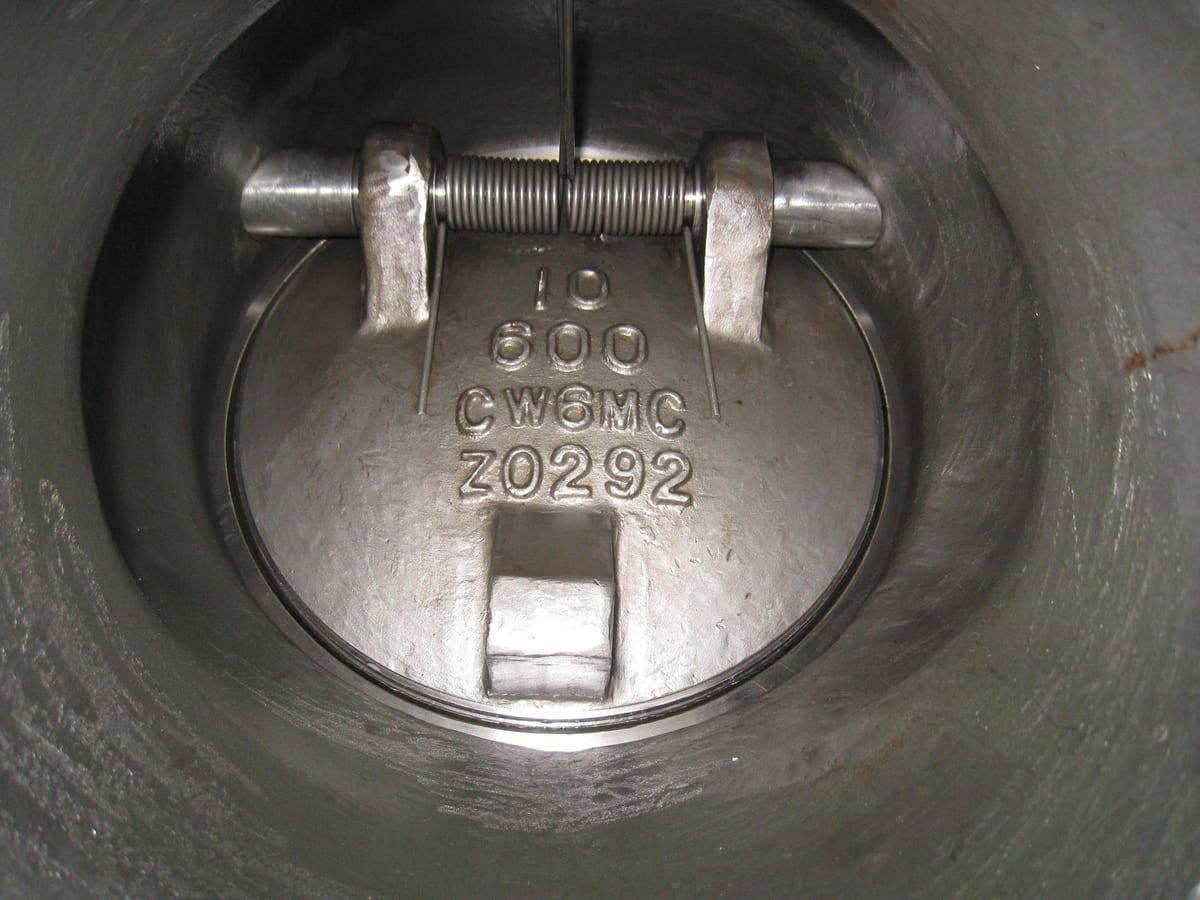
The best sump pump check valves
A forty-dollar valve is the single most common reason a healthy pump appears to be failing. It is also the easiest thing in the pit to replace.