The best sump pumps for a high water table
When groundwater sits above your slab, the pit is not responding to storms. It is holding back the water table, continuously, forever.
We earn a commission if you buy through our Amazon links, at no cost to you. We do not bench-test these products and we never take free product — how we pick · affiliate disclosure
For a high water table the pump to buy is the Wayne CDU980E: 3,500 gallons per hour at ten feet of lift, in a cast-iron and stainless housing that sheds motor heat, with a top-suction intake that keeps silt out of the impeller. It is for the homeowner whose pit never fully dries out, and it should be paired with a battery backup rather than bought alone.
A high water table is a different problem from a wet basement. A wet basement has events: a thaw, a storm, a blocked gutter. A high water table has a baseline. The groundwater level sits at or above the underside of your slab for weeks at a time, and the pit is the only reason the floor is dry. Everything about the specification follows from that one fact.
Quick picks
| # | Product | Best for | Score | Price |
|---|---|---|---|---|
| 1 |  Wayne CDU980E3,500 GPH at ten feet of lift, in cast iron and stainless, with a top-suction intake that keeps grit away from the impeller. | Continuous duty with headroom | 9.1 | Check price on Amazon #ad we earn a commission · Amazon shows the current price |
| 2 |  Liberty Pumps 287A one-piece cast-iron body with a 37 ft maximum head and a sealed magnetic float — the pump for a deep basement with a tight basin. | High lift from a narrow pit | 8.8 | Check price on Amazon #ad we earn a commission · Amazon shows the current price |
| 3 |  Zoeller 1099 (3/4 HP dual-switch submersible)Three-quarters of a horsepower with two switches, so one stuck float does not become a flooded basement. | Switch redundancy | 8.6 | Check price on Amazon #ad we earn a commission · Amazon shows the current price |
| 4 | 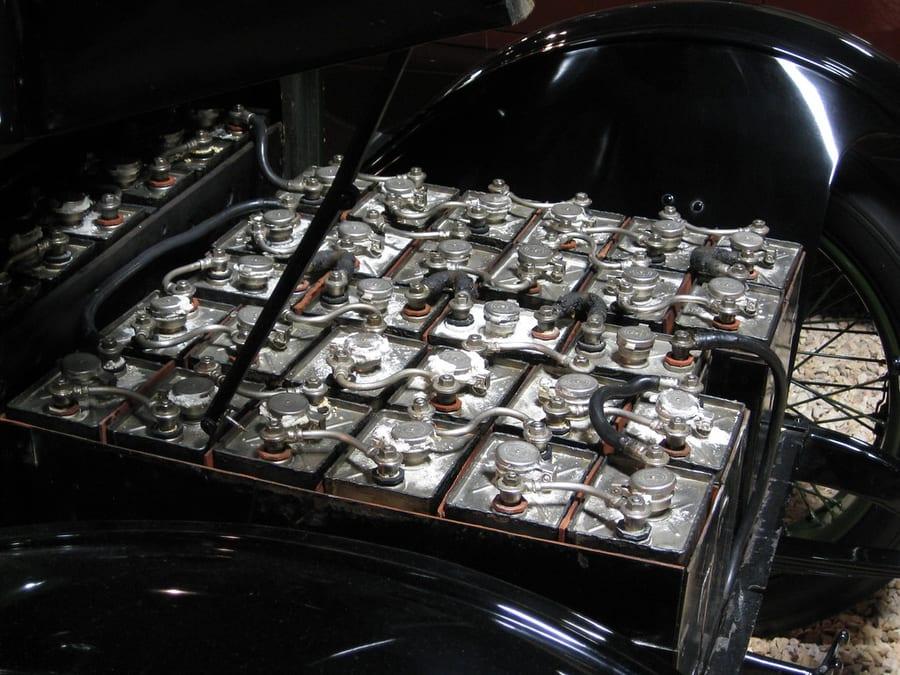 Wayne ESP25N battery backup systemA 12 V backup with a full published curve — 1,680 GPH at ten feet — which is the only thing that works when the power is out. | The outage that comes with the storm | 8.5 | Check price on Amazon #ad we earn a commission · Amazon shows the current price |
Scores are ours and editorial, not lab measurements — see how we pick. Tap a row for the full write-up.
How to tell a high water table from a drainage problem
The distinction decides what you buy, and it is easy to establish without a hydrologist.
| Symptom | High water table | Surface drainage problem |
|---|---|---|
| When the pump runs | Through dry weather too, on a regular rhythm | Only during and just after rain or thaw |
| Pit water level | Returns to the same level within minutes, always | Drops away and stays low between storms |
| Seasonal pattern | Worst in spring, present year round | Tracks the weather exactly |
| What fixes it | Capacity, redundancy and a backup | Gutters, grading and downspout extensions |
| What does not fix it | Regrading alone | A bigger pump |
Wayne CDU980E
3,500 GPH at ten feet of lift, in cast iron and stainless, with a top-suction intake that keeps grit away from the impeller.
#ad we earn a commission · Amazon shows the current price
| Type | Submersible, cast iron and stainless steel |
|---|---|
| Horsepower | 3/4 HP |
| Electrical | 120 V, 10 A |
| Discharge | 1-1/2" NPT |
| Switch | Vertical float, on at 9", off at 4" |
| Intake | Top suction, to keep debris out of the impeller |
| Seals | Carbon/ceramic shaft seal, ball bearings in a sealed oil bath |
| Flow, by lift | 4,600 GPH at 0 ft · 3,500 GPH at 10 ft |
| Warranty | Five years, limited |
A high water table turns a sump pump into a continuous-duty machine, and continuous duty is a thermal problem before it is a flow problem. The CDU980E answers both: a cast-iron and stainless body that conducts motor heat into the pit water, and 3,500 GPH still available at ten feet of lift.
The top-suction intake is the underrated feature here. A pit fed by groundwater carries fine silt continuously, and a bottom-intake pump pulls that silt straight through the impeller for years. Drawing from above the base leaves the heavy material where it settles.
The practical catch is electrical. Ten amps on a shared 15 A circuit alongside a freezer and a dehumidifier is how a basement discovers its breaker during a storm. Plan the circuit before the pump.
What it gets right
- 3,500 GPH at 10 ft published, the highest at real lift in our registry
- Cast iron and stainless, with a sealed oil-bath bearing and a carbon/ceramic shaft seal
- Top suction keeps silt out of the impeller, which matters when the pit never dries
- Five-year limited warranty
Where it falls short
- Draws 10 A, so it usually wants its own circuit
- Overkill in a pit that only runs during storms
Specifications from Wayne CDU980E specification listing, Wayne 58321 CDU980E distributor listing, Wayne CDU980E listing stating 4,600 GPH max and 3,500 GPH at 10 ft (stock verified 2026-10-29), Wayne CDU980E listing stating 120 V / 10 A, 11 in minimum pit, switch on 9 in / off 4 in, five-year warranty.
Liberty Pumps 287
A one-piece cast-iron body with a 37 ft maximum head and a sealed magnetic float — the pump for a deep basement with a tight basin.
#ad we earn a commission · Amazon shows the current price
| Type | Submersible, one-piece "Uni-Body" cast iron |
|---|---|
| Horsepower | 1/2 HP |
| Electrical | 115 V, single phase |
| Discharge | 1-1/2" |
| Solids handling | 3/4" |
| Maximum head | 37 ft |
| Switch | Vertical magnetic float, quick-disconnect 10 ft cord |
| Warranty | Three years |
In a high water table the switch usually fails before the motor does, because the switch is the part that cycles. Liberty's answer is a sealed vertical magnetic float: no exposed arm, no pivot in the water, nothing to hang up on the basin wall or the discharge pipe.
We publish the 37 ft maximum head and deliberately do not publish a headline flow figure for this model, because two distributor listings disagree (63 against 70 GPM at zero lift) and picking the flattering one would be exactly the behaviour this site exists to avoid.
What it gets right
- 37 ft maximum head, so a long vertical run does not strangle it
- Sealed vertical magnetic float with nothing exposed to foul or catch
- Quick-disconnect ten-foot cord makes service a two-minute job
- Passes three-quarter-inch solids, which a silty pit will eventually produce
Where it falls short
- Distributor listings disagree on the zero-lift flow figure, so we do not quote one
- Premium price for a half-horsepower pump
Specifications from Liberty 287 distributor listing, Liberty 287 (115 V) product page.
Zoeller 1099 (3/4 HP dual-switch submersible)
Three-quarters of a horsepower with two switches, so one stuck float does not become a flooded basement.
#ad we earn a commission · Amazon shows the current price
| Type | Submersible, cast iron, dual switch |
|---|---|
| Horsepower | 3/4 HP |
| Switch | Vertical float |
| Line | Zoeller at Home consumer range, sold through Lowe's |
| Flow, by lift | 4,800 GPH at 0 ft |
Count the cycles a high-water-table pit asks for over a year and the number is startling: a pump that runs every three minutes through a wet season does tens of thousands of starts. Every one of those is the switch working. A second switch in the same housing is the cheapest insurance against the part most likely to quit.
It sits third only because Zoeller publishes less data for the consumer range than for its professional pumps, and we rank on published figures.
What it gets right
- A dual-switch design removes the single point of failure
- 3/4 HP for a pit with serious inflow
- Zoeller's parts network is the deepest in the category
Where it falls short
- The Zoeller at Home consumer range publishes less specification detail than the professional line
- More pump than most basements need
Specifications from Zoeller at Home sump pump range (1099-0001 listed, checked 2026-10-29), Zoeller 1099-0001 retail listing stating 3/4 HP, 80 GPM, cast iron, vertical float.
Wayne ESP25N battery backup system
A 12 V backup with a full published curve — 1,680 GPH at ten feet — which is the only thing that works when the power is out.
#ad we earn a commission · Amazon shows the current price
| Type | 12 V DC battery backup pump |
|---|---|
| Housing | Epoxy-coated steel with a cast-iron base |
| Impeller | Corrosion-resistant thermoplastic |
| Discharge | 1-1/2" NPT |
| Battery | One Group 27 deep-cycle battery, sold separately |
| Minimum basin | 14 in diameter |
| Monitoring | LED display and audible alarm on the battery case |
| Flow, by lift | 2,900 GPH at 0 ft · 2,340 GPH at 5 ft · 1,680 GPH at 10 ft · 600 GPH at 15 ft |
| Warranty | Two years |
In a high water table the inflow does not pause when the power does. Groundwater keeps arriving at the same rate, so an outage is a countdown with a known end: pit volume divided by inflow rate. For most houses that is well under an hour.
The ESP25N is on this list because it publishes what it does at four different lifts, which lets you work out whether it can actually hold your pit rather than hoping. At ten feet it moves 1,680 GPH — less than your primary, and enough to keep the floor dry if your inflow is below that.
What it gets right
- Flow published at 0, 5, 10 and 15 ft — rare honesty in backup pumps
- Epoxy-coated steel with a cast-iron base
- LED display and audible alarm on the battery case
Where it falls short
- Group 27 battery sold separately
- Needs a basin at least 14 in across to sit beside the primary
Specifications from Wayne ESP25N specification listing, Wayne ESP25 product listing.
The three things that matter more than horsepower
- Thermal headroom. A continuously cycling pump lives near its thermal cutout. Cast iron conducts that heat into the pit water; thermoplastic holds it. In this application the housing material is not a preference, and cast iron versus plastic works through the numbers.
- Basin volume. A bigger pit is not about storing more water, it is about cycling less often. Going from a 10 gallon to a 20 gallon basin roughly halves the number of starts for the same inflow, and starts are what kill pumps. See sump basins and what size sump pit.
- Switch redundancy. Tens of thousands of cycles a year means the switch is the component under load. Either buy a pump with two switches or add a dual float switch to the one you have.
What a high-water-table system looks like
- A correctly sized primary chosen on published flow at your measured lift, in cast iron.
- A basin as large as the hole allows, to cut the cycle count rather than the inflow.
- A check valve so the vertical column of water does not fall back and trigger an immediate second cycle.
- A battery backup sized against your inflow rate, because groundwater does not stop for an outage.
- An alarm or monitor that tells you about a failure while the floor is still dry — see sump pump alarms and monitors.
Questions people ask
What size sump pump do I need for a high water table?
Size on published flow at your measured lift, not horsepower. A 1/2 to 3/4 HP cast-iron pump delivering 3,000 GPH or more at ten feet covers most high-water-table basements, and having a second pump matters more than making the first one larger still.
Will a bigger pump lower the water table under my house?
No. It will keep the pit below the slab more easily, but the regional groundwater level is not something a basement pump changes. What a bigger pump buys you is margin, not a drier water table.
Should I run two sump pumps with a high water table?
Two pumps in one basin, or two basins, is the standard answer where inflow is continuous and the basement is finished. Redundancy covers switch failure and motor failure, which capacity alone does not.
Does a high water table mean my basement will always be damp?
Not necessarily damp, but it will always be humid, because the slab and walls sit against saturated soil. A pump keeps liquid water out; a dehumidifier handles the vapour that comes through concrete regardless.
Sources
Read next
The best sump pumps, ranked by what they move at real lift
Five pumps that cover almost every residential pit, compared on the number that matters: how much water they move at the height your basement actually needs.
Sump pump keeps running: what is actually wrong
A pump that runs constantly is burning itself out, and in most cases the cause is a part that costs less than a tank of gas.

The best battery backup sump pumps
The storm that fills your pit is the storm that takes the power out. This is the half of the system that works when the other half cannot.
What size should a sump pit be?
The hole constrains everything that goes in it. Pit dimensions rule out more pumps than horsepower ever will.

How often should a sump pump run?
There is no single correct number. There is a correct pattern, and a pump that breaks the pattern is telling you something specific.
The best 3/4 HP sump pumps
Three-quarters of a horsepower is a smaller class than the search results suggest, and the extra power buys volume rather than height. Here is what is real, and what it does.