AlorAir vs AprilAire dehumidifiers
One builds a pump into the box so it can dry a crawl space with no drain. The other publishes a capacity figure a government agency verified. They are not competing on the same thing.
We earn a commission if you buy through our Amazon links, at no cost to you. We do not bench-test these products and we never take free product — how we pick · affiliate disclosure
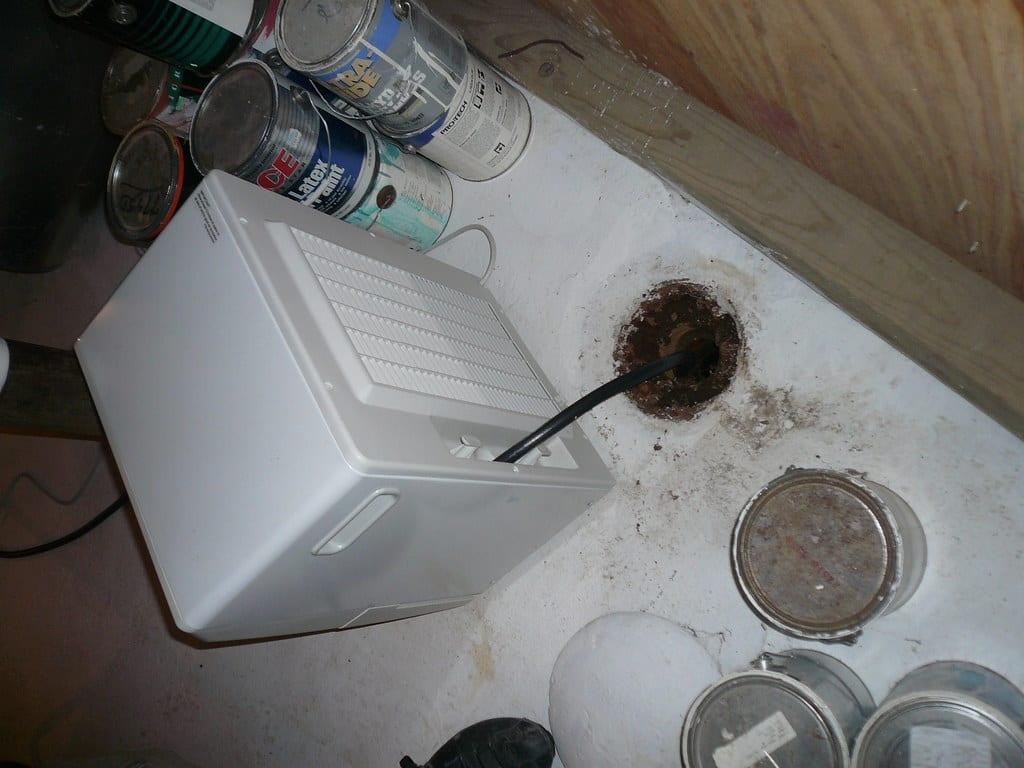
Short answer: buy AlorAir if the space has no drain, and AprilAire if it does. AlorAir builds a condensate pump into the unit and makes it small enough to get into a crawl space, which solves the problem that actually stops most installs. AprilAire publishes an ENERGY STAR verified capacity figure, a real efficiency rating and a warranty everybody states the same way, which is what you want when a drain is already there and you are buying on evidence.
Before anything else, understand that the two brands name their products using different test conditions, so the model numbers cannot be compared. An AlorAir "120 pint" unit removes 55 pints a day under the test an AprilAire "80 pint" unit scores 65.0 on. The smaller-sounding machine is the larger one. That single fact decides most of the bad purchases in this category.
Quick picks
| # | Product | Best for | Score | Price |
|---|---|---|---|---|
| 1 | AprilAire E080ENERGY STAR Most Efficient, with a certified 65.0 pints a day of water removal and 632 kWh a year, behind a washable MERV 8 filter and a five-year warranty everyone states the same way. | AprilAire's case: a number somebody else verified | 8.7 | Check price on Amazon #ad we earn a commission · Amazon shows the current price |
| 2 | AlorAir Sentinel HDi65SA 19 inch unit with a condensate pump rated to lift 19.6 feet and an operating range down to 33.8 F — for the crawl space that has no drain and gets cold. | AlorAir's case: it solves the drainage problem in the box | 8.4 | Check price on Amazon #ad we earn a commission · Amazon shows the current price |
| 3 | AprilAire E100A verified 85.0 pints a day at the same 2.35 L/kWh, with 10 inch duct collars for tying into a basement's existing air handling. | A whole basement, ducted into existing returns | 8.6 | Check price on Amazon #ad we earn a commission · Amazon shows the current price |
| 4 |  AlorAir Sentinel HDi90AlorAir's drainage argument scaled up: 90 pints a day at AHAM, 210 CFM, a MERV-8 filter as standard and a published DOE figure. | A large crawl space that still has no drain | 8.5 | Check price on Amazon #ad we earn a commission · Amazon shows the current price |
Scores are ours and editorial, not lab measurements — see how we pick. Tap a row for the full write-up.
How we compared them
Five criteria, applied in this order. The first two eliminate units outright in a given house; the rest separate what is left.
- Can it get in, and can it drain? Hatch clearance and condensate disposal decide a crawl space install before capacity is ever discussed. An AprilAire over a dirt floor needs a pump you buy separately; an AlorAir has one.
- What does it remove under a comparable test? Not the saturation figure. We rank on AHAM, DOE or ENERGY STAR verified water removal, and we say which one each number is.
- Who measured it? An ENERGY STAR certified figure is independently tested and publicly recorded. A manufacturer's AHAM figure is a real test condition self-reported. Both are usable; they are not the same evidence.
- What does it filter, and how cold does it run? A crawl space is dusty and cold. MERV-1 is a screen; MERV-8 is a filter. A 49 F cut-off means half a winter off duty.
- What is the warranty, and does everybody state it the same way? Five years stated consistently is worth more than six years stated three different ways.
Brand against brand
| AlorAir | AprilAire | |
|---|---|---|
| Capacity headline | Saturation figure (90 F, 90% RH) | Manufacturer pint rating |
| Comparable capacity | 55 pints/day AHAM (HDi65S), 90 (HDi90) | 65.0 and 85.0 pints/day, ENERGY STAR verified |
| Independently certified | No | Yes — ENERGY STAR, E080 is Most Efficient 2025 |
| Internal condensate pump | Yes, on both units here | No — site over a drain |
| Minimum operating temperature | 33.8 F | Not published |
| Filter | MERV-1 on the HDi65S, MERV-8 on the HDi90 | Washable MERV 8 on both |
| Size | 19.2 x 12.2 x 13.3 in (HDi65S) | 15 H x 14 W x 26 D in (both) |
| Coverage | 1,300 sq ft / 2,600 sq ft | 4,400 sq ft / 5,500 sq ft |
| Efficiency | 2.4 L/kWh stated (HDi65S) | 2.35 L/kWh verified, 632 and 821 kWh/year |
| Ducting | Ductable outlet | 10 in inlet and outlet collars on the E100 |
| Warranty | Published three ways: six, five, or one year | Five years, stated consistently |
| Where you buy it | Direct and online retail | Mainly HVAC distribution |
Read that as two companies solving different halves of the same problem. AprilAire answers "how do I know this works and what will it cost to run". AlorAir answers "how do I get this into my crawl space and where does the water go". Neither is dodging the other's question so much as declining to compete on it.
AprilAire E080
ENERGY STAR Most Efficient, with a certified 65.0 pints a day of water removal and 632 kWh a year, behind a washable MERV 8 filter and a five-year warranty everyone states the same way.
#ad we earn a commission · Amazon shows the current price
| Type | Whole-house dehumidifier, ducted or free-standing |
|---|---|
| Capacity | Removes up to 80 pints (10 gallons) per day |
| ENERGY STAR water removal | 65.0 pints/day |
| Coverage | Basements, sealed crawl spaces or whole homes up to 4,400 sq ft |
| Dimensions | 15 H x 14 W x 26 D in |
| Filter | Washable MERV 8, 13.5" x 12" nominal |
| Efficiency | 2.35 L/kWh integrated energy factor; 632 kWh/year |
| Certification | ENERGY STAR Most Efficient 2025 |
| Coils | Corrosion-resistant aluminum |
AprilAire's argument is verification. The E080 is an ENERGY STAR certified product, which means its water-removal rate was measured under a standard test by somebody other than AprilAire and published where anyone can read it: 65.0 pints a day, 2.35 liters per kilowatt-hour, 632 kilowatt-hours a year. In a category where the number on the box is usually chosen for its size, that is worth a great deal.
The hardware backs it. Corrosion-resistant aluminum coils in a machine whose entire job is condensing water, a washable MERV 8 filter rather than a disposable screen, and a five-year warranty that the manufacturer and the distributors all state the same way. AprilAire is a Research Products Corporation brand and says the units are designed and manufactured in the USA.
What it does not do is move its own water. AprilAire's installation guidance is to site the unit over a drain, which is a reasonable assumption in a basement and a wrong one in a crawl space. That single omission is why the AlorAir units exist and why this comparison is not a straight fight. The E100, one size up, is the same machine with a verified 85.0 pints a day — see built-in basement dehumidifiers.
What it gets right
- ENERGY STAR certified at 65.0 pints/day of water removal — independently tested, published in a government database, not a marketing figure
- 2.35 L/kWh integrated energy factor and 632 kWh/year, so the annual running cost is arithmetic rather than a guess
- ENERGY STAR Most Efficient 2025
- Washable MERV 8 filter and corrosion-resistant aluminum coils
- Ducted or free-standing, covering a basement or sealed crawl space up to 4,400 sq ft from one unit
- Five-year warranty, stated identically by AprilAire and by its distributors
- Designed and manufactured in the USA, per the manufacturer
Where it falls short
- No internal condensate pump. AprilAire's guidance is to place the unit over a drain, which a crawl space usually does not have
- 15 H x 14 W x 26 D in is long and awkward in a low crawl space, where the AlorAir units fit between joists
- No published airflow figure in CFM on the listings we could reach, which makes ducting harder to plan
- Sold mainly through HVAC distribution rather than consumer retail — a trade order, not a next-day delivery
- Costs substantially more than the comparable AlorAir before you add the condensate pump you may still need
Specifications from AprilAire E080 product page, AprilAire E080 distributor listing (available, checked 2026-10-21), ENERGY STAR certified dehumidifier record.
AlorAir Sentinel HDi65S
A 19 inch unit with a condensate pump rated to lift 19.6 feet and an operating range down to 33.8 F — for the crawl space that has no drain and gets cold.
#ad we earn a commission · Amazon shows the current price
| Type | Ductable basement and crawl-space dehumidifier with a built-in condensate pump |
|---|---|
| Capacity | 55 pints/day at AHAM (80 F, 60% RH); 120 pints/day at saturation (90 F, 90% RH) |
| Coverage | Up to about 1,300 sq ft |
| Airflow | 130 CFM |
| Dimensions | 19.2 x 12.2 x 13.3 in |
| Weight | Listings disagree: 44 lb on one retailer, 57.3 lb on the AlorAir store |
| Electrical | 115 V, 60 Hz |
| Efficiency | 2.4 L/kWh |
| Operating range | 33.8 to 104 F; 36% to 90% RH |
| Refrigerant | R410A |
| Condensate | Built-in pump lifting 19.6 ft, or gravity drain to 6.5 ft |
| Noise | Under 52 dB(A) |
| Filter | MERV-1 supplied; a MERV-8 filter is also listed for the unit |
| Wi-Fi | Only on the Wi-Fi variant, which controls and monitors through the AlorAir-C app |
| Warranty | Stated inconsistently — see the review page |
AlorAir's argument is practical rather than evidential: here is a dehumidifier that fits through your hatch and gets rid of its own water. In a crawl space those two things decide the install, and no amount of certification makes up for a unit that cannot be carried in or drained once it is there.
The pump is the whole case. 19.6 feet of lift means the condensate line can go up through the rim joist and out to grade with no pit, no fall and no second appliance. Add an operating range down to 33.8 F and a 19 inch body, and you have a machine designed by somebody who has actually been in a crawl space.
The cost is honesty about capacity. A unit named for a 120 pints-per-day saturation figure sitting next to an AprilAire named for 80 pints looks like the bigger machine, and it is the smaller one: 55 pints a day at AHAM against a certified 65. AlorAir publishes both numbers, so this is marketing rather than deception, but the names mislead and almost every forum recommendation repeats the mistake. The full unit review is in the AlorAir Sentinel HDi65S review.
What it gets right
- Built-in condensate pump rated to 19.6 ft of lift, so the unit sits on the crawl space floor and pushes water out through the rim joist
- 19.2 x 12.2 x 13.3 in, which fits hatches and joist bays the AprilAire does not
- Runs down to 33.8 F, where the AprilAire publishes no minimum and the Santa Fe stops at 49 F
- 130 CFM through a ductable outlet, and a gravity-drain option if you do have a fall to work with
- 2.4 L/kWh stated efficiency, in the same territory as the certified AprilAire figure
- In stock direct from AlorAir when we checked on 4 November 2026
Where it falls short
- Marketed as a 120 pints-per-day unit on a saturation figure measured at 90 F and 90% RH. The comparable number is 55 pints a day at AHAM — less than half, and less than the AprilAire's certified 65
- No ENERGY STAR certification, so every capacity figure is the manufacturer's own
- Ships with a MERV-1 filter, which is a coarse screen, against AprilAire's washable MERV 8
- Warranty published three different ways across three sellers: six years limited, five years, and a one-year performance guarantee
- Published weight disagrees by thirty percent between retailers (44 lb vs 57.3 lb)
- Coverage to about 1,300 sq ft against the E080's 4,400 — these are not the same size of machine
Specifications from AlorAir Sentinel HDi65S retail listing and specification (in stock, checked 2026-10-21), AlorAir store listing: in stock, 130 CFM, 19.6 ft pump lift, 57.3 lb, R410A, 2.4 L/kWh, 36-90% RH (checked 2026-11-04), AlorAir Sentinel HDi65S distributor specification.
AprilAire E100
A verified 85.0 pints a day at the same 2.35 L/kWh, with 10 inch duct collars for tying into a basement's existing air handling.
#ad we earn a commission · Amazon shows the current price
| Type | Whole-house dehumidifier, ducted or free-standing |
|---|---|
| Capacity | Removes up to 100 pints (12.5 gallons) per day |
| ENERGY STAR water removal | 85.0 pints/day |
| Coverage | Basements, sealed crawl spaces or whole homes up to 5,500 sq ft |
| Dimensions | 15 H x 14 W x 26 D in |
| Duct collars | 10 in inlet and 10 in outlet |
| Filter | Washable MERV 8, 13.5" x 12" nominal |
| Efficiency | 2.35 L/kWh integrated energy factor; 821 kWh/year |
If the job is a whole basement rather than a damp corner, and especially if there is ductwork to tie into, this is the unit the comparison points at. Ten-inch duct collars on both the inlet and the outlet mean it can be integrated into the house's air handling rather than treated as an appliance, and the verified 85 pints a day is the largest independently tested figure here.
The decision between the E080 and the E100 is square footage and nothing else: 4,400 against 5,500, at identical efficiency and the same warranty. Both still need somewhere for the water to go.
What it gets right
- ENERGY STAR verified at 85.0 pints/day of water removal — the largest certified figure on this page
- 2.35 L/kWh, the same efficiency as the E080 at greater capacity, and 821 kWh/year published
- 10 in inlet and outlet duct collars, so it ties into existing basement ductwork properly rather than being a box in a corner
- Coverage to 5,500 sq ft, enough for a whole house rather than one room
- Same washable MERV 8 filter and five-year warranty as the E080
Where it falls short
- Still no internal condensate pump — the drain requirement does not go away with size
- Same 15 H x 14 W x 26 D in body as the E080, so the crawl space fit problem is unchanged
- The most expensive unit on this page by a clear margin
- Oversizing is a real cost: a dehumidifier with twice the capacity you need short-cycles, which dries unevenly and wears the compressor
Specifications from AprilAire E100 product page, AprilAire E100 distributor listing (available, checked 2026-10-21), ENERGY STAR certified dehumidifier record.
AlorAir Sentinel HDi90
AlorAir's drainage argument scaled up: 90 pints a day at AHAM, 210 CFM, a MERV-8 filter as standard and a published DOE figure.
#ad we earn a commission · Amazon shows the current price
| Type | Basement and crawl-space dehumidifier with a built-in condensate pump |
|---|---|
| Capacity | 90 pints/day at AHAM (80 F, 60% RH); 198 pints/day at saturation |
| DOE rating | 47.71 pints/day at DOE (60 F, 60% RH) |
| Coverage | Up to about 2,600 sq ft |
| Airflow | 210 CFM |
| Noise | Under 58 dB(A) |
| Pump lift | Pumps condensate over 16 ft of hose |
| Operating range | 33.8 to 104 F |
| Filter | MERV-8 |
This is the unit that makes the brand comparison genuinely close, because it is the one AlorAir where the capacity exceeds the AprilAire it sits against and the filter is no longer a weakness. 90 pints a day at AHAM against a certified 65, with a pump in the box and a MERV-8 filter as standard.
It is also the only unit on this page where somebody publishes a DOE figure, 47.71 pints a day at 60 F and 60% RH. That is the coldest and least flattering of the three test conditions and the closest to a real crawl space in spring. Publishing it at all is the most honest thing either brand does.
What it gets right
- 90 pints a day at AHAM, which is a genuine step up and comfortably past the AprilAire E080's certified 65
- A DOE figure is actually published — 47.71 pints/day at 60 F and 60% RH, the most conservative test condition and the one nearest a real crawl space
- 210 CFM, enough to move air the length of a large crawl space
- MERV-8 filter as standard, matching the AprilAire rather than the HDi65S's MERV-1
- Condensate pump over 16 ft of hose, and the same 33.8 to 104 F operating range
- Coverage to about 2,600 sq ft
Where it falls short
- Under 58 dB(A), noticeably louder than the HDi65S's under 52 — relevant when the crawl space is under a bedroom
- Pump lift is specified as over 16 ft of hose, which reads as less reach than the smaller HDi65S's 19.6 ft figure. Check it against your install height
- Still no ENERGY STAR certification, so the capacity figures remain the manufacturer's own
- Dimensions are not published on the listings we could reach, which is a problem when hatch clearance is the constraint
- Headline is a 198 pints-per-day saturation figure — the same naming issue as the HDi65S
Specifications from AlorAir Sentinel HDi90 specification listing, AlorAir Sentinel HDi90 retail listing.
The capacity trap, in one table
This is the part worth reading twice, because it is where the money gets wasted. Dehumidifier capacity is quoted under three standard conditions and the industry quotes whichever flatters the product.
| Rating | Test condition | Who quotes it |
|---|---|---|
| Saturation | 90 F, 90% relative humidity | AlorAir, in the product name |
| AHAM | 80 F, 60% relative humidity | AlorAir, in the specification |
| DOE | 60 F, 60% relative humidity | AlorAir, on the HDi90 only |
| ENERGY STAR verified | Standard test, published by the agency | AprilAire, on both units |
So the honest ladder, smallest to largest, is: AlorAir HDi65S at 55, AprilAire E080 at a certified 65, Santa Fe Compact70 at 70, AprilAire E100 at a certified 85, AlorAir HDi90 at 90. The product names imply a completely different order.
Where AlorAir is the right answer
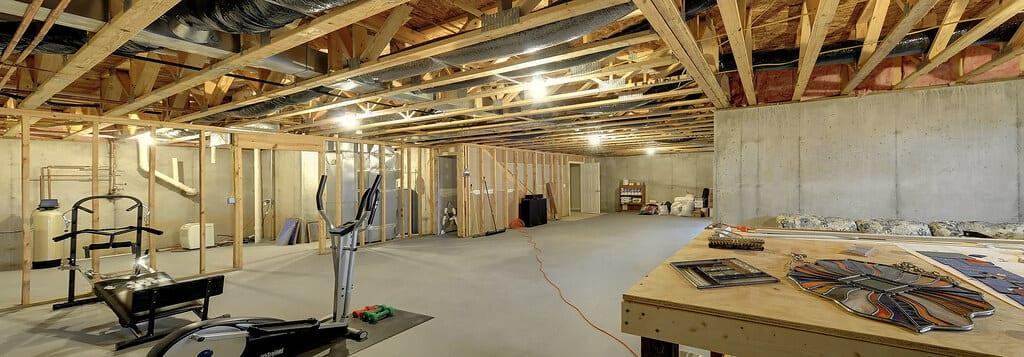
- A crawl space with a dirt floor and no drain. The internal pump is the whole argument and nothing AprilAire sells has one.
- A small or awkward access hatch. 19 inches of unit goes where 26 inches does not.
- A space that gets cold. 33.8 F of operating range against an AprilAire that publishes no minimum.
- You want one box rather than a unit plus a condensate pump plus the plumbing between them.
Where AprilAire is the right answer
- A basement with a floor drain. The missing pump stops being a drawback and the certified figures start being worth the premium.
- You are buying on evidence. ENERGY STAR verified water removal and a published kWh-per-year figure are checkable; a manufacturer's own rating is not.
- A whole house rather than a room. 4,400 to 5,500 square feet of coverage, and duct collars on the E100 to do it properly.
- You want a warranty you can quote back. Five years, stated identically everywhere, against three different AlorAir answers.
- Running cost matters. 632 kWh a year on the E080 is a number you can put against your own electricity rate — see how much electricity does a sump pump use for the same arithmetic applied to a pump.
What neither brand will tell you
A dehumidifier is the third step in a wet basement or crawl space, not the first. Bulk water first, ground cover second, humidity third. Running either of these units in a space where water is still arriving means paying to dehumidify the outdoors, and the compressor will lose that argument eventually.
The second thing: oversizing is not free. A unit with twice the capacity the space needs reaches its setpoint quickly, shuts off, and starts again — and short cycling dries air unevenly and wears a compressor faster than steady running does. Size on the comparable figure, for the actual square footage, in the actual conditions.
And set the humidistat to 50 to 55 percent. The EPA's guidance is to keep indoor humidity below 60 percent, ideally between 30 and 50; chasing 35 in a crawl space costs electricity for a difference nobody can feel. Basement humidity level has the full reasoning.
Questions people ask
Is AlorAir or AprilAire better?
AlorAir if the space has no drain: it builds a condensate pump into the unit, fits through a crawl space hatch and runs down to 33.8 F. AprilAire if a drain is already there: its capacity is ENERGY STAR verified, it publishes a real kWh-per-year figure, and its five-year warranty is stated the same way by everyone who sells it.
Why does a 120-pint AlorAir remove less water than an 80-pint AprilAire?
Because they are quoting different tests. AlorAir names the HDi65S for its saturation rating, measured at 90 F and 90 percent relative humidity. Its AHAM rating, at 80 F and 60 percent, is 55 pints a day. The AprilAire E080 is ENERGY STAR verified at 65.0 pints a day. Compare 55 against 65, not 120 against 80.
Does AprilAire make a dehumidifier with a built-in pump?
Not in the E080 and E100 we compare here. AprilAire's guidance is to place the unit over a drain. If your space has no drain you need a separate condensate pump, which is the job AlorAir's units do in the box.
Which brand is better for a crawl space?
AlorAir, in most cases, and for physical reasons rather than performance ones. The HDi65S is 19.2 inches long against the AprilAire's 26, it has the pump, and it runs down to 33.8 F. The AprilAire's advantages — certified capacity, verified efficiency, a clear warranty — matter more in a basement where a drain already exists.
Is ENERGY STAR certification worth paying for on a dehumidifier?
The certification itself is worth less than what comes with it: a water-removal rate and an annual kWh figure measured under a standard test and published publicly. On the AprilAire E080 that is 65.0 pints a day and 632 kWh a year, which is enough to calculate running cost against your own electricity rate. An uncertified unit's figures are self-reported.
What size dehumidifier do I need?
Match the comparable capacity figure to the actual square footage and conditions: about 1,300 sq ft for the AlorAir HDi65S, 2,600 for the HDi90, 4,400 for the AprilAire E080 and 5,500 for the E100. Resist buying extra. An oversized unit short-cycles, which dries the space unevenly and wears the compressor.
Why do you not list prices?
Because a price written into an article in November is wrong by December. Every buy button on this site goes to the live listing so you see the current price rather than ours.
Sources
- ENERGY STAR certified dehumidifier record, AprilAire E080: 65.0 pints/day, 632 kWh/yr, 2.35 L/kWh
- ENERGY STAR certified dehumidifier record, AprilAire E100: 85.0 pints/day, 821 kWh/yr, 2.35 L/kWh
- AprilAire whole-home dehumidifier range: five-year warranty, designed and manufactured in the USA
- AprilAire E080 distributor listing (available, checked 2026-11-04)
- AprilAire E100 distributor listing (available, checked 2026-11-04)
- AlorAir Sentinel HDi65S store listing: in stock, 120 PPD saturation / 55 PPD AHAM, 130 CFM, 19.6 ft pump lift, 33.8-104 F, 2.4 L/kWh, six-year limited warranty (checked 2026-11-04)
- AlorAir Sentinel HDi65S retail listing quoting 44 lb and a one-year performance guarantee
- AlorAir Sentinel HDi90 specification listing, including the DOE rating of 47.71 pints/day
- EPA guidance: keep indoor humidity below 60 percent, ideally between 30 and 50 percent
Read next
AlorAir Sentinel HDi65S review
The crawl-space dehumidifier everyone recommends, sold on a 120-pint number that describes a day your crawl space will never have. Here is what it actually removes.
The best built-in basement dehumidifiers
An installed dehumidifier is not a bigger portable. It is a different appliance with a drain, a duct and a ten-year expectation, and it is bought on different numbers.
The best crawl space dehumidifiers
Nobody empties a bucket under a house. In a crawl space the condensate pump is not a convenience feature, it is the feature.
The best basement dehumidifiers with a pump
A dehumidifier manages the moisture already in the air. It does nothing about where that moisture is coming from — which is a feature, not a criticism, as long as you know it.
What basement humidity level is safe?
One number answers most of this question, and the number is lower than most basements ever reach on their own.