What basement humidity level is safe?
One number answers most of this question, and the number is lower than most basements ever reach on their own.
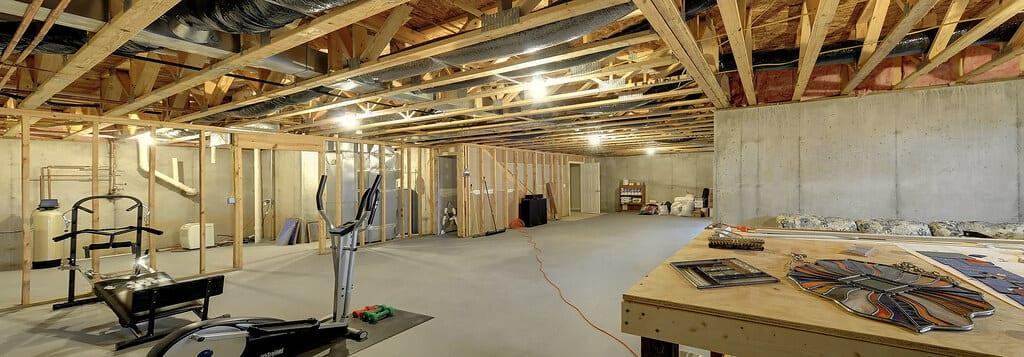
Hold a basement between 50 and 55% relative humidity. The EPA's guidance for homes generally is to keep indoor humidity below 60 percent, and ideally between 30 and 50 percent, to control mold. In a basement, the low 50s is the practical sweet spot: it is comfortably under the threshold where mold and dust mites thrive, and chasing much below it costs energy for no additional benefit while risking condensation problems elsewhere.
A hygrometer costs very little and is the only way to know where you actually are. Buy one before you buy a dehumidifier, and put it in the middle of the space rather than against a cold wall.
What each reading means, and what to do about it
| Reading | What it means | What to do |
|---|---|---|
| Under 40% | Drier than necessary | Nothing. If a dehumidifier is holding it here, raise the setpoint and save the energy |
| 40 to 50% | Comfortably safe | Nothing. This is the target band |
| 50 to 55% | The practical basement target | Hold it here. Confirm the sump pit is covered |
| 55 to 60% | Borderline | Cover the pit, check for liquid water, run a dehumidifier |
| 60 to 70% | Mold territory over time | Dehumidify now, and look for a water source |
| Over 70% | Active problem | Find the liquid water first. A dehumidifier alone will lose this fight |
The bottom row is the one people get wrong. A basement sitting at 75% is not a dehumidifier problem, it is a water problem with a humidity symptom, and buying a bigger dehumidifier to run against an active leak is a way to spend money on electricity indefinitely.
Why basements run humid when the rest of the house does not
Two things conspire. The first is that basement surfaces are cold — the walls and slab are in contact with soil that stays far cooler than summer air. The second is that relative humidity is relative to temperature: the same air, cooled, has a higher relative humidity without gaining a single drop of water.
So warm, humid summer air moves down into the basement, cools against the walls and slab, and its relative humidity climbs. Cool it far enough and it reaches dew point and condenses — on the walls, on ductwork, on the underside of anything cold. This is why a basement can feel clammy in July with no leak anywhere, and why opening the windows on a humid day makes it worse rather than better.
- Do not ventilate a cool basement with warm humid outdoor air. You are importing moisture, not removing it.
- Do not insulate cold surfaces halfway. Partial coverage moves the condensing surface rather than removing it.
- Do cover the sump pit. An open basin is an evaporating pool in the room.
- Do run the dehumidifier in summer, not just after rain. Peak basement humidity is a July problem.
The sources of moisture, in rough order of size
- Liquid water arriving — through a crack, a window well, a failed downspout or a leaking pipe. Always fix this first. How to waterproof a basement sets the order.
- Vapor diffusing through the slab and walls, which is continuous and unavoidable in an untreated basement. A masonry waterproofer reduces it; see the best vapor barrier for basement walls.
- An open sump pit, evaporating all year for free. The cheapest fix on the list.
- Warm outdoor air brought in by ventilation, open windows or a leaky house.
- Indoor sources — an unvented dryer, a damp laundry, drying firewood indoors.
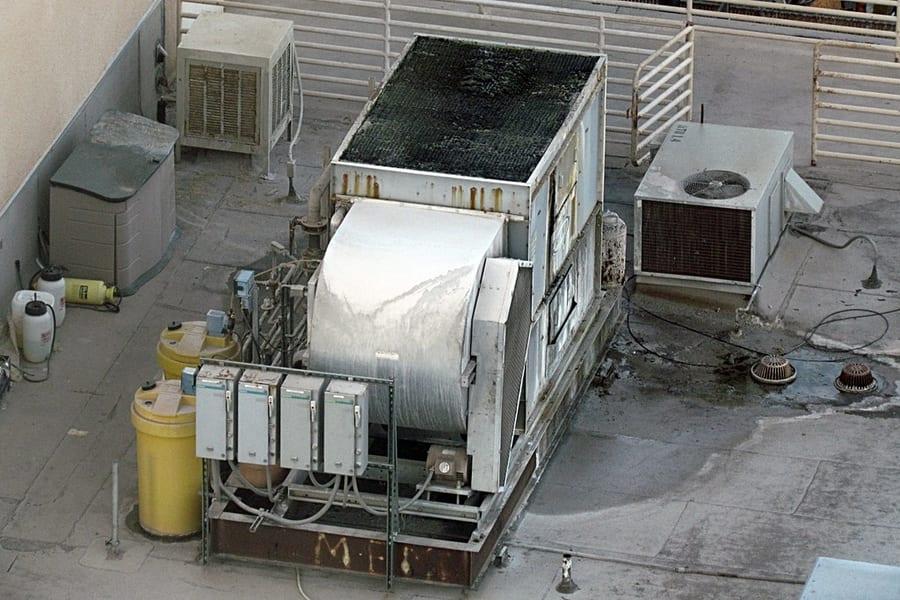
AlorAir Sentinel HDi90
90 pints a day at AHAM conditions with a built-in condensate pump that lifts water over 16 feet of hose, rated to cover about 2,600 square feet.
#ad we earn a commission · Amazon shows the current price
| Type | Basement and crawl-space dehumidifier with a built-in condensate pump |
|---|---|
| Capacity | 90 pints/day at AHAM (80 F, 60% RH); 198 pints/day at saturation |
| DOE rating | 47.71 pints/day at DOE (60 F, 60% RH) |
| Coverage | Up to about 2,600 sq ft |
| Airflow | 210 CFM |
| Noise | Under 58 dB(A) |
| Pump lift | Pumps condensate over 16 ft of hose |
| Operating range | 33.8 to 104 F |
| Filter | MERV-8 |
This is the unit for a basement that defeats portable dehumidifiers — large, cold, or fed by walls that never quite dry. The specification that matters is the pair of ratings: 90 pints a day at AHAM conditions and 47.71 pints a day at DOE conditions. Those are the same machine measured in a warm room and in a cool one, and a basement is the cool one. Any dehumidifier quoting only the big number is quoting the easier test.
The 33.8 F low-temperature limit is the other reason it belongs in a basement rather than a bedroom. Most portable units stop working usefully well above that, which is exactly when an unheated basement is coldest and condensation on cold surfaces is most likely.
The condensate pump is what makes it set-and-forget. A dehumidifier whose tank fills is a dehumidifier that is off, and a 90 pint machine fills a tank fast.
What it gets right
- 90 pints/day at AHAM (80 F, 60% RH) and 47.71 pints/day at the stricter DOE rating (60 F, 60% RH) — both published
- Built-in pump lifts condensate over 16 ft of hose, so it drains to a laundry sink or a window
- Operates from 33.8 F, which matters in an unheated basement in winter
- 210 CFM airflow, MERV-8 filter, under 58 dB(A)
- Rated for roughly 2,600 sq ft of coverage
Where it falls short
- Substantially more expensive than a portable unit
- Heavy and semi-permanent — this is equipment, not an appliance you move around
- Overkill in a small, basically dry basement
Specifications from AlorAir Sentinel HDi90 specification listing, AlorAir Sentinel HDi90 retail listing.
50-pint basement dehumidifier with pump
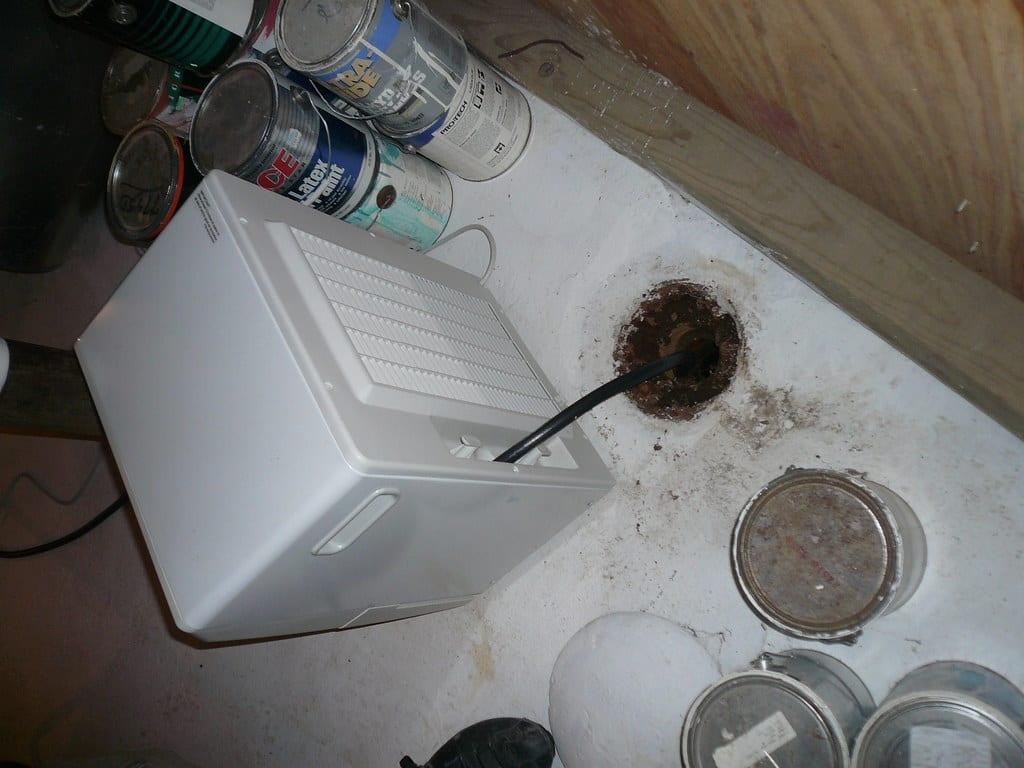
A portable dehumidifier in the 50-pint class with an internal condensate pump, so it runs unattended rather than filling a bucket.
#ad we earn a commission · Amazon shows the current price
| Type | Portable dehumidifier with an internal condensate pump |
|---|---|
| Why the pump matters | It lifts the condensate to a laundry sink or a window, so you are not emptying a bucket |
For the great majority of basements holding somewhere in the 60s and needing to sit in the low 50s, this is the right purchase. The pump is the feature to insist on: a tank-only unit will be found switched off with a full tank every time, which means it was not dehumidifying for most of the period you thought it was.
Note that pints-per-day ratings are quoted under two different test conditions — AHAM uses a warmer room than DOE. Compare like with like, and assume the cooler figure is the one your basement will see.
What it gets right
- The internal pump lifts condensate to a sink or out of a window, which is the difference between running and stopping
- 50-pint class handles a typical residential basement
- Portable, so it can be moved to where the problem is
- Far cheaper than a dedicated basement unit
Where it falls short
- Performance in a cold basement falls off well before a dedicated unit's does
- Smaller coverage area than a 90-pint machine
- Running continuously in a wet basement is a real energy cost
Specifications from Amazon listing (search).
Jackel sealed sump pit cover
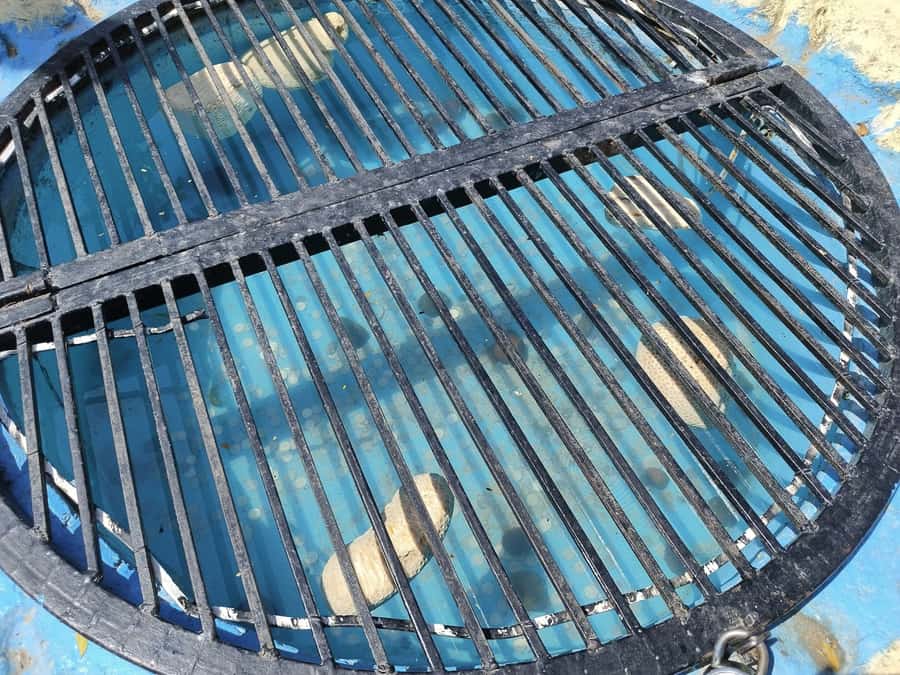
A bolt-down cover with grommets, which stops an open sump pit evaporating into the basement all year.
#ad we earn a commission · Amazon shows the current price
| Type | Bolt-down sump pit cover with pipe and cord grommets |
|---|---|
| Fits | Basins with pre-drilled rim inserts, 18 in class |
| Why it matters | Keeps debris, pets and children out, and cuts pit humidity and odor |
Before buying any dehumidifier, cover the pit. An uncovered sump basin is a permanent pool of water with air moving over it, evaporating into the basement twenty-four hours a day, and a dehumidifier then spends its life removing water that a lid would have stopped releasing.
What it gets right
- Removes a continuous open water surface from the room
- Grommets for pipe and cord keep the seal continuous
- Also addresses pit odor and the safety of an open hole
- Costs a tiny fraction of a dehumidifier
Where it falls short
- Must match the basin rim pattern
- Not a substitute for dehumidification on its own
Specifications from Amazon listing (search).
Reading a dehumidifier's rating honestly
Dehumidifier capacity is quoted in pints per day, under one of two very different test conditions. AHAM testing uses a warm room; DOE testing uses a cooler one. The AlorAir Sentinel HDi90 is rated 90 pints a day at AHAM (80 F, 60% RH) and 47.71 pints a day at DOE (60 F, 60% RH) — same machine, same honesty, two numbers.
Your basement is the cool test. Size on the DOE figure where it is published, and treat an AHAM-only number as the marketing figure. The low-temperature limit matters just as much: a unit that stops working below 50 F is not much use in an unheated basement in February, where the HDi90 is specified down to 33.8 F.
Questions people ask
What humidity level should a basement be?
Between 50 and 55% relative humidity. That is dry enough to discourage mold and dust mites without the energy cost of chasing a lower number. The EPA's general guidance for homes is to keep indoor humidity below 60 percent, and ideally between 30 and 50 percent.
Is 60% humidity too high for a basement?
It is borderline and heading the wrong way. The EPA puts 60 percent as the ceiling for mold control, so a basement sitting at 60% has no margin. Cover the sump pit, check for any liquid water arriving, and run a dehumidifier to bring it into the low 50s.
Is 70% humidity in a basement bad?
Yes, and it usually indicates liquid water rather than just humid air. At 70% you are well into the range where mold grows on organic surfaces over time. Find and fix the water source first — a dehumidifier running against an active leak is an indefinite electricity bill, not a fix.
Why is my basement humid in summer but not winter?
Because relative humidity depends on temperature. Warm, moist summer air moves into the basement, cools against walls and a slab that sit far below outdoor temperature, and its relative humidity climbs without gaining any water. Cool it far enough and it condenses. This is also why opening basement windows on a humid day makes things worse.
Will a dehumidifier fix a wet basement?
It will fix a humid basement. It will not fix a wet one. If liquid water is arriving through a crack, a window well or a failed downspout, the dehumidifier is removing water as fast as it enters and will never catch up. Fix the water path first, then dehumidify what remains.
Sources
Read next
The best built-in basement dehumidifiers
An installed dehumidifier is not a bigger portable. It is a different appliance with a drain, a duct and a ten-year expectation, and it is bought on different numbers.
The best basement dehumidifiers with a pump
A dehumidifier manages the moisture already in the air. It does nothing about where that moisture is coming from — which is a feature, not a criticism, as long as you know it.
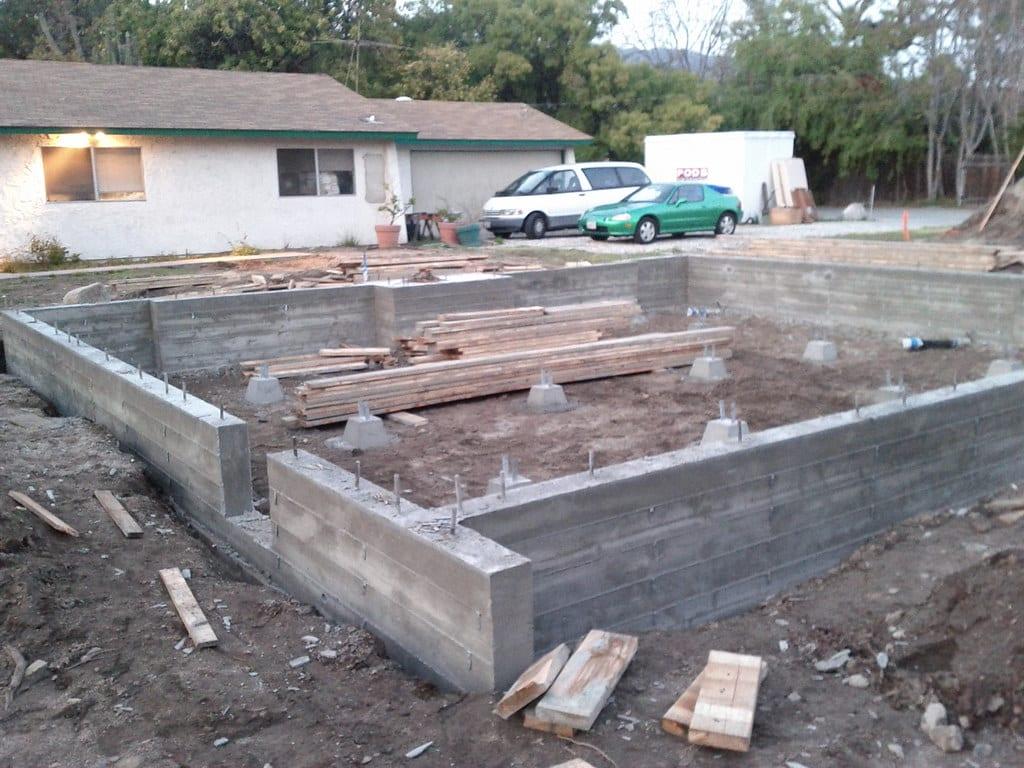
How to waterproof a basement
Start outside. A startling share of wet basements are fixed with a ladder and an afternoon, and no product at all.
The best crawl space dehumidifiers
Nobody empties a bucket under a house. In a crawl space the condensate pump is not a convenience feature, it is the feature.

Sump pump smells like sewage
Four causes, and only one of them means what you are afraid it means. Work through them in this order.
Vented vs sealed crawl space
Decades of building code said vent it. Current practice in most US climates says seal it. Both are defensible; the half-measure is not.