How much electricity does a sump pump use?
Less than almost anyone expects — unless something is wrong, in which case the bill is the first symptom you will notice.
A typical residential sump pump costs roughly one to six dollars a month to run. At the current US average residential electricity price of 18.31 cents per kilowatthour, a pump with a 9.7 A nameplate at 115 V running ten minutes a day costs about $1.02 a month, and the same pump running a full hour a day costs about $6.13 a month — around $75 a year. A pump running four hours a day costs about $24.51 a month, and at that point the bill is telling you something is wrong rather than something is expensive.
Two things drive the number: the pump's draw, which you can read off the nameplate, and how long it runs, which is set by your groundwater and by whether the system is working properly. The second factor matters far more than the first.
The nameplate figures
Every figure below is the manufacturer's rated voltage multiplied by its rated current, taken from the specification sheets cited on each product page. That product is volt-amps, which is an upper bound on real power draw rather than an exact watt figure — a motor's power factor is below one, so actual watts are lower. We use the upper bound deliberately: it means the costs on this page cannot flatter the pump.
| Pump | Nameplate | VA | 10 min/day | 1 hour/day | 1 hour/day, per year |
|---|---|---|---|---|---|
| Wayne CDU980E (3/4 HP) | 120 V, 10 A | 1,200 | $1.10/mo | $6.59/mo | $80.20 |
| Wayne CDU790 (1/3 HP) | 120 V, 9.5 A | 1,140 | $1.04/mo | $6.26/mo | $76.19 |
| Zoeller M53 (3/10 HP) | 115 V, 9.7 A | 1,115 | $1.02/mo | $6.13/mo | $74.55 |
| Zoeller 1084 pedestal (1/2 HP) | 115 V, 7.3 A | 840 | $0.77/mo | $4.61/mo | $56.11 |
| Liberty 257 (1/3 HP) | 115 V, 5.2 A | 598 | $0.55/mo | $3.28/mo | $39.97 |
| Superior 92341 (1/3 HP) | 120 V, 4.1 A | 492 | $0.45/mo | $2.70/mo | $32.88 |
| Superior 91250 utility pump (1/4 HP) | 120 V, 1.5 A | 180 | $0.16/mo | $0.99/mo | $12.03 |
Notice what that table does not show: a neat relationship between horsepower and draw. The 1/2 HP Zoeller 1084 pedestal has a lower nameplate than the 1/3 HP Wayne CDU790, and the 1/3 HP Superior 92341 is the leanest full-size pump in the set. Horsepower is a marketing axis; amps are on the nameplate.
The arithmetic, if you want to run it on your own pump
- Read the nameplate on the pump or its specification sheet: volts and amps.
- Multiply them and divide by 1,000. That gives kilowatts — an upper bound, as above.
- Estimate daily run time. Time one cycle with a stopwatch, count cycles in an hour during typical weather, and multiply out. Do it in a wet week and a dry week; the difference is the point.
- Multiply kilowatts by hours per day to get kilowatthours per day.
- Multiply by your own per-kWh rate from your utility bill — the 18.31 cents used here is the national average, and regional rates vary a great deal.
Superior Pump 92341
A 1/3 HP cast-iron submersible rated 120 V, 4.1 A — the leanest nameplate in our registry for a full-size sump pump.
#ad we earn a commission · Amazon shows the current price
| Type | Submersible, cast iron |
|---|---|
| Horsepower | 1/3 HP |
| Electrical | 120 V, 4.1 A |
| Discharge | 1-1/2" |
| Switch | Vertical float |
| Motor | Continuous duty, thermally protected split capacitor |
| Flow, by lift | 2,760 GPH at 0 ft |
| Warranty | Three years |
If running cost is genuinely your deciding factor, this is the pump in our registry with the lowest published draw at full size. At 4.1 A and 120 V the nameplate works out near 492 VA, which is under half what a Zoeller M53 or a Wayne CDU790 is rated at.
Be careful what you conclude from that, though. A pump with a lower draw is usually a pump making less pressure, and the honest comparison is cost per gallon moved at your lift — not watts. Superior does not publish a figure at ten feet, which makes that comparison impossible to complete here, and the page says so rather than guessing.
What it gets right
- 4.1 A at 120 V, roughly 492 VA — less than half the Zoeller M53's nameplate
- Cast-iron housing despite the low draw
- Continuous-duty, thermally protected split-capacitor motor
- 2,760 GPH published at zero lift
- Three-year warranty
Where it falls short
- No published flow figure at ten feet, so you cannot size it against a real lift
- Low draw partly reflects a modest pressure capability
- Not the pump for a high-lift discharge
Specifications from Superior Pump 92341 specification listing.
Liberty Pumps 257
1/3 HP cast iron at 115 V and 5.2 A, with 23 feet of maximum head published and a 10 inch minimum pit.
#ad we earn a commission · Amazon shows the current price
| Type | Submersible, Class 25 cast iron |
|---|---|
| Horsepower | 1/3 HP |
| Electrical | 115 V, 5.2 A |
| Discharge | 1-1/2" NPT vertical female |
| Impeller | Thermoplastic vortex |
| Solids handling | 3/8" |
| Minimum pit | 10 in diameter |
| Maximum head | 23 ft (rated head 5 ft) |
| Flow, by lift | 2,640 GPH at 0 ft |
| Warranty | Three years |
This is the better answer if you want a lean nameplate without quietly giving up head. 5.2 A at 115 V alongside a published 23 foot maximum head is an unusual combination, and on a long branch circuit the lower current also means less voltage drop at the moment of start-up.
What it gets right
- 5.2 A at 115 V, around 598 VA — among the lowest in the registry
- 23 ft maximum head, so the low draw is not bought by giving up pressure
- Class 25 cast iron with a thermoplastic vortex impeller
- Rated for a minimum 10 inch pit
- Three-year warranty
Where it falls short
- 3/8" solids handling is the lowest in the registry
- No published flow figure at ten feet
Specifications from Liberty 257 specification listing, Liberty 250-series distributor spec page.
Zoeller 30-0181 check valve
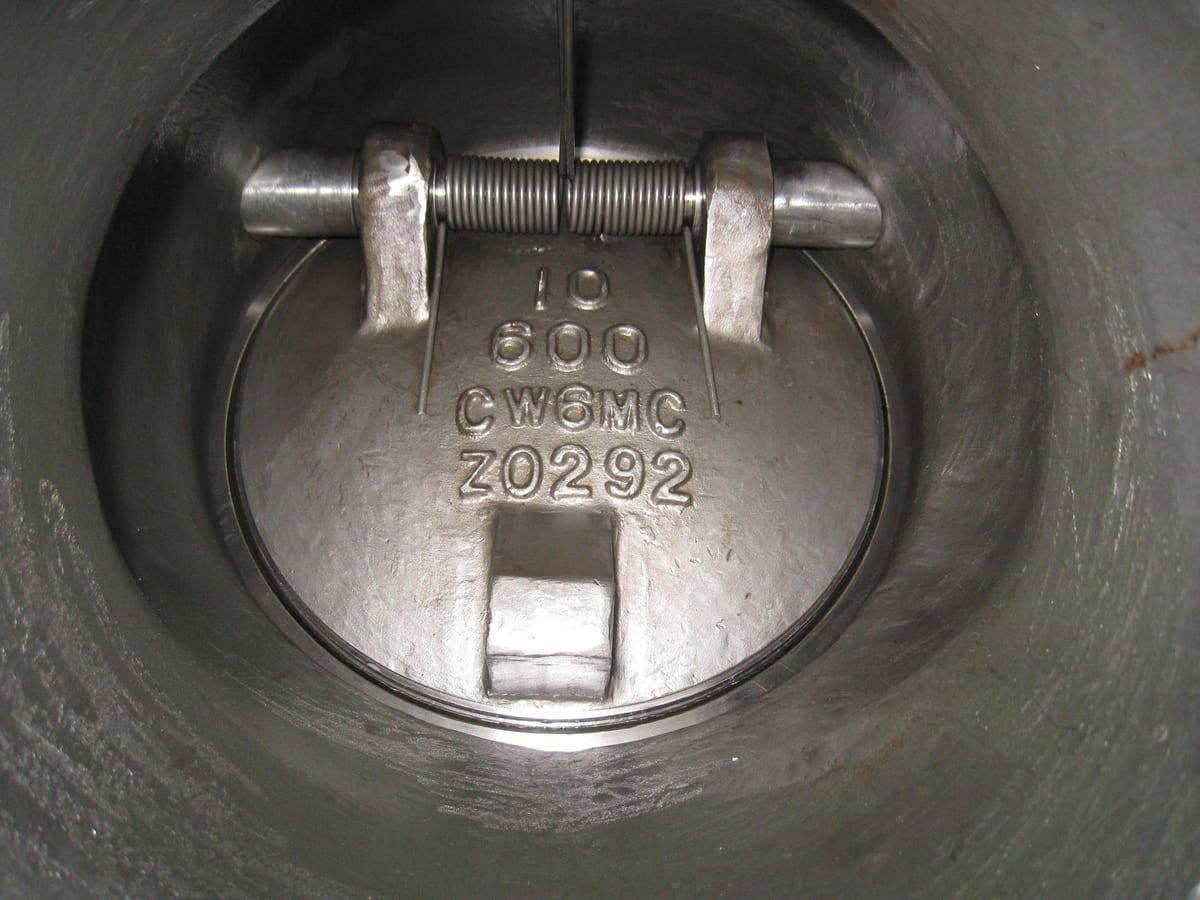
A union check valve with a flexible flapper — the part whose absence makes a pump run twice as often as it needs to.
#ad we earn a commission · Amazon shows the current price
| Type | PVC union check valve with a flexible flapper |
|---|---|
| Size | 1-1/2" slip x slip union, fits 1-1/4" and 1-1/2" pipe |
| Orientation | Vertical or horizontal |
| Noise | Flapper bends over a radius rather than slamming a hard seat |
Here is the arithmetic that makes this the most useful purchase on the page. Without a check valve, every time the pump stops, the water standing in the vertical discharge runs back down into the pit. That refills part of the basin, which lifts the float, which starts the pump again — so the pump pumps the same water repeatedly and your bill pays for every repetition.
A failed valve has the same effect as a missing one. If your pump cycles more often than it used to in the same weather, check the valve before you suspect the pump.
What it gets right
- Stops the column of water in the discharge falling back into the pit, which is wasted pumping by definition
- Union body comes apart for service without cutting pipe; fits 1-1/4" and 1-1/2"
- Flexible flapper bends over a radius rather than slamming a hard seat
- Costs a tiny fraction of the electricity a short-cycling pump wastes over a season
Where it falls short
- Small permanent head loss
- A failed flapper is invisible until you look for it
Specifications from Zoeller check valve distributor listing.
Why the start-up surge does not change the bill
An induction motor draws far more current in the fraction of a second it takes to get the impeller turning than it does while running — commonly two to three times the running figure. That inrush matters enormously for circuit and generator sizing, which is why the generator roundup talks about peak watts rather than running watts.
It does not matter for your bill, because energy is power multiplied by time, and the surge lasts a fraction of a second. What the surge really costs you is pump life: starts, not running hours, are the main wear mechanism in a sump pump, which is the real reason to care about cycling.
If the bill has gone up, something is wrong
A rising electricity bill with no other explanation is a recognized early symptom of a sump system fault, because every fault in the list below makes the pump run more than it needs to.
- A missing or failed check valve. The pump pumps the same water repeatedly. This is the most common cause and the cheapest fix.
- A discharge that ends too close to the house. The water percolates back to the drain tile and returns to the pit. See where to discharge sump pump water.
- A basin that is too small. Short cycles run the motor far more often for the same groundwater — what size sump pit.
- A switch set with too little travel. A small gap between on and off points means constant cycling.
- A stuck float holding the pump on. The pump runs continuously, often dry, which is both expensive and destructive. Sump pump keeps running covers the diagnosis.
- A partly blocked impeller or intake. The pump runs longer to move the same water.
How to spend less without buying a new pump
- Fit or replace the check valve. Highest return of anything on this page.
- Extend the discharge so you are not pumping the same water twice.
- Lengthen the switch travel if the pit allows it — a longer on-off spread means fewer starts for identical inflow. The options are in vertical vs tethered float switch.
- Keep water away from the house in the first place. Downspout extensions and correct grading cost almost nothing and reduce inflow, which reduces run time directly.
- Clean the pit annually. A silted basin and a fouled intake both make the pump work longer per gallon. See how to clean a sump pit.
Questions people ask
How much electricity does a sump pump use?
At the current US average residential price of 18.31 cents per kilowatthour, a pump with a 115 V, 9.7 A nameplate costs about $1.02 a month running ten minutes a day, and about $6.13 a month — roughly $75 a year — running a full hour a day. Those figures use volts multiplied by amps, which is an upper bound on real draw.
Does a sump pump use a lot of electricity?
No, in normal operation it is one of the cheaper things in a house to run. The exception is a system with a fault: a missing check valve, a discharge that returns water to the pit, or a stuck float can multiply run time several times over, and the bill is often the first symptom noticed.
Does a bigger sump pump cost more to run?
Not reliably. The 1/2 HP Zoeller 1084 pedestal has a lower nameplate draw, at 115 V and 7.3 A, than the 1/3 HP Wayne CDU790 at 120 V and 9.5 A. A larger pump may also clear the pit in less time, which offsets its higher draw. Read the nameplate rather than the horsepower.
Does the start-up surge increase my bill?
Barely. Inrush current is commonly two to three times running current, but it lasts a fraction of a second, and energy is power times time. The surge matters when sizing a generator or a circuit, not when estimating a monthly cost. What it really costs is pump life, because motor starts are the main wear mechanism.
How can I reduce what my sump pump costs to run?
Fit a working check valve, extend the discharge well clear of the foundation, lengthen the switch travel if the basin allows it, clean the pit annually, and reduce the water arriving by extending downspouts and correcting the grade. All five reduce run time, which is what you are actually paying for.
Sources
Read next
The best sump pump check valves
A forty-dollar valve is the single most common reason a healthy pump appears to be failing. It is also the easiest thing in the pit to replace.
Sump pump keeps running: what is actually wrong
A pump that runs constantly is burning itself out, and in most cases the cause is a part that costs less than a tank of gas.

How to clean a sump pit
An afternoon, once a year. It is also the only time you will ever get a proper look at the parts that keep your basement dry.
Where to discharge sump pump water
The most expensive mistake in this whole category costs nothing to avoid: putting the water back where it came from.
The best 1/2 HP sump pumps
Half a horsepower is the size most basements are sold and the size many of them do not need. Here is which one to buy when it genuinely is the right class.