The best 1/3 HP sump pumps
A third of a horsepower is the right size for most American basements, and the class where the published numbers vary most. Here is which one to buy.
We earn a commission if you buy through our Amazon links, at no cost to you. We do not bench-test these products and we never take free product — how we pick · affiliate disclosure
The best 1/3 HP sump pump is the Zoeller M53 Mighty-Mate: a cast-iron, oil-filled pump that publishes 2,040 GPH at ten feet of lift, passes half-inch solids and carries a three-year warranty. It is the pump the rest of this class is measured against, and the one here whose maker tells you what it does at the lift your basement actually imposes. If you want more water at that same lift, the Wayne CDU790 publishes 3,060 GPH at ten feet. If your pit is narrower than eleven inches, the Liberty Pumps 257 is rated to run in a 10 in basin and nothing else here is.
A third of a horsepower is the correct size for the majority of American basements: eight to twelve feet of lift, a short horizontal run, a pit fed by drain tile. Stepping up to half a horsepower buys head and solids capacity, not useful speed — and in a pit that does not need it, it buys short cycling, which is the main thing that wears sump pumps out. If you have not measured your lift, read 1/3 HP vs 1/2 HP first and come back with a number.
Quick picks
| # | Product | Best for | Score | Price |
|---|---|---|---|---|
| 1 |  Zoeller M53 Mighty-MateThe pump in this class that publishes a flow figure at ten feet of lift, inside a cast-iron housing with an oil-filled motor and a three-year warranty. | Most basements, and the pump to beat | 9.1 | Check price on Amazon #ad we earn a commission · Amazon shows the current price |
| 2 |  Wayne CDU7903,060 GPH published at ten feet of lift — half again the M53 at the same height — from an epoxy-coated cast-iron body with a top-suction intake. | The most water at a real basement lift | 8.9 | Check price on Amazon #ad we earn a commission · Amazon shows the current price |
| 3 |  Liberty Pumps 257A one-piece cast-iron pump rated to run in a 10 inch pit, with 23 feet of maximum head and a magnetic float on a quick-change 10 ft cord. | A narrow pit, or a switch you can replace | 8.6 | Check price on Amazon #ad we earn a commission · Amazon shows the current price |
| 4 |  Superior Pump 923412,760 GPH at zero lift, 25 feet of maximum head and a stainless impeller inside a cast-iron body, for well under what the name brands charge. | A cast-iron pump on a tight budget | 8.2 | Check price on Amazon #ad we earn a commission · Amazon shows the current price |
| 5 |  Zoeller 1073 (1/3 HP cast iron submersible)The cast-iron 1/3 HP pump from Zoeller's consumer range: the right name and the right housing, with almost nothing published to size it by. | Buying the brand off a retail shelf | 7.6 | Check price on Amazon #ad we earn a commission · Amazon shows the current price |
| 6 | Superior Pump 92330The cheapest honest way to have a working 1/3 HP pump in the house, with a thermoplastic body and a tethered float that both come with conditions. | A spare pump, or a pit that barely runs | 7.2 | Check price on Amazon #ad we earn a commission · Amazon shows the current price |
Scores are ours and editorial, not lab measurements — see how we pick. Tap a row for the full write-up.
How we ranked this class
Six pumps, five criteria, applied in this order. The order matters more than the weighting, because the first two criteria eliminate pumps outright and the rest only separate the survivors.
- Does it fit the pit? Minimum basin diameter and float clearance are hard limits. A pump that cannot fit is not a cheaper pump, it is a returned pump. Liberty publishes 10 in, Wayne publishes 11 in, and several makers publish nothing at all.
- Does it reach? Maximum head has to exceed your measured lift with margin, and the cord has to reach a dedicated outlet without an extension. Cord lengths in this group run from 8 ft to 10 ft, which is a real constraint in a large basement.
- What does it move at ten feet? Not at zero. Only two pumps here publish a figure at a stated lift; where it is missing we say so on the page and the pump ranks lower for it, rather than quietly comparing one measured number against four marketing ones.
- What is the housing, and what is the switch? Cast iron sheds motor heat into the pit water and plastic does not. Switch type decides both pit fit and the most likely failure.
- What does the maker publish, and how long do they stand behind it? A full specification sheet and a three-year warranty are evidence about a company, not just about a pump.
The published specifications, side by side
| Zoeller M53 | Wayne CDU790 | Liberty 257 | Superior 92341 | Superior 92330 | |
|---|---|---|---|---|---|
| Housing | Cast iron | Epoxy-coated cast iron | One-piece Class 25 cast iron | Cast iron | Thermoplastic |
| Flow at 0 ft | 2,580 GPH | 4,600 GPH | 2,640 GPH | 2,760 GPH | 2,400 GPH |
| Flow at 10 ft | 2,040 GPH | 3,060 GPH | Not published | Not published | Not published |
| Maximum head | 19.25 ft | Not published | 23 ft | 25 ft | Not published |
| Electrical | 115 V, 9.7 A | 120 V, 9.5 A | 115 V, 5.2 A | 120 V, 4.1 A | Not published |
| Minimum pit | Not published | 11" | 10" diameter | Not published | Not published |
| Solids handling | 1/2" | Not published | 3/8" | 3/8" | Not published |
| Switch | Vertical float, on 7-1/4" / off 3" | Vertical float | Vertical magnetic float | Vertical float | Tethered float |
| Cord | 9-10 ft (listings differ) | 8 ft | 10 ft | Not published | Not published |
| Warranty | Three years | Three years (SS variant five) | Three years | Three years | Not published |
Three of the five publish no flow figure at a stated lift, and that is the honest condition of the consumer pump market rather than a quirk of this shortlist. It is also why the ranking above is not simply gallons per dollar: computing that would mean comparing two measured numbers against three headline ones and presenting the result as analysis.
Zoeller M53 Mighty-Mate
The pump in this class that publishes a flow figure at ten feet of lift, inside a cast-iron housing with an oil-filled motor and a three-year warranty.
#ad we earn a commission · Amazon shows the current price
| Type | Submersible, cast iron |
|---|---|
| Horsepower | 3/10 HP (sold as 1/3 HP) |
| Electrical | 115 V, 9.7 A, 60 Hz |
| Discharge | 1-1/2" NPT vertical female |
| Switch | Integral vertical float, on at 7-1/4", off at 3" |
| Solids handling | 1/2" |
| Shut-off head | 19.25 ft |
| Flow, by lift | 2,580 GPH at 0 ft · 2,040 GPH at 10 ft |
| Warranty | Three years |
This pump wins on a single piece of honesty: Zoeller publishes what it does at ten feet of lift. The specification sheet gives 43 GPM maximum and 34 GPM at ten feet of head — about 2,580 and 2,040 gallons per hour. Almost every competitor in this class publishes the zero-lift number and stops, which means you can compare the M53 against your own measured lift and you cannot do that with most of the pumps sitting beside it on the shelf.
The hardware backs the paperwork up. The housing is cast iron, which sinks motor heat into the surrounding water during the sort of multi-hour run that a thaw or a three-day storm produces. The motor is oil-filled rather than air-cooled. The impeller is a vortex design that throws solids through rather than chopping at them, which is why the solids rating is half an inch while two of the thermoplastic pumps below are rated at three eighths.
Be clear about what you are not buying. The M53 is the entry model of that family, and the base and impeller are engineered plastic — the all-cast-iron equivalents are on the M63, which also carries a longer warranty. And the 19.25 foot shut-off head is genuinely modest: plenty for a pit floor to rim-joist run in an ordinary house, and not enough for a deep basement discharging to a high grade. Measure first; the arithmetic is in what size sump pump do I need.
One practical note that costs people money: the 9.7 A draw matters on a shared circuit. If the sump outlet also carries a freezer or a dehumidifier, that combination is how a pump ends up behind a tripped breaker during the one storm it needed to run through. Read sump pump tripping breaker before you reuse an old outlet.
What it gets right
- 2,040 GPH published at ten feet of lift (34 GPM), which is the number that decides whether a pump keeps up with your pit
- Heavy cast-iron housing with an oil-filled motor, so motor heat goes into the pit water rather than into the windings
- Non-clog vortex impeller rated to pass 1/2" solids — the best solids figure in this group
- Integral vertical float switch with published trip points: on at 7-1/4", off at 3"
- Made in the USA using a majority of US content, per the manufacturer's specification sheet
- Three-year warranty, and replacement switches and cases for this family are stocked nationwide
Where it falls short
- 9.7 A at 115 V is the highest current draw in this group — nearly double the Liberty 257 and more than double the Superior 92341
- 19.25 ft shut-off head is the lowest maximum head here, so a tall discharge run is the wrong job for it
- The base and impeller are engineered plastic on the M53; the cast-iron versions of both are on the pricier M63
- Distributor listings disagree on cord length (9 ft on one, 10 ft on another) — measure to your outlet before ordering, because an extension cord on a sump pump is a safety problem rather than a convenience
Specifications from Zoeller M53 (53-0001) specification sheet.
Wayne CDU790
3,060 GPH published at ten feet of lift — half again the M53 at the same height — from an epoxy-coated cast-iron body with a top-suction intake.
#ad we earn a commission · Amazon shows the current price
| Type | Submersible, epoxy-coated cast iron |
|---|---|
| Horsepower | 1/3 HP |
| Electrical | 120 V, 9.5 A, PSC oil-filled motor |
| Discharge | 1-1/2" NPT |
| Cord | 8 ft |
| Switch | Vertical float |
| Flow, by lift | 4,600 GPH at 0 ft · 3,060 GPH at 10 ft |
| Warranty | Three years (the CDU790SS stainless variant is five) |
If you want the most water moved at the lift a normal basement actually imposes, this is the pump. 3,060 GPH at ten feet is roughly fifty percent more than the M53 manages at the same height, out of a motor drawing almost exactly the same current. That is not marketing; it is a published pair of figures at a stated lift, which is the only kind of flow number we will rank on.
The top-suction intake deserves a sentence of its own. Most submersibles draw from a screen around the base, inches from whatever has settled on the pit floor. Wayne moves the intake up the body, which means the pump is pulling from cleaner water and the impeller sees less grit over a decade. In a pit that silts up — and most pits fed by drain tile do — that is a longevity feature rather than a spec-sheet one.
Two constraints will decide this for you before the flow curve does. The pump wants an 11 inch or larger pit, and the cord is eight feet. Measure the basin and the distance to the outlet, in that order. If either number is tight, the pump below is the one that fits.
What it gets right
- 3,060 GPH at ten feet of lift and 4,600 GPH at zero — the highest published figures in the class by a wide margin
- Epoxy-coated cast iron, so you get the heat-shedding mass without bare iron sitting in water
- Top-suction intake draws from above the pit floor, which keeps the worst of the silt out of the impeller
- Integrated vertical float switch, and the stainless CDU790SS variant carries a five-year warranty instead of three
Where it falls short
- Wayne specifies an 11" minimum pit — it will not fit the 10 in basins the Liberty 257 is built for
- The 8 ft cord is the shortest here, which decides where the pump can go before anything else does
- 9.5 A draw, essentially the same appetite as the M53
- An epoxy coating is a coating: chip it against a concrete pit edge during installation and you have exposed iron
Specifications from Wayne CDU790 specification listing, Wayne CDU790 distributor listing.
Liberty Pumps 257
A one-piece cast-iron pump rated to run in a 10 inch pit, with 23 feet of maximum head and a magnetic float on a quick-change 10 ft cord.
#ad we earn a commission · Amazon shows the current price
| Type | Submersible, Class 25 cast iron |
|---|---|
| Horsepower | 1/3 HP |
| Electrical | 115 V, 5.2 A |
| Discharge | 1-1/2" NPT vertical female |
| Impeller | Thermoplastic vortex |
| Solids handling | 3/8" |
| Minimum pit | 10 in diameter |
| Maximum head | 23 ft (rated head 5 ft) |
| Flow, by lift | 2,640 GPH at 0 ft |
| Warranty | Three years |
This is the pump you buy when the pit is the problem. A 10 inch rating is unusual — most submersibles in this class need eleven inches or more just for the float to clear the wall — and narrow pits are common in older houses, in crawl spaces, and wherever a pit was cut in after the slab was poured. If a tape measure across your basin reads under eleven inches, the shortlist is this pump and a pedestal.
The casting is the second argument. Liberty pours the motor housing and the volute as a single piece of Class 25 cast iron, so there is no bolted joint and no gasket between them. On a pump expected to sit in water for ten years, removing a seam is worth more than most of the features printed on the box. The vertical magnetic float is the same philosophy applied to the part that actually breaks: no arm, no pivot, and a cord that disconnects so the switch can be changed without unplumbing the pump.
The honest weakness is data. Liberty gives a zero-lift flow and a maximum head and nothing in between, so we cannot tell you what this pump does at ten feet, and we are not going to interpolate a curve and present it as a specification. It ranks third on published performance and it would rank first on pit fit, which is exactly how you should read it.
What it gets right
- Rated for a 10 in diameter pit, the smallest basin any pump in this group will work in
- One-piece Class 25 cast-iron housing, with no gasketed seam between motor and volute to fail in standing water
- Vertical magnetic float switch — no mechanical arm to bind against a pit wall
- 23 ft maximum head, comfortably more than the M53's 19.25 ft
- 5.2 A at 115 V, roughly half the draw of the Zoeller and the Wayne
- Three-year warranty, 10 ft cord
Where it falls short
- Liberty publishes 2,640 GPH at zero lift and a 23 ft maximum head but no gallons-at-ten-feet figure, so you are sizing on the endpoints rather than on the curve
- The impeller is thermoplastic vortex rather than metal, inside an otherwise cast-iron pump
- Usually the most expensive pump in the class, and the published performance does not obviously justify that over the Wayne
- Distributor sheets disagree on solids handling (3/8 in on the one we cite, 1/2 in elsewhere) — assume the smaller figure
Specifications from Liberty 257 specification listing, Liberty 250-series distributor spec page.
Superior Pump 92341
2,760 GPH at zero lift, 25 feet of maximum head and a stainless impeller inside a cast-iron body, for well under what the name brands charge.
#ad we earn a commission · Amazon shows the current price
| Type | Submersible, cast iron |
|---|---|
| Horsepower | 1/3 HP |
| Electrical | 120 V, 4.1 A |
| Discharge | 1-1/2" |
| Switch | Vertical float |
| Motor | Continuous duty, thermally protected split capacitor |
| Flow, by lift | 2,760 GPH at 0 ft |
| Warranty | Three years |
There is a real pump under the price here. Cast iron, a stainless impeller, a split-capacitor motor with thermal protection, and the highest published maximum head in the group at 25 feet. For a basement with a modest pit and an ordinary number of cycles a week, this does the same job as a pump costing substantially more, and the 4.1 A draw is the lowest on this page by a distance.
What you give up is partly data and partly depth. There is no gallons-at-ten-feet figure, so the 25 foot head number has to carry the sizing decision on its own. And the specification sheet stops at the headline items — nothing about bearings, nothing about the seal stack — which are exactly the components that separate a pump that lasts four years from one that lasts twelve.
Buy this if the pit is undemanding, or if it is the second pump in the pit. In a two-pump arrangement, spending the money on the primary and putting a cheaper cast-iron pump on the higher float is a perfectly rational split — see two sump pumps in one pit.
What it gets right
- 25 ft maximum head, the highest in this group — more than the Zoeller, the Liberty or the Wayne
- Cast-iron housing with a stainless steel impeller and a thermally protected continuous-duty motor
- 4.1 A at 120 V, the lowest draw of any pump here
- Vertical automatic float, so it works in a narrow sump without needing swing room
- Three-year warranty, and the pump is stocked by hardware chains and farm stores rather than being an online-only brand
Where it falls short
- No flow figure published at ten feet of lift, only the 2,760 GPH zero-lift number
- 3/8" solids handling, the lowest here — a gritty pit will test it
- Superior Pump is a value brand; replacement switches and impellers are nowhere near as widely shelved as Zoeller's
- Nothing published about bearing type or seal arrangement, which are the parts that decide a decade
Specifications from Superior Pump 92341 specification listing.
Zoeller 1073 (1/3 HP cast iron submersible)
The cast-iron 1/3 HP pump from Zoeller's consumer range: the right name and the right housing, with almost nothing published to size it by.
#ad we earn a commission · Amazon shows the current price
| Type | Submersible, cast iron |
|---|---|
| Horsepower | 1/3 HP |
| Line | Zoeller at Home consumer range |
Zoeller runs two ranges: the professional line the plumbing trade buys, where the M53 lives, and the Zoeller at Home consumer range, where the 1073 lives. The 1073 is a cast-iron 1/3 HP submersible and it is a sound pump in the way that any cast-iron Zoeller is a sound pump.
It ranks fifth here for one reason, and it is not build quality. The consumer-range listing gives horsepower and housing material and essentially nothing else — no flow at any lift, no amps, no float trip points — and we will not fill those cells in from a sibling model and present the result as a specification. If the retail shelf is your constraint, buy it without worrying. If you can order a pump, the M53 is the same company being far more forthcoming.
What it gets right
- Cast-iron submersible housing from the same manufacturer as the M53
- Currently listed in the Zoeller at Home range as 1073-0001, checked 2026-10-21
- Sold through consumer retail channels, so it is a pump you can collect today rather than wait on
Where it falls short
- Zoeller publishes no flow curve, no current draw and no switch trip points for this model in the consumer range listing
- Without a flow figure at any lift, the central sizing decision cannot be made from the manufacturer's own data
- The professional-line M53 is widely available at a similar price and publishes everything this one does not
Specifications from Zoeller at Home sump pump range.
Superior Pump 92330
The cheapest honest way to have a working 1/3 HP pump in the house, with a thermoplastic body and a tethered float that both come with conditions.
#ad we earn a commission · Amazon shows the current price
| Type | Submersible, thermoplastic |
|---|---|
| Horsepower | 1/3 HP |
| Switch | Tethered float |
| Flow, by lift | 2,400 GPH at 0 ft |
Every sump pump page should have one entry that is honest about being the cheap option. This is it: 2,400 GPH at zero lift, a thermoplastic body, a tethered float, and a price that makes it reasonable to own one you are not currently using.
The material is the real trade. Cast iron conducts motor heat away into the water around it; plastic does not, which is why thermoplastic pumps are the ones that die during the storm where the pit ran continuously for six hours. The tethered float is a smaller trade with a genuine upside: it switches off lower in the pit than a vertical float does, so the pump runs longer and starts less often — in a pit wide enough to let the float swing. In a narrow pit it is simply the wrong switch, and the comparison is in vertical vs tethered float switch.
What it gets right
- 2,400 GPH at zero lift from the least expensive pump on this page
- Light enough to lift out of a pit one-handed for cleaning or testing
- A tethered float gives a deeper draw-down than a vertical float, so the pump cycles less often in a deep pit
- Cheap enough to own purely as the spare that sits on a shelf until the night the primary dies
Where it falls short
- Thermoplastic housing holds motor heat instead of shedding it into the pit water — the wrong material for a long continuous run
- A tethered float needs real swing room; in a narrow pit it will foul on the wall or the discharge pipe
- Published data is limited to the zero-lift flow figure and the switch type
- No warranty figure on the listing we cite, where the cast-iron 92341 states three years
Specifications from Superior Pump brand listing.
How much pump a 1/3 HP actually gives you
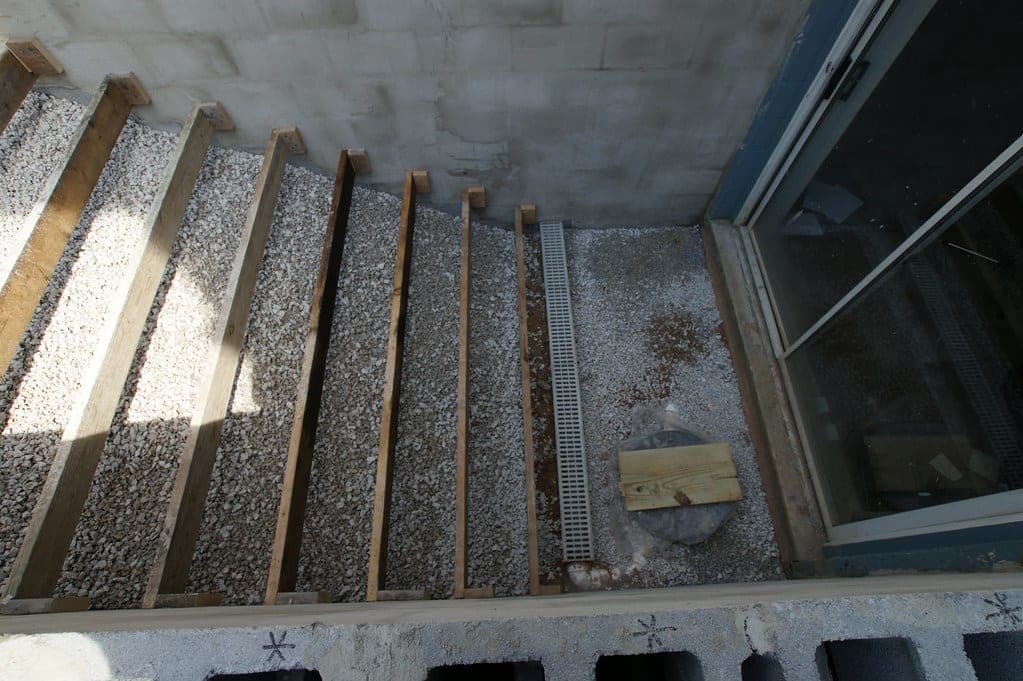
Two thousand gallons an hour at ten feet of lift sounds abstract until you put it against a pit. A standard 18 x 22 inch basin holds roughly 1.4 gallons per inch of depth. A pump moving 2,040 GPH is moving about 34 gallons a minute, which clears the working depth of that pit in well under a minute and keeps pace with an inflow rate that would alarm most homeowners watching it rise.
The way to find your own number is a tape measure and a stopwatch. During steady rain, let the pit fill to the switch-on point, unplug the pump, and time how long the water takes to rise one inch. One inch in sixty seconds in an 18 x 22 pit is roughly 1.4 gallons a minute of inflow — a long way inside what any pump on this page will handle. One inch in five seconds is about 17 gallons a minute, and now the choice between 2,040 and 3,060 GPH at your lift is the whole decision.
Where 1/3 HP stops being the right answer
- Lift above roughly fifteen feet. A deep basement discharging to a high grade is working the top of this class's head range. Step up: 1/2 HP vs 1 HP covers where the extra horsepower stops paying.
- A gritty or silty pit. Three-eighths of an inch of solids handling is not much. The M53's half inch helps, and a top-suction intake like the Wayne's helps more.
- A pit narrower than ten inches. Below that, a submersible float has nowhere to go and a pedestal pump is the honest answer — see pedestal vs submersible.
- Any basement where the real risk is a power cut. Horsepower is irrelevant with no electricity. Before upgrading a working pump, read do I need a battery backup.
What to buy alongside the pump
- A new check valve. It is the cheapest part in the system and the one that makes a brand-new pump look faulty when it fails, because the water standing in the discharge pipe falls back into the pit and the pump restarts on its own backwash. See the best sump pump check valves.
- A pit lid that actually seals. It keeps debris, smell and radon out and stops the pit drying into the basement air. Sump pump covers covers the options.
- A water alarm. A few dollars for the hour of warning that every other item on this list depends on — the best basement water alarms.
- A dedicated outlet. At 9.5 to 9.7 A, the two best pumps here do not want to share a circuit with a freezer.
Questions people ask
What is the best 1/3 HP sump pump?
The Zoeller M53 Mighty-Mate. It is the pump in the class whose maker publishes a flow figure at a stated lift — 34 GPM, about 2,040 GPH, at ten feet of head — inside a cast-iron housing with an oil-filled motor, a non-clog vortex impeller rated for half-inch solids, and a three-year warranty. If you want more water at that lift, the Wayne CDU790 publishes 3,060 GPH at ten feet.
Is 1/3 HP enough for a basement sump pump?
For most houses, yes. A third of a horsepower comfortably handles eight to twelve feet of lift with a short horizontal discharge run, which describes the majority of American basements. Step up when the lift is higher, the run is long or full of elbows, or the pit carries enough grit that you want better solids handling.
How many gallons per hour does a 1/3 HP sump pump move?
At zero lift, the pumps on this page publish 2,400 to 4,600 GPH. At ten feet of lift — the figure that matters in a basement — the two that publish one give 2,040 GPH (Zoeller M53) and 3,060 GPH (Wayne CDU790). Treat any zero-lift number as the ceiling, not the performance.
Should I buy cast iron or thermoplastic in this class?
Cast iron if the pit runs often or runs long. Iron conducts motor heat into the surrounding water, and heat is what kills a pump during the multi-hour run of a thaw or a long storm. Thermoplastic is genuinely fine for a pit that cycles a few times a week, and it is lighter to lift out for cleaning.
Will a 1/3 HP pump fit my pit?
Measure the basin's inside diameter before anything else. Liberty rates the 257 for a 10 in pit and Wayne specifies 11 in for the CDU790; several makers in this class publish no minimum at all, which in practice means allowing clearance for the float to swing or rise without touching a wall or the discharge pipe.
Why do you not list prices?
Because a price written into an article in October is wrong by November. Every buy button on this site goes to the live listing so you see the current price rather than ours.
Sources
- Zoeller M53 (53-0001) specification sheet
- Zoeller M53 distributor listing (availability verified 2026-10-21)
- Wayne CDU790 distributor listing and specification
- Liberty 250-series (257) specification page
- Superior Pump 92341 specification listing
- Zoeller at Home sump pump range (1073-0001 listed, checked 2026-10-21)
Read next
Zoeller M53 review
The pump every plumber names first, and the one most often bought without checking whether its two weakest numbers matter in your basement. Both of them might.
1/3 HP vs 1/2 HP sump pump
The most common sizing question in the category, and the one most often answered by buying more pump than the pit can use.
The best 1/2 HP sump pumps
Half a horsepower is the size most basements are sold and the size many of them do not need. Here is which one to buy when it genuinely is the right class.

What size sump pump do I need?
Two measurements and ten minutes give you a real answer. Almost everyone skips both and buys on horsepower instead.
The best cast iron sump pumps
Iron is not a luxury finish. It is a heat sink, and it only earns its price in a pit that makes the motor work.
Pedestal vs submersible sump pump
Two ways to get water out of the same hole. The pit usually decides this before you do.